Plan a quiet waiting space for someone with Parkinson's disease dementia by reducing noise, glare, clutter, and confusing visual detail. Provide supportive seating, an obvious walking route, gentle lighting, and a calm companion whose face remains visible. Parkinson's disease dementia, or PDD, means significant cognitive decline that begins at least one year after Parkinson's movement symptoms. This timing distinguishes PDD from dementia with Lewy bodies, according to the Parkinson's Foundation.
Medical information disclaimer: This article is for general educational purposes only and does not provide medical advice, diagnosis, or treatment. Always consult a physician or other qualified health professional about symptoms, medications, tests, or treatment decisions.
Table of Contents
- Choose the calmest available location
- Keep the route and layout simple
- Balance visibility with sensory comfort
- Make conversation easier
- Test the space for the individual
Choose the calmest available location
Select a space away from televisions, loud conversations, doors, and busy corridors. People living with dementia report that crowds, noise, bright light, congestion, and unfamiliar stimulation can cause anxiety or confusion, according to the Alzheimer's Association. A separate room is not essential.
A quiet corner with fewer people passing through may work if the person can still see their companion and destination. Avoid making the area feel isolated. The goal is controlled stimulation: enough visual and social contact for reassurance, without constant noise or movement.
Keep the route and layout simple
PDD can make objects harder to find in visually busy settings. It can also make familiar and unfamiliar places difficult to navigate.
Use a direct route with minimal clutter and no unnecessary furniture. check the path from the entrance to the chair and onward to the next destination: These precautions also address movement-related risks. Lewy body dementia, which includes PDD, may involve shuffling, freezing, balance problems, and falls, as the National Institute on Aging explains.
- Remove bags, cords, small tables, and loose objects.
- Leave enough clear space for unhurried movement.
- Place the preferred chair where it is easy to identify.
- Avoid requiring sharp turns around furniture.
- Keep necessary items visible and in consistent locations.
Balance visibility with sensory comfort
Use even lighting that makes faces, furniture, and walking routes easy to see. Low visibility can contribute to visual hallucinations or misperceptions in Parkinson's, while excessive stimulation can increase dementia-related distress. Reduce glare from exposed bulbs, polished surfaces, and bright windows.
If the space may be used after dark, add low-level lighting along the route rather than leaving shadowed areas. Watch the person's response. Squinting, looking repeatedly into dark corners, or becoming more unsettled after a lighting change suggests that the setup needs adjustment.
Make conversation easier
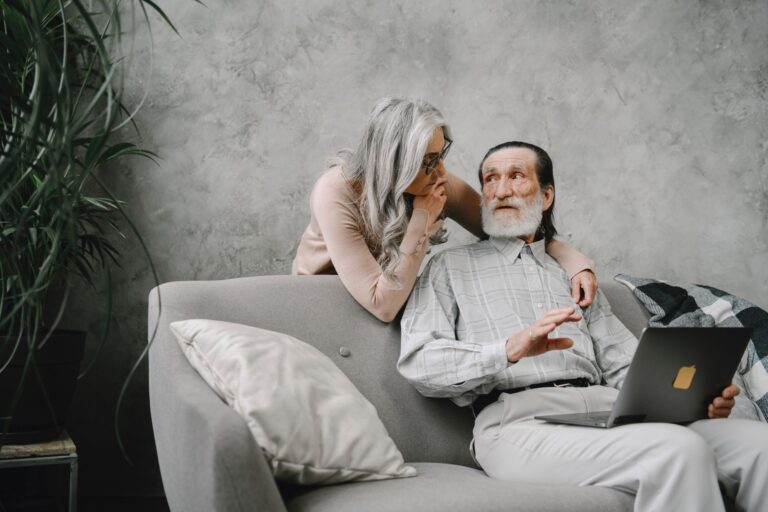
Sit at the person's eye level and within comfortable viewing distance. Keep your face and mouth visible because people with Parkinson's may communicate more effectively when they can see those cues. Turn off background television or radio and move away from nearby conversations.
The Parkinson's Foundation's communication guidance specifically recommends reducing surrounding noise. Speak calmly and allow time for a response. If distress increases, reduce distractions further and offer simple reassurance instead of adding questions or explanations.
Test the space for the individual
No single waiting-space design suits everyone with PDD. Symptoms and abilities vary, so tailor the environment to the person's memory, vision, perception, movement, and orientation needs. Before a longer wait, try the space briefly and observe what happens.
Note whether the person can find the chair, follow the route, see a companion's face, and remain settled. Adjust one feature at a time so the effect is easier to judge. A person who becomes uneasy in a dim corner may need more light, while someone distressed by a bright, busy room may do better in a softly lit area with fewer people.