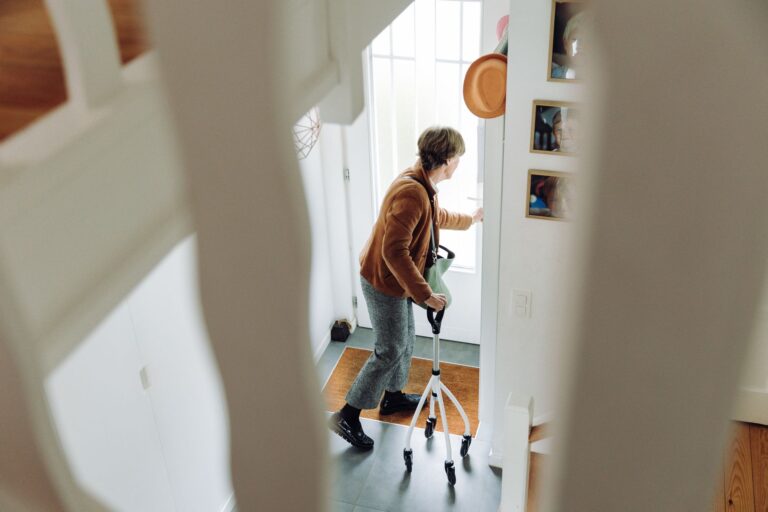
An online dementia test can flag possible problems with memory or thinking, but it cannot diagnose dementia or mild cognitive impairment (MCI). These tools are better described as cognitive self-screeners because they sample thinking skills without providing a full clinical assessment. A concerning result deserves follow-up, not a self-diagnosis. A reassuring result also should not override persistent changes that interfere with everyday life.
Medical information disclaimer: This article is for general educational purposes only and does not provide medical advice, diagnosis, or treatment. Always consult a physician or other qualified health professional about symptoms, medications, tests, or treatment decisions.
Table of Contents
- What does an online test measure?
- How meaningful is a concerning score?
- What can a reassuring result miss?
- Should people without symptoms test themselves?
- What happens after a concerning result?
What does an online test measure?
A cognitive self-screener may assess one or more areas of thinking. Its score can show that someone had difficulty with the tasks presented, but it cannot explain why. Screening tests are designed to identify people who may need further assessment. The U.S.
Preventive Services Task Force emphasizes that they are not intended to diagnose MCI or dementia in its final recommendation on cognitive-impairment screening. The distinction depends partly on daily function. Dementia involves cognitive decline severe enough to interfere with independent activities, while MCI does not. An online score cannot establish that threshold because it does not show how a person manages medicines, appointments, finances, meals, or other responsibilities.
How meaningful is a concerning score?
A low score can be a useful signal. It may support arranging a medical appointment, especially when the person or family has noticed changes outside the test. Evidence for one test does not validate every online quiz.
In a study of 91 adults, one self-administered Brain Health Assessment model detected amnestic MCI with an ROC AUC of 0.76, compared with 0.71 for a clinician-administered MoCA model, according to The Journals of Gerontology: Series B. ROC AUC measures how well a model separates people with and without a condition; it does not represent the percentage of correct diagnoses. That study involved community-dwelling adults aged 60 or older with adequate vision, hearing, English proficiency, reading ability, and computer use. Its findings therefore cannot be assumed to apply to every test or every person.
What can a reassuring result miss?
A passing score does not prove that nothing is wrong. A brief test samples limited abilities at one moment and cannot determine whether changes are affecting independent daily life.
Pay attention to the pattern outside the test. If memory or thinking changes continue, record concrete examples rather than relying only on the score: The National Institute on Aging describes face-to-face cognitive assessment by a clinician as the gold standard for detecting cognitive impairment, while noting that at-home tools may make screening more accessible in its 2024 Dementia Research Progress Report.
- What changed, and when did it begin?
- Which daily tasks have become harder?
- Who else has noticed the change?
- Is the problem stable, improving, or becoming more frequent?
- What result did the self-check produce, and which test was used?
Should people without symptoms test themselves?
Routine self-screening is not clearly proven to improve outcomes for adults who have no recognized symptoms. For adults aged 65 or older without recognized signs, the USPSTF found insufficient evidence to determine the overall balance of benefits and harms. That finding does not mean screening is useless or that symptoms should be ignored.
It means the evidence has not established whether routinely testing everyone in that group produces more benefit than harm. The Task Force's update process was still underway as of June 12, 2025, according to its draft update summary. A self-check is most useful as one piece of information. It should not become a label, replace medical care, or settle disagreements about whether meaningful changes are occurring.
What happens after a concerning result?
Bring the result to a medical appointment, along with examples of changes and a complete medicine list. If possible, include observations from someone familiar with the person's usual abilities. A diagnostic evaluation looks beyond the score. It reviews symptoms, medical and family history, and medicines.
Depending on the situation, it may also include physical and laboratory tests, cognitive or neurological testing, brain imaging, and psychiatric assessment. This broader review matters because memory and thinking problems can have causes other than dementia. Medication effects, metabolic or endocrine problems, infection-related delirium, depression, vitamin deficiency, and tumors are among the potentially treatable or reversible possibilities. The practical next step after a concerning self-check is a medical assessment that can investigate those possibilities.