New study sits at the center of this dementia and brain health question.
Blood tests have now surpassed traditional brain imaging as the most accurate way to predict Alzheimer’s disease before symptoms appear. Recent clinical studies show that blood tests, particularly those measuring phosphorylated tau proteins like p-tau217, achieve accuracy rates of 94.5% in detecting Alzheimer’s-related changes—significantly higher than the 73% accuracy of traditional clinical evaluations in specialty memory clinics or the 61% accuracy in primary care settings.
This shift represents one of the most important advances in dementia diagnosis in decades. Rather than requiring expensive PET scans or MRI imaging, doctors can now order a simple blood test that costs a fraction as much, exposes patients to zero radiation, and delivers results faster. This article explores how blood tests have become more reliable than brain scans, why this matters for patients and families, and what it means for early detection of Alzheimer’s disease.
Table of Contents
- How Do Blood Tests Compare in Accuracy to Brain Imaging?
- What Are Blood Biomarkers and Why Do They Work So Well?
- Can Blood Tests Predict Alzheimer’s Before Memory Loss Starts?
- What Are the Practical Advantages of Blood Tests Over PET Scans?
- What Does FDA Approval Mean and Are These Tests Ready for Routine Use?
- What About the Finger-Prick Alternative?
- What Does This Mean for the Future of Alzheimer’s Detection?
- Conclusion
- Frequently Asked Questions
How Do Blood Tests Compare in Accuracy to Brain Imaging?
The comparison between blood tests and brain scans reveals a dramatic shift in diagnostic power. Brain imaging methods like PET scans, which directly visualize amyloid and tau accumulation in the brain, have long been considered the gold standard for confirming Alzheimer’s-related pathology. However, newer blood biomarkers now match or exceed their accuracy. The FDA-approved Lumipulse blood test, cleared in May 2025, demonstrates over 90% accuracy in detecting Alzheimer’s-related changes. More impressively, the p-tau217 blood test—tested in a Spanish clinical study of over 200 patients aged 50 and older—achieved 94.5% accuracy in clinical settings.
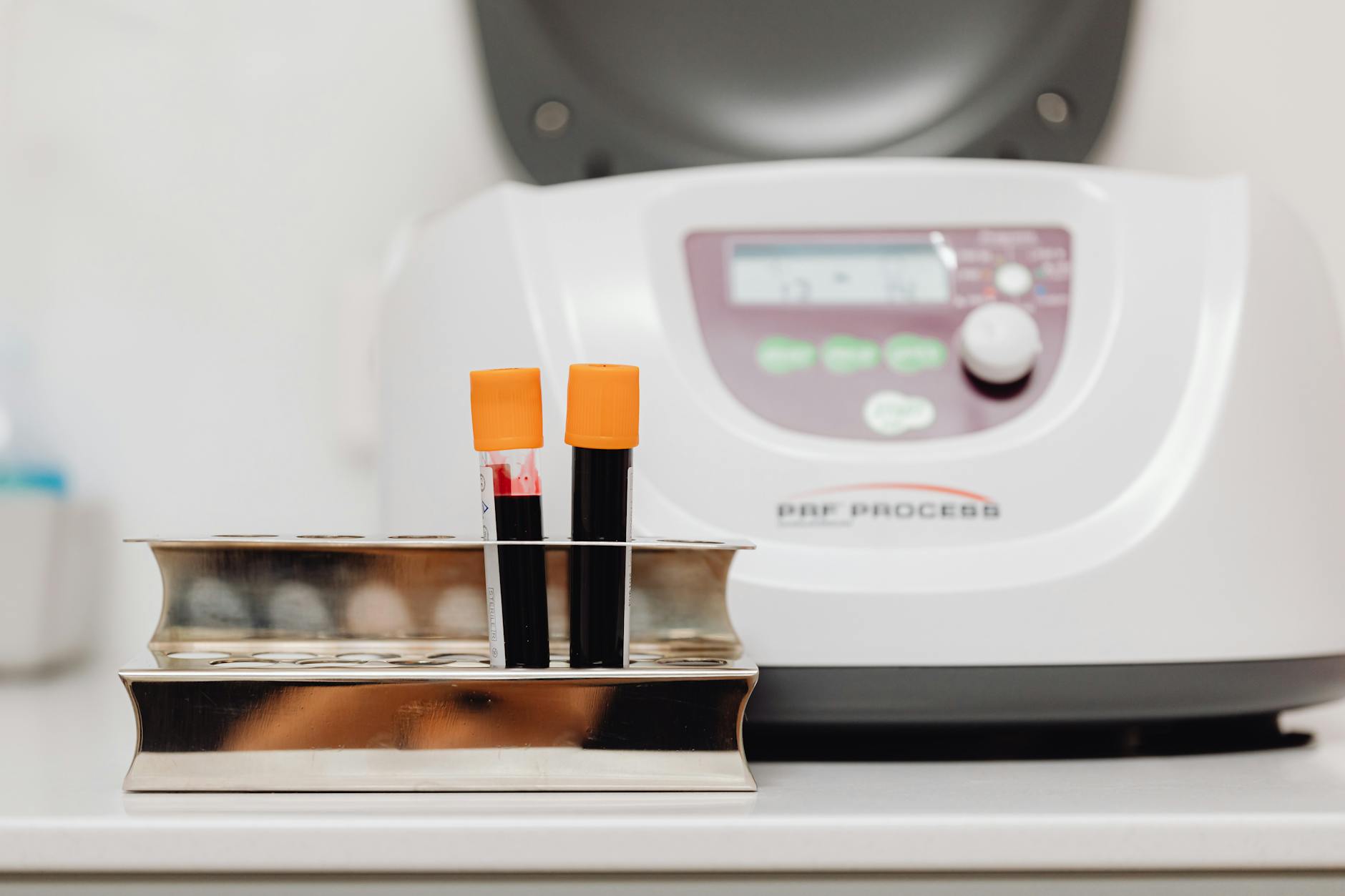
This means that if 100 people take the test, roughly 94-95 of them receive the correct diagnosis, a reliability rate that rivals the best brain imaging available. What makes this particularly significant is that blood tests achieve this accuracy while being substantially simpler. A brain imaging study requires scheduling an appointment at a specialized imaging center, waiting for the appointment, spending 30-60 minutes in the scanner, and paying thousands of dollars out of pocket or through insurance. A blood test requires only a simple blood draw—the same procedure used for routine cholesterol checks—and can often be ordered by a primary care doctor. The results come back in days rather than weeks.
What Are Blood Biomarkers and Why Do They Work So Well?
Blood biomarkers for Alzheimer’s are proteins that accumulate in the bloodstream as a result of brain pathology. The most powerful ones are phosphorylated tau variants—particularly p-tau217 and p-tau181—as well as phosphorylated alpha-synuclein and neurofilament light chain (NfL). These proteins escape from damaged brain cells into the cerebrospinal fluid and eventually enter the bloodstream, where they can be detected and measured with high sensitivity. Think of them as chemical messengers that leak out when Alzheimer’s pathology is building up in the brain, long before the person notices any memory loss or cognitive decline.
The reason these blood biomarkers work so well is that they’re highly specific to Alzheimer’s disease processes. A person can have mildly elevated cholesterol or high blood pressure without having Alzheimer’s, but if their p-tau217 or p-tau181 levels are elevated in a pattern consistent with Alzheimer’s, it’s a strong indicator that Alzheimer’s pathology is present in their brain. The tests measure actual molecular changes associated with the disease, not just indirect signs. However, one important limitation: a positive blood biomarker doesn’t mean someone will definitely develop dementia symptoms, only that Alzheimer’s-related changes are present. Some cognitively normal older adults have elevated biomarkers but remain cognitively stable for years.
Can Blood Tests Predict Alzheimer’s Before Memory Loss Starts?
One of the most transformative findings is that blood tests can predict when Alzheimer’s symptoms will develop—years before they actually appear. A recent study demonstrated that measuring p-tau217 levels allows clinicians to forecast symptom onset within a 3-4 year timeframe, with a margin of error of about 3-4 years. this means if someone is 60 years old with elevated p-tau217, doctors might predict they could develop cognitive symptoms around age 63-67, depending on their specific biomarker levels and other factors. This predictive ability has profound implications.
A 58-year-old woman with a family history of Alzheimer’s might get a blood test and learn that her biomarkers suggest symptom onset in 5-6 years. That information gives her time to make meaningful decisions: to pursue cognitive training and brain-healthy lifestyle changes, to plan for her care and financial future, to potentially enroll in clinical trials for preventive treatments, and to prepare her family for what’s coming. She’s not waiting passively for confusion or memory loss to arrive unexpectedly. Instead, she has actionable forewarning that can shape her medical care and life planning.

What Are the Practical Advantages of Blood Tests Over PET Scans?
The practical advantages of blood tests extend far beyond accuracy. First, cost is dramatically lower. A PET scan typically costs $3,000-$5,000, often requiring insurance approval or out-of-pocket payment. Blood tests cost a few hundred dollars or less—sometimes as little as a routine lab test covered by insurance. Second, there’s no radiation exposure. PET scans expose patients to radioactive tracers, which, while considered safe in diagnostic doses, still carry radiation risk. Blood tests carry zero radiation risk. Third, blood tests are accessible almost everywhere.
Any clinic, hospital, or even some direct-to-consumer labs can draw blood. PET scans require specialized equipment available only at large imaging centers, which may be hours away for rural patients. Turnaround time is another key advantage. Blood test results typically return within 5-10 business days. PET scans can take 1-2 weeks because the scans themselves take time, imaging specialists must interpret them, and reports must be compiled. Additionally, blood tests are less intimidating for anxious patients. Lying in a PET scan machine for 30+ minutes can feel claustrophobic or disorienting. A blood draw is familiar to almost everyone and takes less than 5 minutes.
What Does FDA Approval Mean and Are These Tests Ready for Routine Use?
The FDA’s clearance of the Lumipulse blood test in May 2025 represented a watershed moment. This approval means the test has been rigorously evaluated for safety and effectiveness, and it can now be marketed and used in clinical practice. Lumipulse, which measures phosphorylated tau and amyloid-beta ratios, demonstrated over 90% accuracy in the studies reviewed by the FDA. However, patients should understand that FDA approval doesn’t mean every neurologist uses these tests yet, nor does it mean insurance automatically covers them in all situations.
A critical warning: while blood tests are highly accurate, they’re not perfect, and they’re most reliable in people with cognitive symptoms or those already showing cognitive decline. Using blood tests as a screening tool in completely asymptomatic, healthy people raises different questions. A positive result in an otherwise healthy 55-year-old might cause unnecessary anxiety. The tests work best when ordered by a neurologist or memory specialist who can interpret the results in the context of the person’s symptoms, age, genetics, and overall health. Getting tested at a direct-to-consumer lab without medical oversight can lead to misinterpretation or overreaction.

What About the Finger-Prick Alternative?
Not everyone is comfortable with traditional blood draws, and not every setting has phlebotomy services. Researchers have developed a dried blood spot test that requires only a finger prick—similar to a home blood glucose test. This test can accurately measure Alzheimer’s biomarkers using just a few drops of blood on filter paper.
The advantage is clear: it’s minimally invasive, can be done at home, and is perfect for large-scale screening studies or follow-up testing. The tradeoff is that the dried blood spot test shows slightly lower accuracy than conventional blood tests drawn from a vein. It’s a minor difference—typically 85-90% rather than 94%—but in the context of a serious diagnosis, every percentage point matters. For now, dried blood spot testing is most useful in research settings or as a complementary test rather than a replacement for the more accurate venous blood tests.
What Does This Mean for the Future of Alzheimer’s Detection?
The shift toward blood biomarkers is reshaping how the field approaches dementia. Rather than waiting for people to develop noticeable memory loss before testing—at which point significant brain damage has already occurred—clinicians can now identify at-risk individuals years earlier. This enables preventive interventions. Medications like lecanemab and aducanumab, which slow cognitive decline in early Alzheimer’s disease, work best when started early, ideally before major symptoms develop.
Blood tests make this timeline shift possible. Looking forward, routine blood screening for Alzheimer’s may become standard for high-risk groups—people over 65, those with family histories of dementia, or those with genetic risk factors like the APOE4 gene. Imagine a 60-year-old going in for their annual physical and getting a comprehensive blood panel that includes Alzheimer’s biomarkers alongside cholesterol and glucose levels. This could become common in the next 5-10 years as costs decline further and more healthcare systems integrate these tests into preventive care protocols.
Conclusion
Blood tests have fundamentally changed the landscape of Alzheimer’s detection. With accuracy rates exceeding 94%, they now outperform traditional brain imaging while being cheaper, more accessible, and faster. The ability to predict symptom onset years in advance gives patients unprecedented time to plan, prepare, and pursue preventive treatments.
While these tests represent genuine progress, they work best when ordered and interpreted by qualified healthcare providers who can contextualize the results within each person’s broader health picture. If you’re concerned about Alzheimer’s risk—whether because of family history, age, or early cognitive symptoms—talk with your primary care doctor or a neurologist about whether blood biomarker testing makes sense for you. These tests aren’t a crystal ball, but they’re one of the most powerful tools now available for understanding your risk and taking action early.
Frequently Asked Questions
Do I need a referral to a neurologist to get a blood test for Alzheimer’s?
No, though working with a specialist is recommended. Some primary care doctors can order these tests, and some direct-to-consumer labs offer them. However, a neurologist’s expertise in interpreting results in the context of your symptoms and medical history is valuable.
If my blood test is positive, does that mean I’ll definitely get Alzheimer’s?
Not necessarily. A positive biomarker indicates that Alzheimer’s-related changes are present in your brain, but some people with positive biomarkers remain cognitively normal for many years. The test shows increased risk and pathology, but doesn’t guarantee symptom development on any specific timeline.
Are blood tests covered by insurance?
Coverage varies. Medicare may cover these tests if ordered by a physician for symptomatic patients. Private insurance policies differ. Check with your insurance provider or ask your doctor’s office to verify coverage before testing.
How often should I be tested?
There’s no standard recommendation yet. If you’ve had one test and it was normal, repeating it immediately isn’t necessary. If you have early cognitive symptoms or positive results, your doctor might recommend follow-up testing annually to track changes over time.
Is there a “normal” level of these biomarkers?
Levels that indicate abnormality vary depending on the specific biomarker, the test used, and the person’s age. Your doctor interprets your results against reference ranges and the specific assay used.
Can I prevent Alzheimer’s if my blood test is positive?
Early detection opens doors to prevention. Lifestyle changes—cognitive activity, exercise, sleep, social engagement, Mediterranean-style diet—have shown promise. New medications like lecanemab may slow progression if started early. Talk with your doctor about what options apply to you.
You Might Also Like
- How a $75 Blood Panel Could Replace Expensive Brain Scans for Early Dementia Detection
- The Blood Biomarker That Predicts Dementia 25 Years Early Is Now Available in 12 States
- New Blood Test Can Predict Dementia Risk 25 Years Before Any Symptoms Appear
For more, see National Institute on Aging.