Reviewed by the Help Dementia Editorial Team — our editors review every article for accuracy against guidance from the National Institute on Aging, the Alzheimer’s Association, and peer-reviewed sources.
New funding sits at the center of this dementia and brain health question.
Multiple major initiatives are now funding cutting-edge technology designed to identify and reverse brain decline before it becomes irreversible. In April 2026, a new company called Epia Neuro launched specifically to develop intent-driven neural technology that can restore function after stroke and address cognitive decline—a direct response to the urgent need for technologies that work at the neural level. Beyond this, the National Institutes of Health’s BRAIN Initiative continues supporting research platforms that directly bridge the gap between basic neuroscience and clinical treatments for people experiencing cognitive changes.
These funding efforts represent a significant shift in how the medical community approaches brain aging and decline. Rather than focusing solely on drugs, researchers are now developing devices and technologies that can monitor neural circuits, understand how the brain changes over time, and potentially intervene before serious damage occurs. This isn’t theoretical work happening in isolation—it’s funded, coordinated research happening right now across multiple institutions.
Table of Contents
- What New Technologies Are Being Funded to Fight Cognitive Decline?
- How Are Major Research Institutions Advancing Our Understanding of Brain Aging?
- Why Is Funding for Advanced Brain Technology Critical Right Now?
- What Are the Practical Pathways for People Interested in Advanced Brain Research?
- What Are the Real Limitations Facing Brain Research Funding Today?
- How Is Private Investment Shaping Brain Technology Development?
- What Does This Investment Mean for Brain Health in the Next Five Years?
- Conclusion
What New Technologies Are Being Funded to Fight Cognitive Decline?
The most recent major development is Epia Neuro’s launch, a company backed by investors who recognized that stroke recovery and cognitive decline require technologies that can directly interface with damaged neural pathways. Their intent-driven neural technology aims to restore function by understanding what a person is trying to do and helping the brain execute those intentions again. This approach is fundamentally different from past treatments because it works with the brain’s remaining capabilities rather than trying to replace lost function entirely. The NIH BRAIN Initiative is simultaneously funding dozens of projects through its Brain research Through Advancing Innovative Neurotechnologies (BRAIN) program.
These grants support the development of platforms and technologies that translate findings from basic neuroscience into clinical tools. Specifically, the NIH is funding next-generation devices that can monitor neural circuits with unprecedented precision and, critically, devices that can modulate or adjust neural activity. A limitation to understand: most of these technologies are still in development or early testing phases. The time between a promising laboratory result and a technology available to patients can span many years, and not every development succeeds in human trials.

How Are Major Research Institutions Advancing Our Understanding of Brain Aging?
The Salk Institute for Biological Studies declared 2026 as its dedicated “Year of Brain Health Research,” and they’re deploying an impressive arsenal of advanced tools to understand how brains change over time. They’re using brain organoids—tiny, lab-grown structures that mimic aspects of human brain development—alongside single-cell epigenomics to understand which genes are turned on or off in different brain cells. High-resolution imaging lets them see changes at a microscopic level, while artificial intelligence and machine learning tools help them spot patterns across thousands of data points that human researchers alone might miss.
The Simons Foundation is funding collaborative research specifically focused on plasticity—the brain’s ability to form new connections and reorganize itself—and how this changes with aging. Understanding why plasticity declines is crucial because it’s one of the core mechanisms that allows the brain to recover from injury or adapt to change. One important caveat: these technologies can show us what’s happening in the brain, but understanding the cause-and-effect relationships takes time. A brain organoid can show us that a certain protein is misbehaving in Alzheimer’s disease, but determining whether fixing that protein will actually help a living person is an entirely different challenge that requires years of additional research.
Why Is Funding for Advanced Brain Technology Critical Right Now?
The urgency behind this funding surge reflects a hard truth: approximately 6 million Americans currently live with Alzheimer’s disease, and that number is projected to grow significantly as the population ages. Traditional approaches—developing new medications through pharmaceutical research—have produced disappointingly few breakthroughs in the past decade. The brain is extraordinarily complex, and drugs often fail because they can’t reach the right parts of the brain or affect only a small piece of a much larger problem. Technology offers a different pathway.
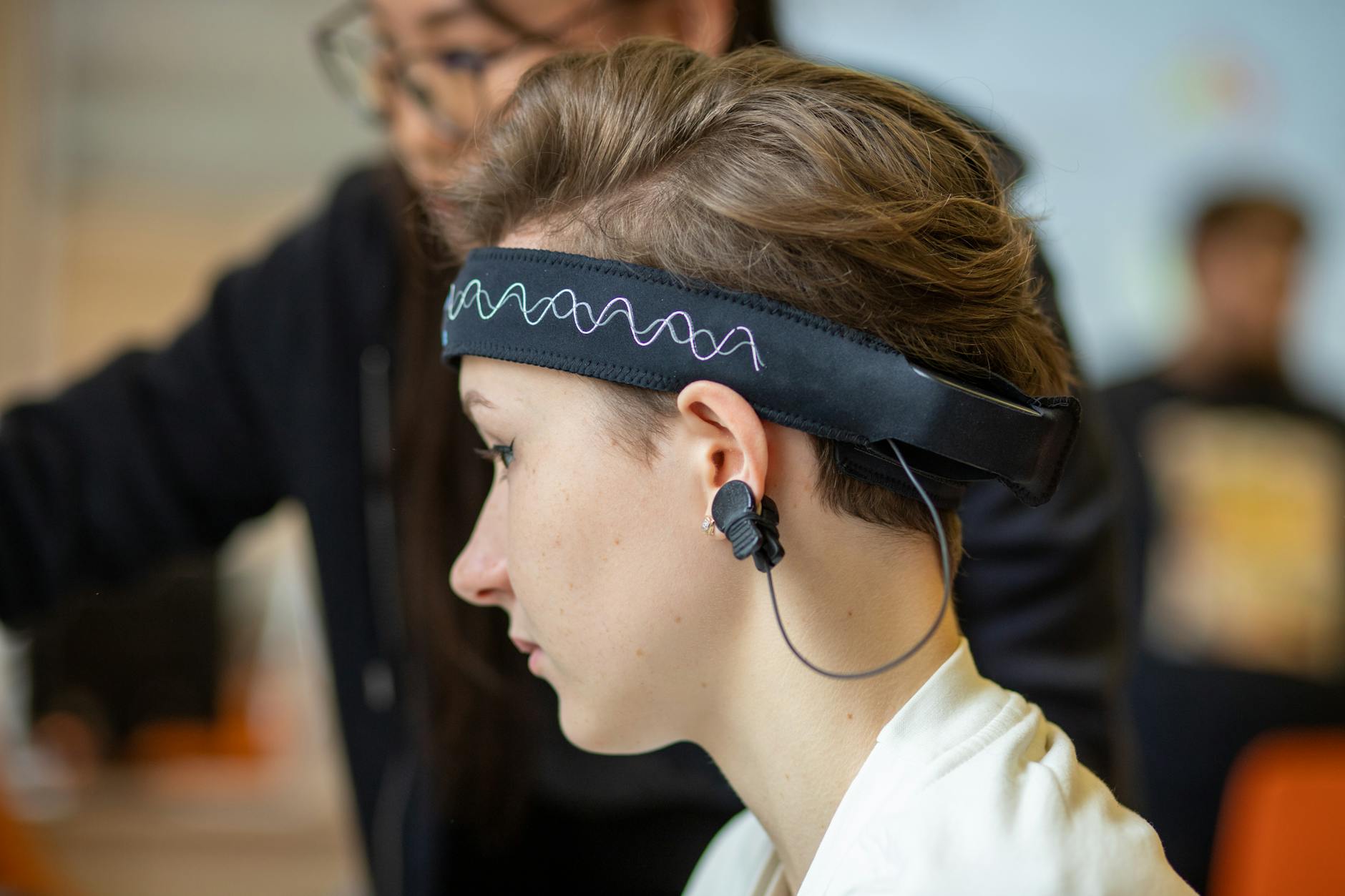
A device that can record neural activity tells us what’s actually happening in a person’s brain in real time. A device that can stimulate specific neural circuits might restore function that was lost. Unlike a drug that affects the entire body, a neural technology can be precisely targeted. The comparison is useful here: it’s the difference between trying to fix a car engine with medicine (unlikely to work) versus using actual mechanical tools to diagnose and repair it. However, this approach also comes with ethical considerations around implanting devices in the brain and ensuring equitable access to expensive technologies.
What Are the Practical Pathways for People Interested in Advanced Brain Research?
For people concerned about their own cognitive health or that of a family member, several avenues exist to engage with this research landscape. Clinical trials testing new neural technologies and brain health interventions are actively recruiting participants through ClinicalTrials.gov. Many of these trials are run by the same institutions receiving NIH funding—the Salk Institute, university medical centers, and specialized research hospitals. Participating in a trial offers potential access to cutting-edge treatments years before they become widely available, though participants should understand they’re contributing to research and outcomes aren’t guaranteed.
Educational resources have also expanded. Institutions like the Salk Institute and the NIH publish research findings and explanations for general audiences, making it possible to stay informed about developments in brain health technology. One tradeoff to consider: earlier-stage trials often require more frequent appointments and carry more uncertainty than later-stage trials, but they offer access to the most innovative approaches. Later trials are more established but may be testing refinements rather than fundamentally new approaches.
What Are the Real Limitations Facing Brain Research Funding Today?
Despite significant investment, brain research still faces substantial hurdles that funding alone can’t immediately solve. The human brain contains approximately 86 billion neurons, each connecting to thousands of others—the complexity is staggering. A technology that shows promise in a laboratory or even in a small animal model can fail completely in human beings.
Funding research doesn’t automatically accelerate the scientific process; some discoveries simply take time to understand fully. Another limitation deserves attention: current brain research funding concentrates heavily on certain areas, like Alzheimer’s disease and stroke recovery, while relatively underfunded conditions like vascular dementia, Lewy body dementia, and frontotemporal dementia receive less attention. This means that people with these conditions have fewer new treatment options in development. Additionally, the expense of advanced research technologies means that most cutting-edge work happens at well-funded institutions in major research centers, potentially limiting the diversity of research directions and the perspectives brought to understanding brain health.

How Is Private Investment Shaping Brain Technology Development?
Epia Neuro’s launch illustrates how private investment is complementing publicly funded research. Private companies can move more quickly than government-funded research in some respects and can focus intensely on specific technical challenges. Epia Neuro’s particular focus—intent-driven neural technology—emerged from recognizing a specific gap in the market and a specific medical need that researchers believed was solvable with the right approach and resources.
The advantage of private investment is speed and focus. The disadvantage is that private companies prioritize problems they believe will be profitable, which may not align perfectly with public health needs. A technology for wealthy patients in developed countries is more likely to attract private funding than a solution for a rare form of dementia affecting a smaller population. This is why the combination of public funding like the NIH’s BRAIN Initiative and private investment through companies like Epia Neuro is important—together, they provide incentives to solve both major problems and specialized problems.
What Does This Investment Mean for Brain Health in the Next Five Years?
The convergence of major funding efforts in 2026 suggests that the next five years will bring tangible progress in brain technology. We should expect to see clinical trial results from NIH-funded projects, real-world data from Epia Neuro’s neural technologies, and new discoveries from Salk’s brain health research year. Not all of these efforts will succeed—that’s the nature of research—but the sheer volume of coordinated effort significantly increases the probability of breakthroughs.
The message for anyone concerned about brain health is that the scientific community is mobilizing resources to develop practical solutions. This isn’t pie-in-the-sky research; it’s funded development happening in real laboratories right now. For people currently experiencing cognitive changes or worried about their future brain health, these developments offer hope that new options may become available in the coming years.
Conclusion
New funding for advanced brain technology represents a genuine inflection point in how medicine approaches cognitive decline and brain aging. From Epia Neuro’s neural technologies to the NIH BRAIN Initiative’s research platforms to the Salk Institute’s comprehensive research program, the investment landscape has shifted toward practical, technology-based solutions. These initiatives acknowledge what decades of drug-focused research has made clear: understanding and treating brain decline requires new tools and new approaches.
For anyone interested in brain health, whether for personal reasons or general interest, staying informed about these developments makes sense. Clinical trial information is publicly available, research findings are increasingly shared with general audiences, and the pace of innovation suggests that real treatment advances are likely within the next few years. If you’re concerned about cognitive health in yourself or a loved one, discussing these emerging approaches with a healthcare provider and exploring whether participation in a clinical trial might be appropriate is a reasonable next step.
You Might Also Like
- New Findings Show One Vitamin Could Help Protect Brain Health Years Later
- New Alzheimer’s Treatment Reverses Cognitive Decline in Early Testing
- New Alzheimer’s Treatment Reverses Cognitive Decline in Early Animal Trials
For more, see Alzheimer’s Association — medical tests.