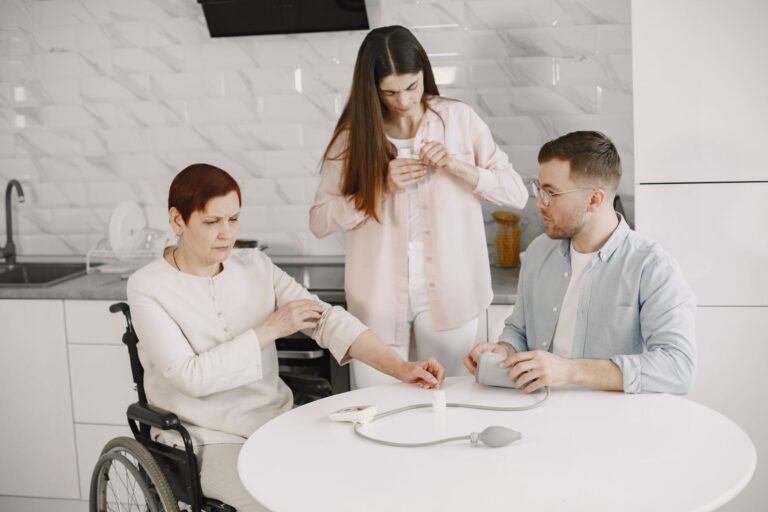
Moving away from sedation toward connection means fundamentally shifting how we respond to dementia behaviors—instead of using medications to suppress agitation, aggression, or restlessness, care providers build relationships, modify environments, and meet the underlying needs driving the difficult behavior. A resident who wanders and becomes combative when a nurse approaches might be sedated under the old model, spending the day drowsy and disconnected from family visits. Under the connection model, staff investigate whether the person is looking for someone, needs to use the bathroom, is in pain, or simply needs a structured activity to channel their energy.
The difference between these approaches determines whether someone with dementia spends their final years present or chemically absent. This shift is not new in principle—geriatricians and dementia specialists have documented the harms of overmedication for decades—but it remains uncommon in practice, especially in facilities where staffing is thin and behavioral medications are cheaper than trained staff. The evidence is clear: sedative medications like benzodiazepines and antipsychotics increase fall risk, accelerate cognitive decline, and raise mortality rates in older adults with dementia. Yet they remain standard because they are easy to administer and appear to solve the immediate problem of a difficult moment.
Table of Contents
- Why Sedation Became the Default Response in Dementia Care
- The Hidden Costs of Overmedication
- How Connection Replaces Chemical Restraint
- Practical Approaches to Reducing Sedative Use
- Common Obstacles and Realistic Challenges
- Staffing and Training Requirements for Connection-Based Care
- Measuring the Real Impact of Connection-Based Care
Why Sedation Became the Default Response in Dementia Care
The reliance on behavioral medications grew partly from necessity and partly from convenience. In the 1980s and 1990s, antipsychotics like haloperidol were prescribed widely to manage agitation and psychosis in dementia units, and they did reduce noise and disruption in the short term. Nursing homes discovered that quieter residents required less monitoring, fewer staff interventions, and generated fewer incident reports. Over time, a culture developed in which a resident’s behavioral distress was treated as a medical problem requiring a pharmaceutical solution, rather than as a communication attempt or a sign that something in their environment or care was wrong. Facility staffing patterns reinforced this approach.
A nursing home with one certified nursing assistant for every eight or more residents cannot spend the time needed to determine why someone is crying or striking out. It is faster to call the doctor and request a medication adjustment than to sit with the person, explore their history, and problem-solve environmental changes. Insurance billing also favored the medication path: a psychiatric medication added to a resident’s chart could justify higher acuity ratings and higher reimbursement, while time spent on meaningful activity or one-on-one engagement generated no additional revenue. The system inadvertently incentivized sedation. A concrete consequence: studies show that residents in facilities with higher rates of antipsychotic use are 40% more likely to experience a serious fall or fracture within a year, yet these same residents are not necessarily safer or more content. They are simply less mobile, less vocal, and less visible in their distress.
The Hidden Costs of Overmedication
Sedative medications carry a high price that extends far beyond the cost of the pill. Benzodiazepines like lorazepam and diazepam, commonly prescribed for anxiety and agitation in dementia, suppress the central nervous system and increase the risk of falls, broken hips, and head injuries—injuries that often trigger a cascade of additional hospitalizations and decline. Antipsychotics such as risperidone, approved for use only in psychotic symptoms but prescribed off-label for general agitation, carry a black-box warning of increased stroke risk and mortality in elderly patients with dementia. A resident sedated on these medications may seem calm, but they are simultaneously losing alertness, appetite, motivation, and the ability to engage with loved ones. The cognitive cost is particularly damaging.
Sedative medications slow thinking and memory formation. A person already losing their cognitive abilities due to dementia experiences an artificial additional decline when medicated. Some of this is reversible—stopping the medication can restore some alertness—but prolonged use can accelerate the underlying disease process. Families often report that after a medication increase, their relative “is not themselves anymore,” which is literally true: the medication has changed their mental state in ways that mimic and worsen the dementia itself. A limitation worth acknowledging: some residents do experience genuine psychiatric symptoms—depression, hallucinations, or severe anxiety—that cause real suffering and may require medication. The argument for moving toward connection is not that no one with dementia should ever receive psychotropic medication, but that medications should be a last resort after all other approaches have been attempted and documented, not the first response to behavioral change.
How Connection Replaces Chemical Restraint
When a person with moderate dementia begins hitting or yelling, trained staff trained in dementia care approach this as a symptom to decode, not a behavior to suppress. Common causes include pain (dental, urinary tract infection, arthritis), unmet toileting needs, overstimulation or understimulation, medication side effects, or the person trying to communicate something they can no longer express in words. A structured protocol begins: Is the person in pain? Can they point to where it hurts? Do they need to use the bathroom? Are they looking for a specific person? Do they recognize their surroundings? A specific example: An 78-year-old with Alzheimer’s disease began aggressive behavior every afternoon around 3 p.m., leading staff to recommend a sedating medication. Before implementing it, a nurse conducted a detailed assessment and discovered the person had always taken a walk after lunch at their former job. They were experiencing “sundowning”—a late-afternoon restlessness common in dementia—compounded by a lifelong habit.
The facility created a structured afternoon activity: a slow walk around a secure outdoor path with soft music playing, timed to start at 2:45 p.m. The aggressive behavior stopped almost completely. No medication was needed; the person’s own history and natural rhythms were the solution. Connection-based care uses validation, redirection, structured routines, meaningful activities, and environmental modifications. When these are in place, behavioral medications become genuinely unnecessary in many cases. The trade-off is that they require staff time, training, and intentionality—resources that do not appear on a pharmacy bill but are far more effective at maintaining quality of life.
Practical Approaches to Reducing Sedative Use
Facilities committed to reducing behavioral medications typically implement a tiered approach: identify and treat medical causes first (pain, infection, medication interactions), then modify environment and routine (consistent staff, familiar objects, clear signage, structured activities), then implement behavioral strategies (validation, distraction, redirection), and only then consider medication as an additional tool, with frequent reassessment and attempts to reduce the dose. One practical strategy is “activity-based care,” where structured programming is tailored to each resident’s history, abilities, and interests. A person who was a carpenter might spend time in a wood-working area with real tools and salvaged wood. A former teacher might participate in a reading group or mentorship activity. A musician might attend or lead music sessions. These activities are not entertainment add-ons; they are core therapeutic interventions that occupy the person’s mind, provide purpose, and reduce the idle restlessness that often triggers behavioral escalation.
The comparison is striking: a sedated resident sitting quietly in a wheelchair versus an engaged resident sorting photographs or participating in a gardening activity. Both are calm, but one has abandoned their personhood and the other has not. The tradeoff is significant, however. Activity-based programming requires staffing levels that many facilities cannot achieve. A facility with strong activity programs needs activity coordinators, trained aides, and nursing staff with time to participate—costs that exceed what most residents’ Medicare or Medicaid reimbursement covers. Facilities in rural areas or those serving low-income residents face particular barriers.
Common Obstacles and Realistic Challenges
The biggest obstacle to reducing sedation is the staff shortage crisis in long-term care. A nurse or aide cannot spend 20 minutes with an agitated resident doing validation work and activity engagement if they have 10 other residents waiting for basic care. In under-resourced facilities, sedation is not an evil choice but a triage decision made under impossible conditions. This is a system failure, not a staff failure—and it means that individual facilities cannot solve this problem alone. A second obstacle is physician inertia and liability concerns. Prescribing a medication is documented, trackable, and legally defensible: “I prescribed this because the resident was agitated.” Not prescribing, and instead managing behavior through care interventions, is harder to document in ways that satisfy liability concerns. If a non-medicated resident falls, the facility faces questions about why medication was not used.
If a medicated resident falls, the medication is rarely questioned as the cause. This creates a legal bias toward medication. A warning: deprescribing—stopping or reducing psychiatric medications in someone who has been on them for years—must be done slowly and carefully, ideally under close medical supervision. Abrupt withdrawal from benzodiazepines can cause seizures. Stopping antipsychotics suddenly can cause rebound psychosis or agitation that is worse than the original problem. A resident whose symptoms were masked by medication may experience a temporary worsening of behavior as the medication is reduced, which can be demoralizing for both the resident and staff. This period requires extra patience and monitoring, which again circles back to the staffing problem.
Staffing and Training Requirements for Connection-Based Care
Facilities that successfully reduce behavioral medications typically invest in intensive training for direct care staff. Dementia-specific care training, crisis intervention, de-escalation techniques, and person-centered care approaches must become core competencies, not optional add-ons. Staff need to understand that behavior is communication, that repetition and asking the same question 50 times is not a behavioral problem but the disease itself, and that the goal is connection and dignity, not compliance and quiet.
An example: one facility implemented a two-week dementia care training program for all staff, including not just nursing but dietary, housekeeping, and maintenance workers. Staff learned how to communicate with someone who has advanced dementia, how to recognize pain and discomfort, and how to respond calmly to difficult moments. Within six months, the facility reduced its psychotropic medication use by 30% and reported higher staff satisfaction—not because the job became easier, but because staff felt competent and effective in their work. The initial investment in training translated to lower turnover, fewer behavioral emergencies, and stronger team cohesion.
Measuring the Real Impact of Connection-Based Care
The outcomes of connection-based care are measurable, though not always in the ways typical outcome metrics capture. Facilities report reductions in falls, hospitalizations, urinary tract infections (often triggered by catheter use, which is higher in sedated residents), and mortality. Residents are more likely to maintain social connections with family and continue participating in meaningful activities. Quality of life, as measured through direct observation and family surveys, improves. These are not soft outcomes; they are hard, clinically relevant metrics. One facility tracked 50 residents over an 18-month period as they transitioned from a medication-heavy approach to a connection-based model.
The average number of psychotropic medications per resident dropped from 2.8 to 1.2. Fall rates decreased by 35%. Importantly, behavioral incidents did not increase—they decreased, because residents who were more alert and engaged and whose needs were being met became less distressed. Families reported spending more meaningful time with their relatives and seeing more of their personality and presence than they had in years. Staff reported lower burnout and higher confidence in their ability to manage challenging moments. The trade-off was an increase in staffing hours and activities coordinator time, but the facility found that the reduction in hospitalizations and medication costs offset much of this expense.
- —