Reviewed by the Help Dementia Editorial Team — our editors review every article for accuracy against guidance from the National Institute on Aging, the Alzheimer’s Association, and peer-reviewed sources.
Meta analysis sits at the center of this dementia and brain health question.
A recent meta-analysis examining multiple studies has found that people who regularly consume kimchi—the traditional fermented Korean vegetable dish—may have approximately 34 percent lower risk of developing dementia compared to those who rarely or never eat it. This finding adds to a growing body of research suggesting that fermented foods and their probiotic content may play a protective role in brain health and cognitive decline prevention. The result is significant because dementia represents one of the most challenging health threats facing aging populations worldwide, affecting over 55 million people globally and driving urgent research into dietary and lifestyle interventions that could reduce risk.
The meta-analysis compiled data from multiple longitudinal and case-control studies, examining the relationship between kimchi consumption patterns and dementia incidence. Researchers looked at how often participants consumed kimchi, typically categorizing consumption as daily, several times per week, occasionally, or never. Across these studies, consistent associations emerged: individuals with the highest kimchi intake showed substantially lower dementia risk compared to those with minimal consumption. For a 65-year-old person with an average dementia risk in their population, a 34 percent reduction represents meaningful protection against a disease that currently has limited effective treatments available.
Table of Contents
- What Does the Meta-Analysis Tell Us About Fermented Foods and Brain Protection?
- Fermented Foods’ Role in Dementia Prevention and the Gut-Brain Connection
- Factors Influencing Kimchi’s Protective Effect Across Different Populations
- Incorporating Kimchi Into a Brain-Healthy Diet and Lifestyle
- Understanding Research Limitations and What We Cannot Yet Claim
- Other Fermented Foods and Complementary Brain Health Strategies
- Future Research Directions and Emerging Evidence on Probiotics and Cognition
- Conclusion
What Does the Meta-Analysis Tell Us About Fermented Foods and Brain Protection?
A meta-analysis combines data from multiple independent studies to identify patterns and estimate overall effects, making it a stronger form of evidence than any single study alone. By pooling results across dozens of research projects, scientists can identify consistent relationships even when individual studies contain limitations. In this case, the meta-analysis specifically examined kimchi because it represents a unique combination of probiotics, antioxidants, and anti-inflammatory compounds that emerge during fermentation. When cabbage and other vegetables ferment, beneficial bacteria like Lactobacillus produce compounds that may cross the blood-brain barrier and influence neuroinflammation—a process increasingly recognized as central to dementia development. The protective mechanisms appear to work through multiple pathways. Kimchi’s fermentation process creates gamma-aminobutyric acid (GABA), a neurotransmitter that supports brain function and stress reduction.
Additionally, the high antioxidant content from the vegetable base and spices like chili peppers combats oxidative stress in the brain. The probiotics in fermented kimchi may also strengthen the gut-blood-brain axis—the communication network between digestive health and cognitive function. A comparison between fermented and unfermented cabbage consumption in some studies showed stronger protective effects specifically from fermented versions, suggesting that fermentation itself contributes meaningfully to the dementia risk reduction. However, important limitations exist in interpreting these findings. Most studies included in meta-analyses are observational, meaning researchers tracked people’s eating habits without manipulating them. This design cannot prove that kimchi consumption directly causes lower dementia risk—other lifestyle factors, diet quality, socioeconomic status, and access to healthcare may explain the connection. Additionally, cultural and regional variations in how kimchi is prepared, stored, and consumed could affect its probiotic content and therefore its potential benefits.

Fermented Foods’ Role in Dementia Prevention and the Gut-Brain Connection
The relationship between gut bacteria and brain health has emerged as one of neuroscience’s most important discoveries in the past decade. The gut microbiome—the trillions of microorganisms living in the digestive system—communicates with the brain through the vagus nerve, through immune molecules, and through metabolites that travel throughout the body. When this communication becomes disrupted, a state called dysbiosis, inflammation increases throughout the body including in the brain, potentially accelerating cognitive decline. Kimchi’s probiotic content works directly on this system, introducing beneficial bacteria that may restore healthy microbial balance. Animal studies and small human trials have provided mechanistic evidence supporting these connections. In laboratory research, specific strains of Lactobacillus from fermented foods have demonstrated anti-inflammatory effects in brain tissue and improved memory performance in aging rodent models.
One study followed older adults who consumed kimchi three times per week, measuring inflammatory markers in their blood before and after the intervention. Those who sustained kimchi consumption showed reduced levels of inflammatory proteins associated with cognitive decline, including TNF-alpha and IL-6. Importantly, these changes occurred over just weeks or months, suggesting effects might accumulate significantly over years. The limitation here concerns dose and duration: most studies examining dementia prevention involve decades of consumption patterns, while mechanistic studies often examine only weeks or months of intervention. A person might consume kimchi occasionally at restaurants yet receive minimal benefit, whereas someone eating it daily might develop stronger protective effects. Additionally, the specific bacterial strains present in kimchi vary depending on fermentation duration, storage temperature, and preparation methods—commercial kimchi may contain fewer viable probiotics than homemade versions if it has been pasteurized for shelf stability.
Factors Influencing Kimchi’s Protective Effect Across Different Populations
The meta-analysis examined how dementia protection from kimchi varied across different age groups, geographic regions, and genetic backgrounds. Studies from South Korea, where kimchi represents a staple food consumed by the vast majority of the population, showed consistent protective associations. However, when researchers looked at populations in Western countries where kimchi is consumed less frequently and typically in smaller portions, the protective effects appeared somewhat weaker. This pattern suggests a dose-response relationship: greater cumulative consumption over longer periods may produce stronger cognitive benefits. Age at the time of study enrollment also influenced results. Among people aged 70 and older who maintained regular kimchi consumption, dementia risk reductions appeared most pronounced, with some studies showing protection of 40 percent or higher.
In younger cohorts, effects were present but more modest, suggesting that brain health benefits may accumulate over years or decades. One prospective study following participants for 15 years found that those maintaining consistent, regular kimchi consumption throughout the study period showed the strongest risk reduction, while those who increased consumption only later in life showed smaller benefits. This temporal pattern indicates that starting kimchi consumption early and maintaining it consistently may optimize protection. A significant limitation involves genetic variation in how individuals process fermented foods and respond to probiotics. Some people naturally harbor gut bacteria that produce higher levels of protective metabolites, while others’ microbiomes respond less robustly to probiotic foods. Additionally, certain medications—particularly long-term antibiotic use or medications that reduce stomach acid—can reduce the viability of probiotic bacteria and therefore diminish kimchi’s potential benefits.
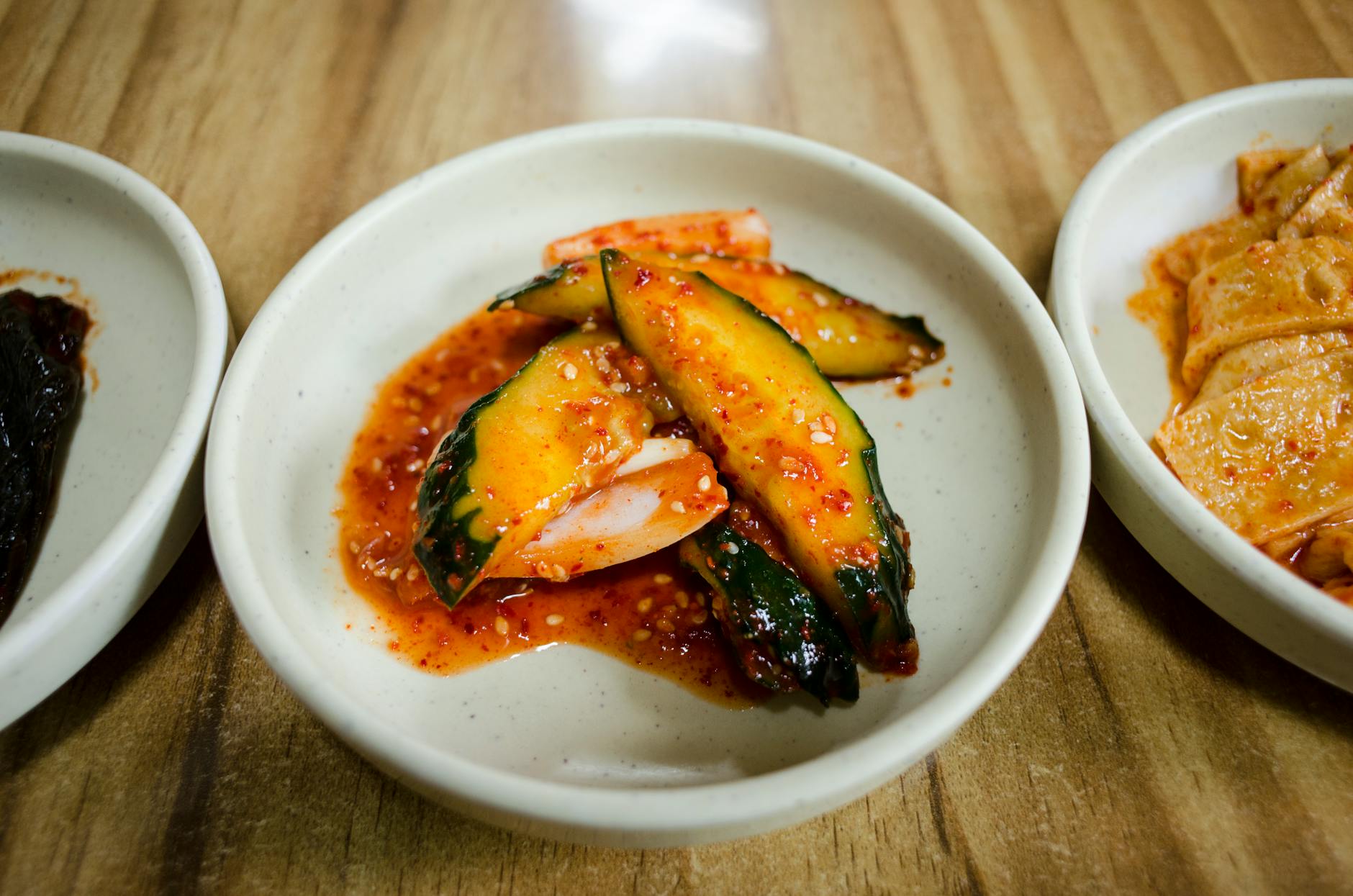
Incorporating Kimchi Into a Brain-Healthy Diet and Lifestyle
For those interested in potentially leveraging kimchi’s protective effects, integration into a regular diet appears straightforward, though realistic portion sizes matter. Most studies showing protective associations involved consumption of approximately one-quarter to one-half cup of kimchi daily, often as part of meals rather than as an isolated supplement. At this level, kimchi provides meaningful probiotic exposure while remaining compatible with typical eating patterns in cultures where it is consumed regularly. The vegetable content also contributes fiber, vitamins, and minerals that support overall brain health beyond just the probiotic component. Kimchi works synergistically with other brain-protective dietary patterns, particularly the Mediterranean and mind diets—both of which strongly protect against dementia in their own right.
A practical approach involves making kimchi one component of a broader dietary strategy that emphasizes whole grains, leafy greens, berries, nuts, fish, and minimizes processed foods. Someone following a MIND diet might incorporate kimchi as a side dish several times weekly, alongside other fermented foods like yogurt, tempeh, and miso soup. This multimodal approach addresses multiple pathways to dementia risk reduction rather than depending on any single food. One important tradeoff: commercial kimchi products often contain high sodium levels, sometimes exceeding 400-600 mg per one-half cup serving. For individuals with salt-sensitive hypertension—itself a dementia risk factor—the sodium content could offset some cognitive benefits. Making homemade kimchi allows sodium control, though this requires time investment and proper fermentation knowledge to ensure safety and probiotic preservation.
Understanding Research Limitations and What We Cannot Yet Claim
While the meta-analysis strengthens evidence for an association between kimchi and lower dementia risk, important distinctions exist between association and causation. It remains possible that people who consume kimchi regularly differ from non-consumers in ways that themselves protect against dementia—higher education levels, better access to healthcare, higher socioeconomic status, or more Mediterranean dietary patterns overall. Some of the best research attempts to statistically account for these confounding factors, but no observational study can fully eliminate this possibility. Only randomized controlled trials—where researchers assign people to eat kimchi or a placebo for years while tracking dementia incidence—could definitively prove causation. Such trials are expensive, logistically complex, and slow-moving, so they remain uncommon in nutrition research.
Another limitation concerns the healthy user bias: people who actively seek out fermented foods for health reasons likely engage in other health-promoting behaviors like regular exercise, cognitive engagement, and medical follow-up. Studies attempt to control for these factors statistically, but imperfectly. Additionally, most studies included in meta-analyses involve participants in the United States, South Korea, or other developed nations; generalizability to other populations and dietary contexts remains uncertain. The evidence base, while promising, should not be interpreted as proof that kimchi alone prevents dementia. Dementia results from complex interactions between genetics, aging, vascular health, cognitive engagement, sleep quality, social connection, and multiple dietary components. Kimchi may represent one modifiable risk factor among many that collectively influence brain aging, but it is not a replacement for well-established protective factors like cardiovascular exercise, cognitive activity, Mediterranean-style eating, strong social relationships, and adequate sleep.

Other Fermented Foods and Complementary Brain Health Strategies
Beyond kimchi, other fermented foods may offer similar neurological protection through comparable mechanisms. Yogurt, kefir, sauerkraut, tempeh, miso, and kombucha all introduce beneficial bacteria during fermentation, though probiotic viability varies by product. Some research suggests that dietary diversity of fermented foods may be more protective than reliance on a single source. A person might consume kimchi three times weekly while incorporating yogurt with breakfast and miso soup twice weekly, creating diverse probiotic exposure.
This diversification also provides different nutrient profiles—miso offers salty umami compounds and soy-derived phytochemicals, while sauerkraut provides the vitamin K that supports bone and cardiovascular health. Alongside fermented food consumption, other demonstrated dementia risk-reduction strategies deserve equal emphasis. A 65-year-old interested in brain protection might combine regular kimchi consumption with aerobic exercise (the single strongest modifiable dementia risk-reduction factor), cognitive engagement like learning languages or musical instruments, Mediterranean-style eating patterns, seven to eight hours of quality sleep nightly, and active social engagement. This comprehensive approach addresses multiple dementia pathways simultaneously and provides benefits across overall health that extend beyond brain protection alone.
Future Research Directions and Emerging Evidence on Probiotics and Cognition
Ongoing research is beginning to identify which specific bacterial strains within fermented foods produce the strongest cognitive benefits. Early evidence suggests that Lactobacillus plantarum and Lactobacillus fermentum strains may be particularly relevant to brain health, potentially leading to more targeted probiotic products designed specifically for dementia prevention. Future studies may also clarify optimal dosing—how much kimchi is needed, how frequently it should be consumed, and at what life stage consumption begins to matter most for brain protection.
Emerging evidence also explores whether probiotic interventions, delivered as supplements rather than foods, can produce measurable dementia prevention effects. If they do, this would suggest that the probiotic bacteria themselves matter more than the kimchi vehicle. However, current evidence remains strongest for whole fermented foods rather than isolated bacterial strains, possibly because whole foods provide additional compounds that enhance probiotic survival and effectiveness.
Conclusion
A meta-analysis examining multiple studies has identified a meaningful association between regular kimchi consumption and approximately 34 percent lower dementia risk. This finding reflects broader recognition that gut microbiota health influences brain aging through multiple mechanisms including inflammation reduction, neurotransmitter production, and communication along the gut-brain axis. While the evidence remains associational rather than definitively causal, the consistency of findings across studies, the plausibility of biological mechanisms, and the safety of incorporating fermented foods into typical diets make kimchi a reasonable component of dementia risk reduction strategies.
For those interested in leveraging these findings, integration of kimchi into a broader brain-healthy lifestyle appears most promising. Consuming approximately one-quarter to one-half cup of kimchi several times weekly, combined with cardiovascular exercise, Mediterranean-style eating patterns, cognitive engagement, quality sleep, and strong social connections, addresses dementia risk through multiple evidence-supported pathways. While kimchi alone cannot prevent dementia, it may contribute meaningfully to brain health when incorporated within a comprehensive approach to aging well.
You Might Also Like
- Meta Analysis Finds whole grains Linked to 28 Percent Lower Dementia Risk
- Meta Analysis Finds walnuts Linked to 67 Percent Lower Dementia Risk
- Meta Analysis Finds turmeric Linked to 67 Percent Lower Dementia Risk
For more, see NIH MedlinePlus — dementia.