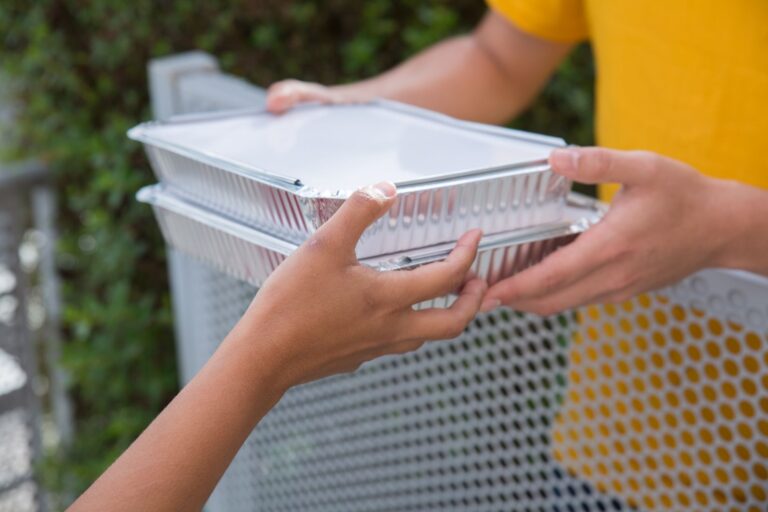
Meal delivery can relieve dementia families during the current caregiver shortage when paired with staffing backup, safety checks, and menu checks. Home-delivered meals are prepared meals brought to homebound older adults, often arranged through a local aging agency. They do not replace supervision, personal care, or medical advice.
In 2024 nearly 12 million Americans gave over 19 billion hours of unpaid Alzheimer's and dementia care, valued at $413.4 billion, according to the Alzheimer's Association's November caregivers awareness report. The U.S. Bureau of Labor Statistics projects 18% employment growth for home health and personal care aides from 2025 to 2035.
Medical information disclaimer: This article is for general educational purposes only and does not provide medical advice, diagnosis, or treatment. Always consult a physician or other qualified health professional about symptoms, medications, tests, or treatment decisions.
Table of Contents
- Why is staffing part of the meal plan?
- What do home-delivered meals provide?
- How do you check safety at delivery?
- Is the menu a good fit for dementia?
- What can families do this week?
- Frequently Asked Questions
Why is staffing part of the meal plan?
Family caregivers are stretched thin on meals and daily tasks after billions of hours of unpaid dementia care. Paid help remains scarce, and federal projections point to continued demand for home health and personal care aides.
That gap affects routines like shopping, cooking, reheating, and staying present at meals. Families need a delivery plan plus a people plan for who receives food, stores it, and supervises eating.
What do home-delivered meals provide?
According to the Administration for Community Living, Older Americans Act Title III-C home-delivered meals serve mainly homebound adults age 60 and older, with local nutrition program details. Details vary locally and there is no federal income or means test, so families should contact the local Area Agency on Aging.
The same Administration for Community Living source says funded meals must follow the Dietary Guidelines for Americans and supply at least one-third of Dietary Reference Intakes per meal. They must also meet state and local food-safety rules and appeal to older adults.
How do you check safety at delivery?
The FDA Food Code requires cold holding at 41°F or below and hot holding at 135°F or above, according to the FDA's current Food Code. Food kept in the 41–135°F danger zone is discarded after 4 hours cumulatively.
Check arrival temperature, confirm hot foods arrive hot and cold foods arrive cold, and refrigerate promptly. Keep delivery times, reheating instructions, and a food thermometer in one visible spot.
Is the menu a good fit for dementia?
Dementia-related swallowing problems raise choking and aspiration risk. Government dementia-care guidance from nidirect urges soft moist single-texture foods, avoiding hard, dry, lumpy or mixed-texture items, plus upright seating, mealtime supervision, and speech-language referral, described in its dementia eating and drinking guidance.
Ask for soft or pureed menus when chewing, coughing, pocketing food, or wet voice occur. A Sept. 30, 2025 JAMA Network Open qualitative study of 54 meal recipients, mean age 75.9, found the program met goals to reduce hunger, food insecurity and malnutrition while supporting socialization and well-being, but the small interview-only sample limits generalizability.
What can families do this week?
Match delivery days to days when someone can receive, store, and watch the meal. Share swallowing concerns, texture needs, allergies, and dentition issues before the first order. Call the local Area Agency on Aging to confirm current menus and delivery days.
- Confirm eligibility, schedule, and menu choices with the local Area Agency on Aging
- Arrange who meets the driver, checks temperature, and refrigerates food
- Request soft, moist, single-texture or pureed options when needed
- Plan upright seating and supervision, and ask the clinician about speech-language referral
Frequently Asked Questions
Who handles eligibility questions for home-delivered meals?
Contact the local Area Agency on Aging, because local agencies set program details and there is no federal income test.
What texture should families request for swallowing problems?
Ask about soft moist single-texture or pureed menus, avoid hard, dry, lumpy or mixed textures, and use upright seating with supervision.