The LiBBY trial found that twice-daily THC/CBD oil eased agitation in late-stage dementia. Benefit came with safety limits spouses and partners must weigh with clinical teams.
LiBBY stands for Life's End Benefits of cannaBidiol and tetrahYdrocannabinol, a Phase 2 study of agitation — restlessness, aggression, and distress — near end of life. Topline results were reported July 14, 2026 at AAIC in London, according to the Alzheimer's Association/AAIC in the AAIC topline announcement. The trial enrolled hospice-eligible older adults with major agitation, not people with early memory loss.
Medical information disclaimer: This article is for general educational purposes only and does not provide medical advice, diagnosis, or treatment. Always consult a physician or other qualified health professional about symptoms, medications, tests, or treatment decisions.
Table of Contents
- Who took part in LiBBY?
- What dose and design did researchers use?
- How much did agitation change?
- What safety signals limit the findings?
- What can spouses and partners do now?
Who took part in LiBBY?
LiBBY enrolled 120 hospice-eligible participants with Alzheimer's or other dementia and major agitation, according to NeurologyLive. Participants joined across 10 U.S. sites, with a mean age of 80.
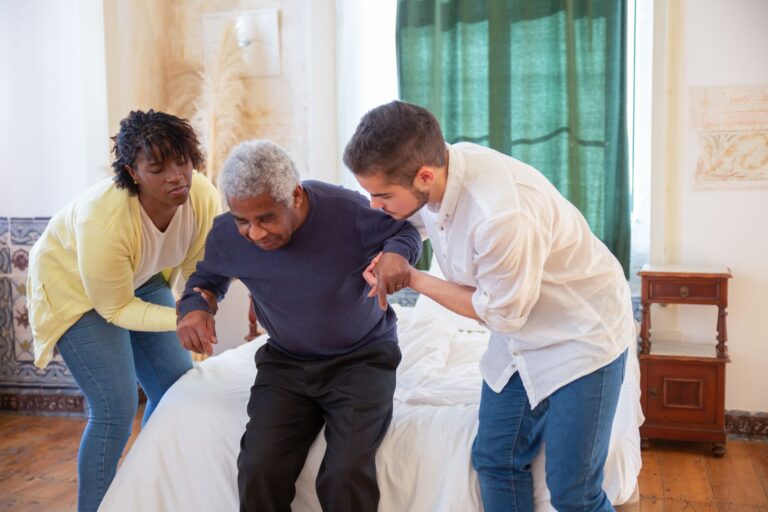
Study visits took place in homes and residences to include patients near end of life. That home-based design matters for spouses and partners providing late-stage care. It shows research can reach people who cannot travel to clinics. It does not show the approach works in earlier dementia or mild restlessness.
What dose and design did researchers use?
Participants received a novel oral oil with 2 mg THC plus 100 mg CBD twice daily, called T2:C100, versus placebo for 12 weeks. The design was multicenter, randomized, and double-blind, according to the Alzheimer's Association/AAIC. Neither families nor study clinicians knew who received active oil during the trial.
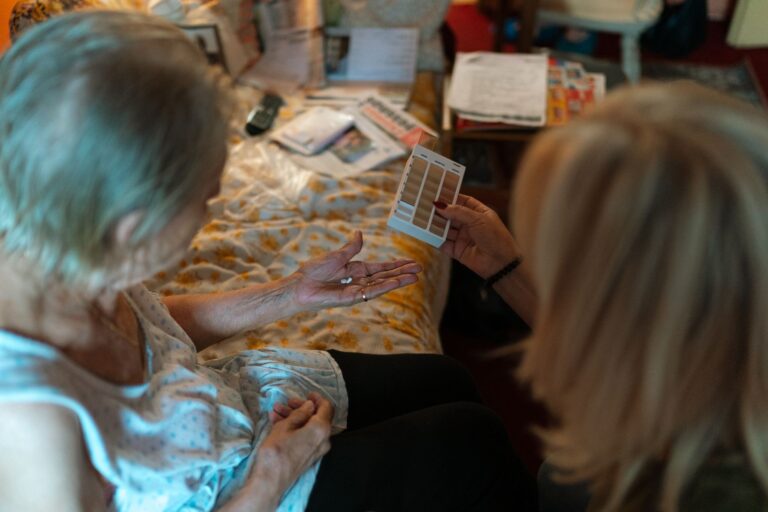
This was a purified, supervised formulation with a set dosing system. It was not dispensary or over-the-counter cannabis, according to NeurologyLive. Dose, purity, and supervision affect what the result can mean.
How much did agitation change?
Agitation fell more with THC/CBD than placebo at week 2, with CMAI scores down 10.61 points versus 4.35 points, p equals 0.0004, according to NeurologyLive. Benefit lasted through week 12, with an overall AUC contrast of minus 8.23. A larger drop means less frequent or severe agitated behavior.
Clinician-rated global improvement reached 83.9% at week 2 and 87.2% at week 12 with treatment, versus 30.5% and 23.6% with placebo, p less than 0.0001, according to Georgetown University School of Medicine in the Georgetown University summary. The school described this as nearly 9 in 10 improved. Global rating reflects overall clinical impression, not only one symptom score.
What safety signals limit the findings?
Overall adverse events were similar, but serious events were higher with THC/CBD at 23.3% versus 11.9%, driven by serious infections, with more deaths at 13.1% versus 5.1%, according to NeurologyLive in the NeurologyLive trial summary. This was a small Phase 2 conference presentation, not yet a peer-reviewed publication.
For a spouse or partner, the contrast is direct: less agitation alongside more serious illness events. The result cannot separate drug effect from frailty, infection risk, or chance. Larger study is needed before benefit can outweigh harm for any individual.
What can spouses and partners do now?
Discuss agitation care and trial evidence with hospice and clinical teams rather than substitute retail cannabis, according to the Medical University of South Carolina. Late-stage home-based trial participation proved feasible, but benefits and infection and mortality signals need larger study.
Retail products differ in dose, purity, and oversight. Bring a one-page note on agitation triggers, sleep, medicines, and what calms or worsens episodes to the next hospice visit.
- Track when agitation rises, what precedes it, and what calms it
- Ask the hospice team about pain, sleep, medicines, and daily routine changes
- Ask what the LiBBY dose and safety pattern would mean for this patient
- Do not replace prescribed care with a store-bought cannabis oil
You Might Also Like
- p-tau217 Findings a Decade Before Alzheimer’s Symptoms in 2026: Study Design and Evidence Limits for Spouses and Partners
- AAIC 2026 p-tau217 Alzheimer’s Risk Prediction Research: Study Design and Evidence Limits for Spouses and Partners
- The $100 Million PROTECT-Cog Alzheimer’s Study Announced in 2026: Who Was Studied and Who Was Not for Spouses and Partners