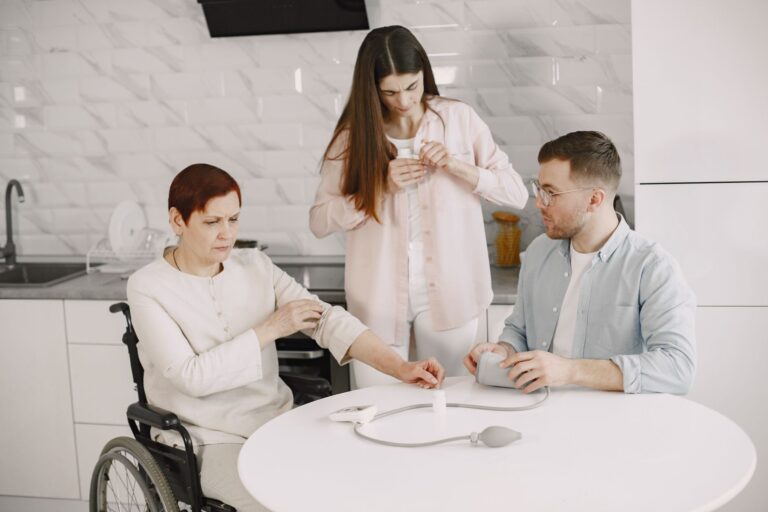
In-home dementia care for a spouse means paid or coordinated help that supervises, assists with daily tasks, and keeps the home safer. It works best when you match staffing to needs, fix wandering risks, and check agency quality before hiring.
Custodial supervision means staying with the person to keep them safe. Skilled care means nursing or therapy for a medical need. Spouses often need both at different times.
Medical information disclaimer: This article is for general educational purposes only and does not provide medical advice, diagnosis, or treatment. Always consult a physician or other qualified health professional about symptoms, medications, tests, or treatment decisions.
Table of Contents
- What kind of help can come to your home?
- How do you reduce wandering and injury risk?
- How do you check aides and agencies?
- What if you need ongoing relief?
What kind of help can come to your home?
Short-term respite gives the caregiving spouse relief for a few hours to several weeks. The National Institute on Aging says respite can happen at home, in a facility, or at adult day care while the person with dementia is supervised. Medicare home health is narrower.
According to Medicare's home health coverage, Medicare covers part-time aide help with walking, bathing, linens, and feeding only while the patient is homebound and also getting skilled nursing or therapy from a Medicare-certified agency. It excludes 24-hour care, meal delivery, and custodial-only care. For eligible Original Medicare patients, the CMS GUIDE Model adds coordinated dementia care, a 24/7 support line, and caregiver training. It also reimburses program participants for respite, as described in the next sections.
How do you reduce wandering and injury risk?
In the middle stages of Alzheimer's, leaving the person alone becomes too difficult or dangerous. The Alzheimer's Association says preventing wandering and adding precautions throughout the home become central at that stage. The Association advises installing latches or deadbolts above or below eye level on exterior doors.
It also advises removing locks on interior doors and hiding an extra key near the door, according to the Association's home safety guidance. Check doors, windows, stoves, cleaning products, and medications in one pass. Repeat the check when behavior changes.
- Put door latches out of direct sight line.
- Remove bathroom and bedroom locks that trap.
- Keep a spare key reachable outside the home.
- Add night lights, grab bars, and clear walking paths.
How do you check aides and agencies?
Ask how many hours of dementia training aides receive. Federal rules set the staffing floor at 75 clock hours of nurse-aide training, and CMS surveys enforce at least 12 hours of aide in-service training every 12 months.
For Medicare-certified home health agencies, use Medicare's Care Compare. The Centers for Medicare & Medicaid Services publishes two home-health star ratings from 1 to 5 stars there, as explained in the CMS star-ratings page: Quality of Patient Care and Patient Survey ratings. Choose the agency that answers clearly and documents training, supervision, and backup.
- Compare star ratings for nearby agencies.
- Ask about aide turnover and backup coverage.
- Ask who supervises aides and how often.
- Request a written care plan with tasks and hours.
What if you need ongoing relief?
Medicare home-health and GUIDE do not cover full-time custodial supervision. Spouses needing ongoing relief must look beyond medical coverage to local support. The Centers for Medicare & Medicaid Services reports that GUIDE reimburses participants up to $2,500 per patient per year, inflation-adjusted, for in-home, adult-day, or facility respite with no patient cost-sharing, per the CMS GUIDE Model page.
That amount helps with breaks, but it is not full-time care. Contact your Area Agency on Aging through the Eldercare Locator at 1-800-677-1116 for local respite, support groups, and referrals. Caregiving spouses should also keep their own medical appointments and seek help early when sleep, mood, or health slips.