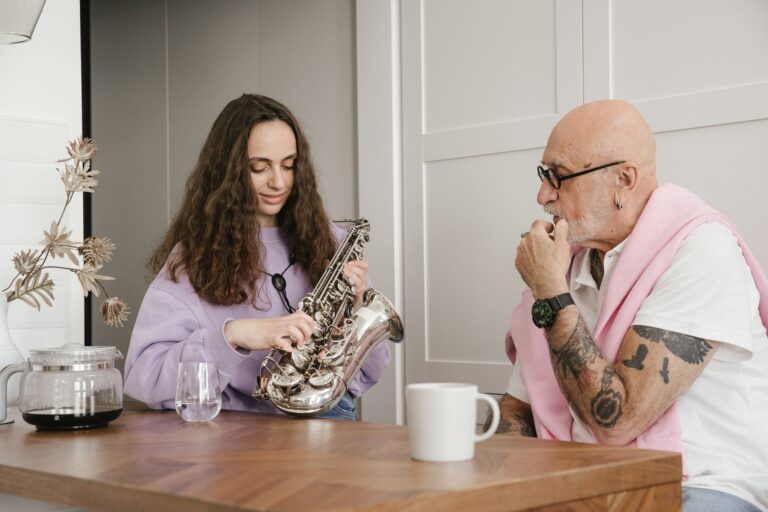
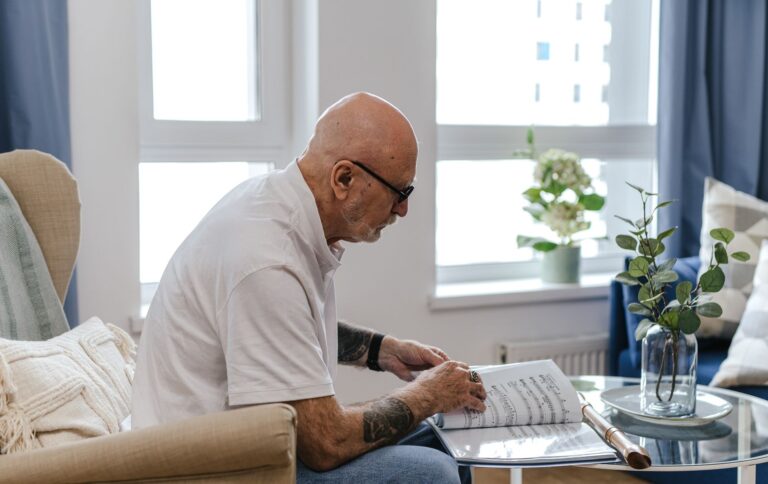
Track progress with a weekly practice log that notes the piece, minutes played, metronome start and end tempos, improved sections, and a short audio recording. Review those entries every four weeks inside a 2026 brain-health plan that also tracks exercise, sleep, social activity, and vascular care. A brain-health plan means a written weekly routine for habits linked to lower dementia risk. Music practice fits as cognitive stimulation and social activity, not as a solo shield.
Medical information disclaimer: This article is for general educational purposes only and does not provide medical advice, diagnosis, or treatment. Always consult a physician or other qualified health professional about symptoms, medications, tests, or treatment decisions.
Table of Contents
- What should you write down after each session?
- How is music practice linked to thinking?
- What should dementia caregivers track?
- Where does music fit in a full brain-health plan?
- How do you judge progress honestly?
- Frequently Asked Questions
What should you write down after each session?
Music educators recommend a short log that makes small gains visible over weeks in Muzart's 2025 progress-tracking guide. The guide points to piece title, minutes, metronome start and end tempos, improved sections, and audio recordings.
Use the same five lines each time so weeks stay comparable: Listen back at month's end with the log open. Keep the recording that shows steadier rhythm, fewer stops, or cleaner phrasing, then set next month's tempo target from that baseline.
- piece, date, and total minutes
- metronome start tempo and end tempo
- one or two sections that improved
- link or file name for a 1–2 minute recording
How is music practice linked to thinking?
Northeastern researchers found regular practice in children ages 7–9 was associated with distinct white-matter microstructure and higher vocabulary, math, and working-memory scores. The pattern links steady practice with brain structure and school-type skills, especially memory and learning.
For older learners, University of Sheffield and Western Sydney researchers found learning to play music, especially improvisation, improved cognitive skills such as learning and memory plus motor skills, described in the Sheffield study announcement. Improvisation means making up short phrases, varying rhythm, or trading simple musical answers. Log those tasks by name, such as "8-bar improvisation in C" or "call-and-response.".
What should dementia caregivers track?
Swinburne researchers reported an eight-week music-therapy program improved working memory, cognitive compensation, and executive function in people living with dementia, described in the Swinburne University report. Executive function means planning, focus, switching tasks, and self-control during daily steps. Track function, not perfection.
Note attendance, minutes engaged, songs completed, prompts needed, mood after the session, and one daily task such as following a two-step instruction. Bring the two-page monthly summary to care visits. Ask whether music sessions should continue alongside sleep support, hearing and vision checks, and medication review.
Where does music fit in a full brain-health plan?
WHO's second-edition guidance released July 15, 2026 recommends regular physical activity, cognitive stimulation, social activity, tobacco cessation, and control of hypertension and diabetes to reduce dementia risk, summarized in the United Nations report on WHO guidance. Music covers two slots at once: mental challenge and social time, especially group lessons, choirs, or family play-alongs. The Alzheimer's Association U.S.
POINTER trial tested a combined approach in 2,111 adults ages 60–79. Two years of exercise, MIND diet, cognitive-social challenge, and health monitoring improved cognition, with larger gains in the structured group. NIA-funded trials at UMaine and Rice are now testing whether 12-week music programs or active music creation improve memory, attention, and mental-health quality of life in adults 65-plus with normal cognition or mild impairment.
How do you judge progress honestly?
Treat tempo, accuracy, memory for pieces, and practice consistency as habit metrics. Rising end tempos, fewer restarts, longer remembered phrases, and steadier weekly minutes show the habit is working. Flat weeks still count when attendance stays steady through illness, travel, or caregiving load.
Northeastern notes its child study cannot prove lessons caused the gains. NIA notes no puzzle or brain-training app is proven to prevent Alzheimer's. Keep music, exercise, sleep, and blood-pressure and diabetes care together, and treat the log as proof of effort and skill growth rather than a dementia guarantee.
Frequently Asked Questions
How many practice days should the log show each week?
Aim for short, regular sessions you can repeat, such as five 20-minute sessions. Record missed days plainly so the monthly review shows the true pattern.
What is one clear sign to raise the difficulty?
Raise the target when you can play a passage cleanly at the end tempo on three separate days. Increase the metronome by a small step and log the new start point.