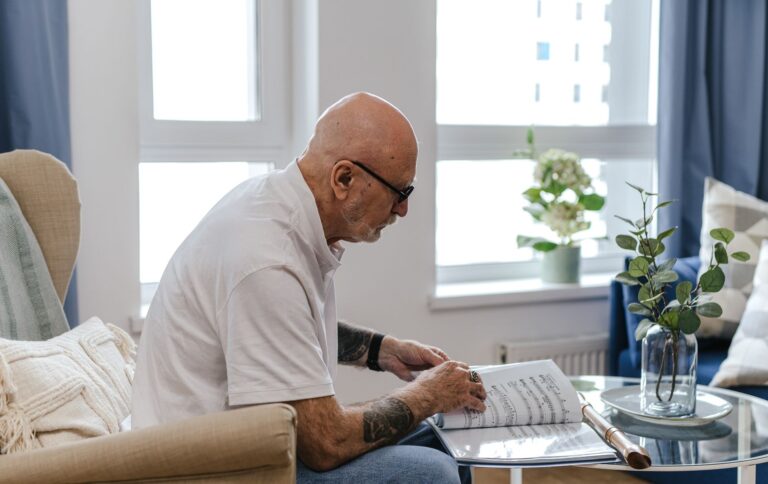
Ask if your plan includes daily music listening, regular instrument playing, or both, and what brain-health links each habit carries. Ask how you will stay consistent, what early change to expect, and how to interpret observational results. A brain health plan here means a weekly routine to support memory and thinking in later life. Cognitive impairment-no dementia means milder thinking problems that do not meet dementia criteria.
Medical information disclaimer: This article is for general educational purposes only and does not provide medical advice, diagnosis, or treatment. Always consult a physician or other qualified health professional about symptoms, medications, tests, or treatment decisions.
Table of Contents
- Should you listen, play, or do both?
- What does active playing add?
- What can beginners expect early?
- How do you build an honest weekly plan?
Should you listen, play, or do both?
Monash University followed 10,893 Australian adults age 70 and older without dementia at enrollment. Always listening to music was compared with never, rarely or sometimes listening. Always listening was linked to 39% lower dementia risk. It was also linked to 17% lower risk of cognitive impairment-no dementia from year 3 onward, Monash University reports in the Monash publication record. Monash University found often or always playing an instrument was linked to 35% lower dementia risk only.
It showed no clear link to milder impairment in the same group. People who both listened regularly and played had 33% lower dementia risk and 22% lower risk of cognitive impairment-no dementia than low-engagement peers. Pick the habit you will repeat weekly. Listening fits busy days and low energy. Playing fits people who want active practice and lessons.
- Daily listening habit: steady, low-effort exposure
- Regular instrument practice: active learning with timing and feedback
- Combined habit: listening plus playing across the week
What does active playing add?
The University of Geneva Archive describes a randomized trial of 132 healthy retirees ages 62-78. Six months of piano practice or listening lessons increased grey matter, the tissue that handles signals, in caudate nucleus, Rolandic operculum and inferior cerebellum. The University of Geneva Archive reports improved tonal and verbal working memory despite overall age-related brain atrophy in the Geneva trial record.
In that trial, piano learners kept grey matter stable in the right primary auditory cortex. The listening-awareness group showed decline in that hearing area. Ask your teacher how playing adds focused listening, timing and feedback.
What can beginners expect early?
ClassicFM reporting a University of Nottingham study describes novice adults learning Twinkle, Twinkle, Little Star in one violin lesson. Wearable scanners showed changed brain-activity patterns after that single lesson. Ask what one session can show and what needs months of practice. Northeastern University links regular instrument practice in children ages 7-9 to distinct white-matter structure in corpus callosum and superior longitudinal fasciculus.
White matter connects brain areas and supports fast signals. Those children also scored higher in vocabulary, math and working memory. Early change does not equal lasting protection. Plan for weekly lessons, short daily practice and simple songs. Track memory for daily tasks, mood and sleep.
How do you build an honest weekly plan?
Monash University notes its dementia-risk results are observational and adjusted only for age, sex and education, described in the Monash methods record. Music may track with healthier, more socially engaged lives rather than cause lower risk. Use music as one part of a broader brain-health routine.
Choose times you can keep for months. Pair listening with walks, meals or rest. Start with 20-minute listening blocks and two 30-minute practice sessions per week. Bring your schedule to your next clinic visit and ask how it fits sleep, exercise and social contact.
- Listen daily at a set time
- Practice one instrument in short sessions
- Combine both if energy allows
- Review consistency monthly with family or care team