Track hypertension — high blood pressure — in midlife by measuring at home each day with a strict rest and cuff routine and working to stay below 130/80 mm Hg. With a parent or sibling with Alzheimer's, feed that log into a prevention plan built around exercise, MIND diet, cognitive training and vascular-risk checks. Midlife hypertension is one of 14 modifiable risk factors that together account for about 45% of dementia cases worldwide, according to the 2024 Lancet Commission described in the HMRI summary of the commission. Family history raises personal concern because a first-degree relative with Alzheimer's increases risk, though it does not guarantee disease.
Medical information disclaimer: This article is for general educational purposes only and does not provide medical advice, diagnosis, or treatment. Always consult a physician or other qualified health professional about symptoms, medications, tests, or treatment decisions.
Table of Contents
- What number should you track toward?
- How do you get readings you can trust?
- Why does midlife pressure matter for later brain health?
- What does family history change in your plan?
What number should you track toward?
The 2025 AHA/ACC hypertension guideline sets the treatment goal below 130/80 mm Hg for most adults, as listed in the AHA high blood pressure highlights. It specifically recommends systolic pressure below 130 mm Hg to prevent mild cognitive impairment and dementia. Systolic pressure is the upper number in a reading.
Use that target as a tracking anchor, not a self-diagnosis. Bring your home log to primary care visits. Your clinician sets your personal goal and treatment.
How do you get readings you can trust?
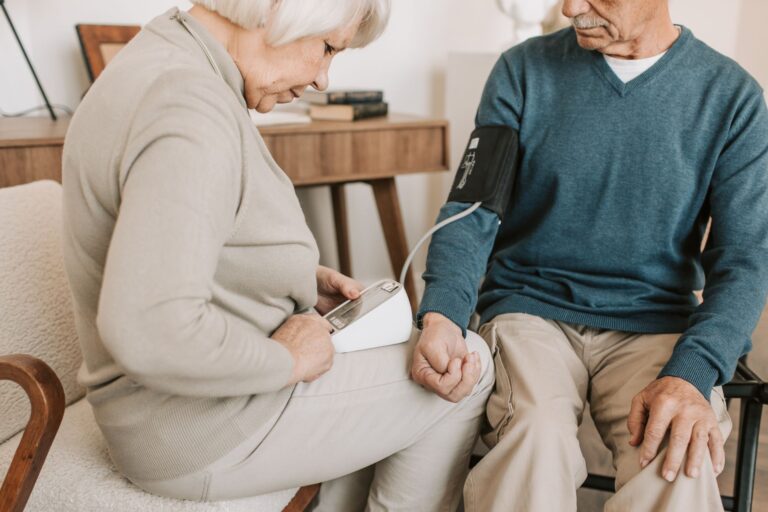
Home self-measured monitoring works only when technique stays the same each time. The CDC home-measurement advice recommends a quiet, seated routine with careful cuff placement and repeat readings.
Log both readings with date and time. Share the pattern across weeks, not one high day. Bring the cuff to a visit for a size and accuracy check.
- Measure at the same time daily after sitting quietly for 5 minutes
- Avoid caffeine, smoking or exercise for 30 minutes before
- Use a bare-arm cuff at heart level, then take two readings 1-2 minutes apart and log them
Why does midlife pressure matter for later brain health?
A 2025 study in Alzheimer's & Dementia found women with midlife hypertension had about 17% higher risk of any dementia than those without it. Risk was especially higher for vascular dementia later in life. Vascular dementia involves reduced blood flow to the brain.
SPRINT-MIND, described in a NIA trial summary, randomized 9,361 adults aged 50 and older to systolic targets below 120 versus below 140 mm Hg. Intensive control cut mild cognitive impairment by about 19%, but probable-dementia reduction was not statistically significant. NEJM Journal Watch notes the trial stopped early for heart benefits and was underpowered for dementia, so benefit is proven for mild impairment, not for dementia itself.
What does family history change in your plan?
The National Institute on Aging reports that people with a parent or sibling with Alzheimer's have higher risk than those without a first-degree relative. The increase reflects shared genes, environment and lifestyle. It is a risk signal, not a prediction. That makes steady vascular-risk monitoring more useful.
A 2-year structured program of exercise, MIND diet, cognitive training and vascular-risk monitoring improved cognition in at-risk older adults, according to Alzheimer's Association U.S. POINTER reports. The same program improved blood-pressure regulation of brain blood flow. Ask your clinician to review your pressure log alongside activity, diet, sleep, cholesterol and blood sugar at each check.