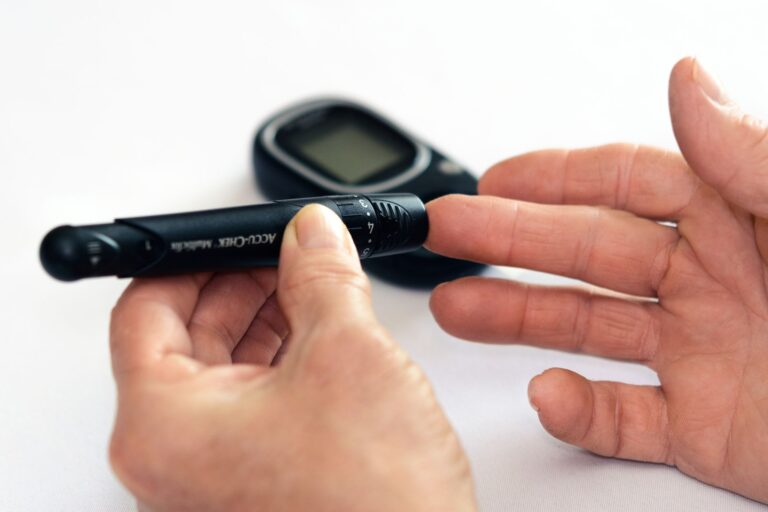
Track diabetes in midlife for dementia prevention by starting screening at age 35, learning your A1C number, and keeping blood sugar in target range with eating, activity, and medication if needed. A1C is a blood test that shows average blood sugar over about 2 to 3 months, and tracking it early gives you time to act. Family history of Alzheimer's raises the stakes because blood-vessel damage and inherited risk can combine. The National Institute on Aging says diabetes harms vessels throughout the body including the brain and increases risk for stroke, heart attack, and Alzheimer's.
Medical information disclaimer: This article is for general educational purposes only and does not provide medical advice, diagnosis, or treatment. Always consult a physician or other qualified health professional about symptoms, medications, tests, or treatment decisions.
Table of Contents
- Why family history raises the stakes
- When should you start testing in midlife?
- What does your A1C result mean?
- How often should you recheck it?
- What actions protect blood sugar and brain health?
Why family history raises the stakes
Diabetes does not only affect blood sugar. It injures small and large vessels that feed the brain, and the National Institute on Aging links that damage to higher risk for stroke, heart attack, and Alzheimer's. Managing diabetes along with hypertension, cholesterol, and depression can protect those vessels.
Risk grows with earlier onset and longer duration. Meta-analyses cited in a 2026 Springer review find type 2 diabetes raises risk of all-cause dementia, Alzheimer's disease, and vascular dementia, with pooled relative risks of roughly 1.3 to 1.8. Midlife control matters because years of high blood sugar add harm.
When should you start testing in midlife?
Start by age 35, not 45. The Centers for Disease Control and Prevention reports in its May 2024 screening update that U.S. guidance lowered the start age after expert updates, adding about 12 million newly eligible adults for prediabetes and type 2 diabetes testing.
Ask your clinician which test fits you and what follow-up fits your result. Bring a short family record: who had Alzheimer's, age at symptoms, and any known APOE e4 status. That history helps the clinician judge urgency without changing the basic screening rule.
What does your A1C result mean?
A1C is reported as a percent. The National Institute of Diabetes and Digestive and Kidney Diseases defines the ranges in its A1C test information: under 5.7 percent is normal, 5.7 to 6.4 percent is prediabetes, and 6.5 percent or higher meets the diabetes threshold.
Treat high prediabetes values as a stronger warning. The same source notes higher values within the prediabetes range carry greater diabetes risk. Ask what range you fall in, what may have pushed it up, and when to repeat the test.
How often should you recheck it?
Use a simple schedule tied to control. The American Diabetes Association advises in its 2026 Standards summary A1C checks at least twice yearly when stable and meeting goal, and about every 3 months when above goal or after treatment changes.
Many nonpregnant adults aim for below 7 percent, under the same Association guidance. Your target may differ with age, other illness, or low-blood-sugar risk. Write the agreed target on your lab slip so each result has a clear pass point.
What actions protect blood sugar and brain health?
Focus on habits that serve both goals. The Alzheimer's Association lists control of type 2 diabetes through healthier eating, increased physical activity, and medication if needed as one of 10 habits to lower cognitive decline.
Pair that plan with care for blood pressure, cholesterol, and mood. Make tracking easy to keep: People with both type 2 diabetes and an APOE e4 gene variant faced about 5.5 times higher Alzheimer's risk than people with neither factor in a Japanese-American men's cohort tracked by researchers cited by the National Institute on Aging.
- Keep one log with date, A1C, weight, blood pressure, and medicines.
- Bring the log plus home glucose readings, if you use them, to each visit.
- Ask after each change in dose or routine when to recheck A1C.
- Flag very high readings, frequent lows, chest pain, weakness, or vision change for prompt care.