Reviewed by the Help Dementia Editorial Team — our editors review every article for accuracy against guidance from the National Institute on Aging, the Alzheimer’s Association, and peer-reviewed sources.
Tracking dementia care needs involves documenting changes in a person’s cognitive abilities, physical health, and daily functioning through regular assessments, observation notes, and communication with healthcare providers. The most practical approach combines daily observation logs with scheduled medical appointments—for instance, noticing when your mother starts forgetting to take medications on her own and recording this pattern helps inform conversations with her doctor about whether medication management support is needed. Effective tracking creates a record that guides care decisions, prevents gaps in treatment, and helps coordinate support across family members and professionals.
Tracking becomes increasingly important as dementia progresses because symptoms evolve unpredictably, and small changes can signal the need for significant care adjustments. Without documentation, you may overlook warning signs or repeat information to different doctors, wasting time during already stressful appointments. A structured tracking system also protects your own memory—when you’re managing multiple responsibilities, written records are far more reliable than trying to remember exact dates or specific behavioral changes weeks later.
Table of Contents
- What Should You Track When Caring for Someone with Dementia?
- Practical Tracking Tools and Documentation Methods
- Recognizing and Recording Behavioral and Cognitive Changes
- Communicating Your Tracking Data to Healthcare Providers
- Common Challenges in Tracking Dementia Care Needs
- Involving Other Caregivers and Care Team Members
- Using Tracking Data to Plan for Future Care Needs
- Conclusion
What Should You Track When Caring for Someone with Dementia?
The core categories to monitor include cognitive changes (memory loss, confusion, difficulty with familiar tasks), behavioral shifts (aggression, withdrawal, sleep disruption), physical changes (weight loss, bathroom habits, mobility decline), and medication effects. In practical terms, if your father starts repeating the same questions within minutes when he never did before, that’s a cognitive change worth documenting. If he suddenly refuses to shower or becomes hostile during personal care, those are behavioral changes. If he’s eating less at meals or having trouble walking stairs, those are physical changes.
tracking these categories helps you distinguish between normal aging and dementia progression, and more importantly, helps your doctor identify which specific problems need intervention. Many families try to track “everything,” which becomes overwhelming—focus instead on what’s changing for this particular person. Someone’s dementia might primarily affect short-term memory while leaving their personality relatively stable, while another person experiences dramatic behavioral changes early on. Your tracking system should reflect that individual pattern.

Practical Tracking Tools and Documentation Methods
You can use a simple notebook, a shared Google Doc, a dedicated dementia care app, or even voice notes—the medium matters less than consistency. A notebook kept beside the kitchen table works fine if you’re the primary caregiver and remember to fill it daily. A shared online document makes sense if multiple family members need access; this prevents contradictory information and ensures everyone knows the current situation. Apps like CarePredict, Caring Village, or even a plain spreadsheet with dates and observations all serve the same fundamental purpose.
The main limitation of digital tools is privacy and learning curve—some seniors and their families feel uncomfortable with apps, and setting up new technology during a stressful time can backfire. A handwritten log also has the advantage that you’re forced to pause and reflect while writing, which can reveal patterns you’d miss scrolling through a list. However, handwritten logs can be lost or difficult to share with doctors. Consider starting simple: a notebook where you write one line daily about any significant changes, then bring that notebook or a typed summary to medical appointments. Once that habit sticks, you can explore whether a digital system would help your family.
Recognizing and Recording Behavioral and Cognitive Changes
behavioral changes often precede other symptoms or indicate that current care isn’t meeting the person’s needs. If your mother who always woke at 7 AM now wakes at 3 AM confused and anxious, that’s worth noting—it might indicate pain, medication side effects, or the need for a nightlight and bathroom accessibility. Cognitive changes like forgetting how to use familiar objects, getting lost in the house, or losing the ability to follow conversations are milestones that signal when different types of support are needed. An example: a man who was independent with laundry starts putting dirty clothes in the clean pile.
Initial documentation might read “confused about clean vs. dirty laundry on Tuesday,” but after two weeks of daily notes, you see this happens every time and is getting worse. You can then tell his doctor, “This has been consistent for two weeks and is affecting independence”—which is far more useful than saying “He’s getting confused.” The specific, dated pattern also helps rule out one-time incidents (forgetting once) versus genuine decline (forgetting consistently). Create brief, factual entries: date, time if relevant, what happened, any apparent trigger.

Communicating Your Tracking Data to Healthcare Providers
Doctors and specialists need specific, dated examples to make informed decisions about medication adjustments, therapy, or care level changes. Vague statements like “He’s gotten worse” are essentially useless in medical contexts. Bringing your tracking notes to appointments—or having a one-page summary of recent patterns—transforms the conversation from relying on the doctor’s clinical observation during a brief visit to incorporating weeks of real-world observations from the person who spends the most time with your loved one. The tradeoff here is between detailed documentation and overwhelming your doctor.
A specialist doesn’t need every single note; they need the pattern. If you’ve recorded 30 incidents of confusion over six weeks, summarize: “Memory confusion has increased from once weekly to almost daily over the past month.” Highlighting the progression matters more than volume. When bringing notes to an appointment, organize them by category (cognitive, behavioral, physical, medication side effects) so the doctor can quickly find relevant information. This converts you from a bystander in care decisions into an informed partner.
Common Challenges in Tracking Dementia Care Needs
One significant challenge is caregiver fatigue—tracking takes mental energy, and when you’re exhausted from caregiving, keeping notes feels like one more burden. Many families start strong documentation but it lapses after a few weeks. A practical solution is lowering expectations: writing one sentence daily is better than elaborate notes once weekly, because patterns emerge from consistency, not detail. Another challenge is that some changes are subtle or develop gradually, making it hard to pinpoint exactly when something shifted.
Your tracking system helps because even vague observations accumulate into obvious patterns over time. A warning: do not let tracking become a substitute for enjoying time with your loved one. If you’re so focused on documenting behavior that you’re not present during interactions, reconsider your approach. Also be aware that sharing detailed notes with multiple family members sometimes creates conflict—a sibling reading “Mom refused to eat again today” may draw different conclusions than the primary caregiver who knows Mom was nauseous from medication. Keep communication open about what changes mean rather than just sharing raw observations.

Involving Other Caregivers and Care Team Members
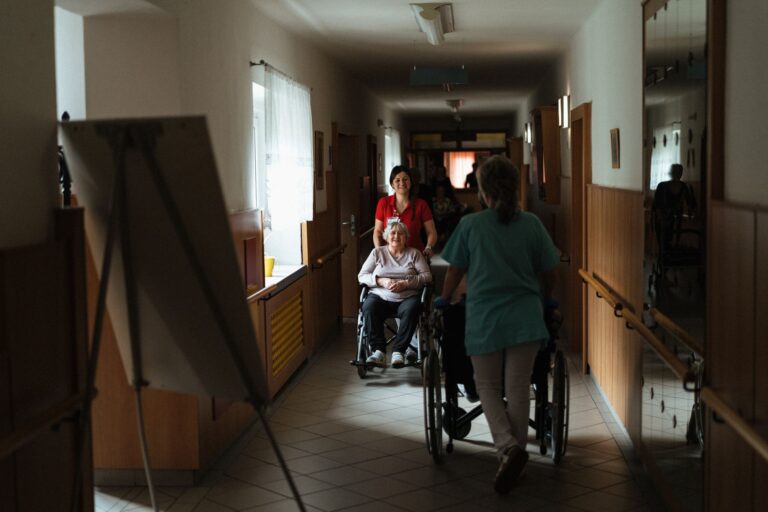
If your loved one receives care from a nursing home, adult day program, or home health aide, those providers also observe important patterns. Some facilities have formal logs; others rely on shift-to-shift communication. The most effective approach includes both your personal tracking and information shared by paid caregivers.
If your mother attends adult day care three days weekly and your notes only cover nights and weekends, you’re missing daytime behavioral patterns. Ask caregivers specifically: “Did Mom seem confused today?” or “Did she eat her meals?” rather than “How was she?”—specific questions get more useful answers. Create a simple form or shared document where caregivers can note significant observations, which takes minimal time but fills critical gaps. A nursing home, for instance, might notice your father sleeps poorly on certain nights or becomes agitated before certain activities—information you wouldn’t have access to otherwise.
Using Tracking Data to Plan for Future Care Needs
Your documentation becomes the foundation for major care decisions: whether someone can remain home alone, needs medication management support, or requires facility-based care. Patterns in your tracking data should inform these discussions. If your notes show that your husband gets lost leaving the house and leaves the stove on regularly, that’s concrete evidence that independent living isn’t safe, which is harder for him to argue with than general assertions.
As dementia progresses, tracking also helps you anticipate needs rather than scrambling to respond to crises. If your mother’s bathroom accidents are increasing weekly, it makes sense to discuss toileting supports, scheduled bathroom breaks, and potentially specialty clothing before this becomes a daily emergency. The goal isn’t just documenting what’s happening but using that documentation to stay one step ahead, making care adjustments proactively rather than reactively.
Conclusion
Tracking dementia care needs is fundamentally an act of attentiveness and planning—it transforms scattered observations into a useful tool for medical decision-making, family coordination, and predictive care planning. Whether you use a notebook or an app, the key is consistency and specificity: dated observations of what’s changing, recorded in enough detail that patterns become clear but concise enough that you actually maintain the system.
Start simple, focus on changes relevant to your specific situation, and bring your observations to medical appointments as an active contributor to care planning. Over time, your tracking system becomes an irreplaceable record that guides decisions, communicates needs across multiple caregivers, and helps you provide the most appropriate care at each stage of dementia’s progression.