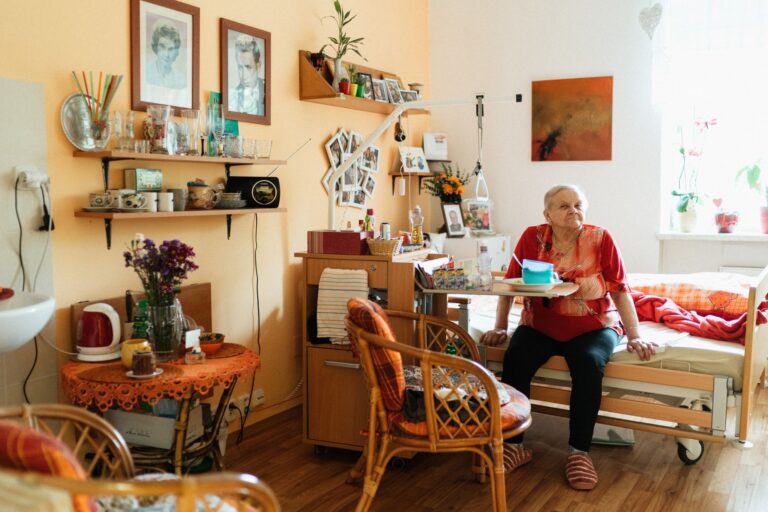
Simplify a familiar music session for one-on-one dementia care by stripping it down to one listener, one quiet room, and one playlist of songs the person already loves. The fewer decisions and distractions in the room, the more the music can do its job.
A one-on-one session works differently than playing music for a group. It lets a caregiver watch one person's reactions and adjust in real time, something the Relias caregiver training summary identifies as the advantage of individual sessions over shared listening. That focus is also what makes simplification possible: with just one listener, a caregiver can control every variable — song choice, volume, room noise — instead of compromising across a group's different tastes and tolerances.
Medical information disclaimer: This article is for general educational purposes only and does not provide medical advice, diagnosis, or treatment. Always consult a physician or other qualified health professional about symptoms, medications, tests, or treatment decisions.
Table of Contents
- Start With Music the Person Already Knows
- Control the Room Before You Press Play
- Build a Playlist Once, Then Reuse It
- What the Music Can Realistically Do
- Using Music to De-escalate an Agitation Episode
- Frequently Asked Questions
Start With Music the Person Already Knows
The first and most important simplification is song selection. The Alzheimer's Association advises caregivers to choose music the person already knows and enjoys, and to let the person pick the music themselves whenever they're still able to do so. Familiarity does the work that a varied or "enriching" playlist can't.
This means resisting the urge to introduce new music, even music a caregiver personally likes or thinks might be soothing. A session built around five or six well-loved songs, repeated across visits, is simpler to plan and more reliable in effect than a constantly rotating selection. If the person can no longer name songs or artists, caregivers can build a short list from decades they associate with strong memories — young adulthood is often the richest source — and test reactions one song at a time rather than guessing at a whole album or era.
Control the Room Before You Press Play
Simplifying the environment matters as much as simplifying the song list. The Alzheimer's Association recommends removing competing noise before starting — shutting windows and doors and turning off the television — and keeping the volume moderate rather than loud, since overstimulation can undo the calming effect the music is meant to provide. A single, predictable signal is easier for someone with dementia to process than a room with multiple sounds competing for attention.
One speaker, one volume level, one source — no background chatter from another room, no second screen running nearby. The same source should also be free of interruptions. The Alzheimer's Association notes that commercial breaks can confuse someone with dementia and break the simplicity of the experience, so a saved playlist or ad-free source works better than live radio or a streaming tier with ads.
Build a Playlist Once, Then Reuse It
A tested approach is to build one individualized playlist rather than assembling music fresh for each visit. A guide for creating these playlists was evaluated in a randomized trial published in the Journal of Alzheimer's Disease in 2020, which found quality-of-life improvements over a six-week period among caregivers who used it.
A follow-up study on the same guide, reported in 2021, found that caregivers described the simplified guidelines as easy to understand and apply at home — without needing a trained music therapist present. That's the core appeal for one-on-one home care: a family member or aide can set up a working playlist once and reuse it, rather than treating music as something that requires professional facilitation every time. Once a playlist is built and tested, the session itself becomes repeatable: same songs, same room setup, same quiet environment, every time.
What the Music Can Realistically Do
Music chosen this way has a real, documented effect on behavior. The Alzheimer's Association states that studies have shown music can reduce agitation and improve behavioral problems common in the middle stages of Alzheimer's disease. Dementia Australia adds that familiar music can encourage fond memories and promote a sense of calm and security, and can serve as a useful distraction from the stress that caregiving itself creates for both parties.
These effects aren't guaranteed to last. A quasi-experimental study of 51 adults with dementia using personalized music through headphones found mixed results: smiling and calmness moved in different directions during the session compared with afterward. A single simplified session calms the moment; it doesn't necessarily carry the effect forward on its own. That's a reason to treat the playlist as a recurring tool rather than a one-time fix — something to repeat at the same time of day, or whenever agitation starts to build, rather than something saved for occasional use.
Using Music to De-escalate an Agitation Episode
Some researchers are testing whether the order of songs within a playlist matters for calming someone down in the moment. An ongoing three-arm randomized controlled trial in Hong Kong, registered as NCT06104436, is comparing a personalized playlist sequenced using the "ISO principle" against an unordered preferred-music playlist and usual care, specifically for de-escalating agitation episodes in 81 participants with dementia.
The ISO principle sequences songs to match, then gradually shift, a person's emotional state — starting with music that mirrors their current mood and moving toward calmer selections. For a caregiver simplifying a session at home, the practical takeaway is to not just pick favorite songs but also think about order: starting with something familiar and energizing before easing into quieter, slower pieces may do more than playing the same songs in random order. This trial's results aren't final, but the design itself offers a usable framework now — order the playlist deliberately rather than shuffling it, and save the calmest songs for last.
Frequently Asked Questions
How many songs should a simplified playlist include?
There's no fixed number in the research, but caregiver guides tested in the Journal of Alzheimer's Disease trial favor a short, individualized list the person already knows over a long or varied one, since familiarity drives the effect.
Should the person with dementia choose the songs?
Yes, whenever they're able to. The Alzheimer's Association recommends letting the person pick the music themselves as the starting point, and falling back to music known to have been meaningful to them when they can't.
Does the order of songs in a session matter?
It may. The ongoing Hong Kong trial (NCT06104436) is specifically testing whether sequencing songs by the ISO principle — matching current mood, then shifting toward calm — outperforms an unordered familiar playlist for de-escalating agitation.