Managing type 2 diabetes in elderly patients requires a fundamentally different approach than treating younger adults. The primary goals shift away from aggressive glucose control and toward preventing hypoglycemia, preserving function, and maintaining quality of life. For most older adults with type 2 diabetes, a target HbA1c of 7.5% to 8.5% is appropriate — looser than the under-7% target often cited for younger patients — because tight control in this population carries real risks of dangerous blood sugar crashes, falls, and hospitalizations.
A 78-year-old with moderate cognitive decline, for example, may not recognize hypoglycemia symptoms or be able to respond appropriately, making overly strict glucose targets more harmful than helpful. The core of management involves individualized medication selection, dietary adjustments that account for reduced appetite and swallowing changes, regular but safe physical activity, and coordinated care between primary physicians, endocrinologists, and often geriatric specialists. This article covers how to set appropriate glycemic targets, which medications are safest in older adults, how cognitive decline complicates self-management, and practical strategies for caregivers supporting an elderly person with this condition.
Table of Contents
- What Are the Right Blood Sugar Targets for Elderly Patients with Type 2 Diabetes?
- Which Diabetes Medications Are Safest for Older Adults?
- How Does Cognitive Decline Complicate Diabetes Self-Management?
- Dietary and Nutritional Management in Elderly Diabetic Patients
- Fall Risk, Exercise, and Physical Activity Considerations
- Monitoring Blood Sugar in Elderly Patients — How Much Is Enough?
- Coordinating Care Across Multiple Providers
- Conclusion
- Frequently Asked Questions
What Are the Right Blood Sugar Targets for Elderly Patients with Type 2 Diabetes?
Standard diabetes guidelines were largely built on studies of middle-aged adults, and applying them directly to elderly patients can cause harm. The American Diabetes Association and the American Geriatrics Society both recommend stratifying older patients by health status. A relatively healthy 70-year-old with few other conditions and good cognitive function can reasonably aim for an HbA1c under 7.5%. A frail 85-year-old with heart failure, chronic kidney disease, and mild dementia should target somewhere between 8% and 8.5%, with some clinicians accepting up to 9% if hypoglycemia is a recurring concern. The reason for this loosening is straightforward.
Hypoglycemia in elderly patients causes dizziness, confusion, and falls — each of which carries serious downstream consequences including hip fractures, prolonged hospitalizations, and accelerated cognitive decline. One study published in JAMA Internal Medicine found that elderly diabetic patients who experienced even a single severe hypoglycemic episode had a significantly elevated risk of developing dementia in the following years. Preventing lows is, in many cases, more important than preventing highs in this population. A useful comparison: treating an 80-year-old to an HbA1c of 6.8% might look excellent on paper but could mean they’re spending hours each week in mild hypoglycemia without realizing it. Treating that same patient to an HbA1c of 8.2% might look like poor control but actually reflects a safer, more stable blood sugar pattern throughout the day.

Which Diabetes Medications Are Safest for Older Adults?
Metformin remains the preferred first-line agent for most elderly patients with type 2 diabetes, assuming kidney function is adequate. It does not cause hypoglycemia on its own, is inexpensive, and has decades of safety data. However, it must be used carefully when the estimated glomerular filtration rate (eGFR) drops below 45, and it should generally be stopped below 30 due to risk of lactic acidosis. Kidney function in older adults can decline quickly, so regular monitoring is essential — not a one-time check. Sulfonylureas like glipizide and glyburide are commonly prescribed but warrant caution. Glyburide in particular has a long active metabolite that significantly raises hypoglycemia risk in elderly kidneys.
Glipizide is the preferred sulfonylurea if one is needed, because it has a shorter duration. Even then, if a patient is eating inconsistently — common among those with dementia or poor appetite — sulfonylureas can cause dangerous lows. A patient who skips lunch after taking their morning dose is at real risk. GLP-1 receptor agonists such as semaglutide and liraglutide have become popular for their cardiovascular benefits and modest hypoglycemia risk, but they come with practical challenges in the elderly. Nausea, vomiting, and reduced appetite — already problems for many older adults — can worsen with these drugs, leading to malnutrition and unintended weight loss. SGLT2 inhibitors like empagliflozin carry risks of urinary tract infections, genital infections, and volume depletion, all of which are more dangerous in elderly patients who may already be dehydrated. These newer drug classes should be considered carefully, not automatically adopted because of their benefits in younger trial populations.
How Does Cognitive Decline Complicate Diabetes Self-Management?
Diabetes self-management is cognitively demanding. Patients must remember to take medications, monitor blood sugar, adjust diet, recognize symptoms, and respond appropriately to both highs and lows. Cognitive decline — whether from early Alzheimer’s disease, vascular dementia, or general age-related slowing — chips away at each of these abilities in sequence. Often, medication errors are the first visible sign that a patient can no longer safely manage their own diabetes. Consider a patient with mild cognitive impairment who has managed her own insulin injections for fifteen years.
She may begin drawing up incorrect doses, forget whether she took her morning medication and double-dose, or lose track of what she ate and miscalculate carbohydrates. These errors don’t happen all at once; they accumulate gradually, which is why caregivers and clinicians need to reassess self-management capacity regularly rather than assuming a patient who was capable last year is still capable today. One practical approach is simplifying the regimen as cognitive function declines. Switching from multiple daily insulin injections to a single long-acting basal insulin, or even transitioning off insulin entirely if glucose targets are relaxed appropriately, can reduce the cognitive load substantially. Pre-filled medication organizers, blister packs, or direct caregiver administration become necessary supports as independence decreases. The goal is matching the management regimen to the patient’s actual capacity, not the capacity they had five years ago.
Dietary and Nutritional Management in Elderly Diabetic Patients
Diet management for elderly patients with type 2 diabetes involves navigating a genuine tension between glycemic control and nutritional adequacy. Restricting carbohydrates can help manage blood sugar, but many elderly patients already eat too little and lose weight unintentionally. Aggressive dietary restriction in someone who is already underweight or malnourished does more harm than good. In these cases, the priority shifts to ensuring adequate caloric intake, even if that means accepting somewhat higher blood sugar readings. For patients with good appetite and stable weight, a moderate carbohydrate approach — spreading carbohydrates evenly across three meals rather than eliminating them — works better than low-carb diets in practice.
Consistency in meal timing matters as much as carbohydrate quantity, particularly for patients on sulfonylureas or insulin. Skipping meals is a primary driver of hypoglycemia in this group. Swallowing difficulties (dysphagia) are common in elderly patients, particularly those with neurological conditions, and they can significantly limit food choices. A patient on a pureed diet has very different nutritional constraints than one who eats normally. Dietitians familiar with geriatric care can be invaluable here, offering texture-modified meal plans that still provide appropriate nutrition without causing aspiration. This is an area where generic diabetes dietary advice — eat more vegetables, avoid processed foods — fails to account for the realities of aging.
Fall Risk, Exercise, and Physical Activity Considerations
Exercise improves insulin sensitivity, supports weight management, and benefits cardiovascular health — all relevant to diabetes management. But for elderly patients, the type and intensity of exercise must be chosen carefully. Falls are the leading cause of injury-related death in older adults, and certain exercise recommendations common in diabetes care can actually increase fall risk if not adapted. Balance training and resistance exercise are generally safer and more beneficial than high-intensity aerobic activities for frail or deconditioned patients. A warning: patients on insulin or sulfonylureas should check blood glucose before exercise and carry a fast-acting carbohydrate source.
Exercise lowers blood sugar, sometimes significantly, and an elderly patient who exercises in the afternoon without eating adequately may experience hypoglycemia during or after the activity without recognizing the symptoms. This risk is magnified in patients who use beta-blockers for heart conditions, since these drugs blunt the heart-rate warning signs of a low. Chair-based exercises, short walks after meals, and gentle resistance band work are practical starting points for sedentary elderly patients. Physical therapists can assess fall risk and design safe programs. The goal is not athletic performance but functional maintenance — preserving the strength and balance needed to live independently, or at least to reduce injury risk for those who are not independent.

Monitoring Blood Sugar in Elderly Patients — How Much Is Enough?
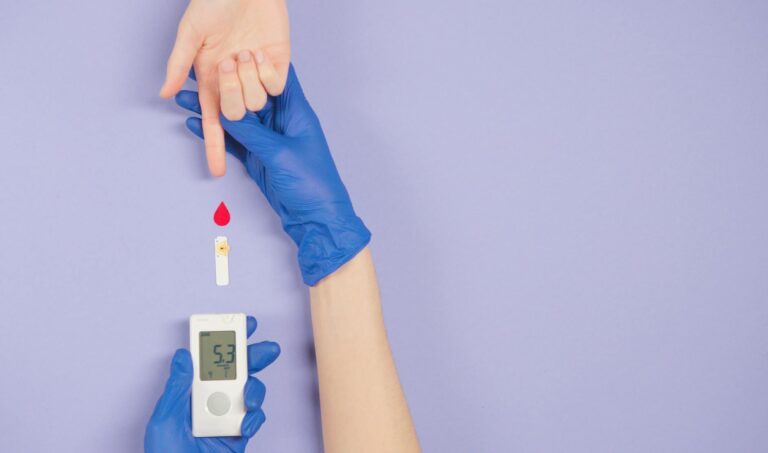
Frequent self-monitoring of blood glucose can be burdensome and painful for elderly patients, particularly those with arthritis, vision problems, or cognitive decline. For patients managed with diet and oral medications that carry low hypoglycemia risk, daily finger-stick testing is often unnecessary and can be safely reduced to a few times per week or during illness. For those on insulin, more frequent monitoring remains important, but continuous glucose monitors (CGMs) offer a less painful alternative.
CGMs like the Dexterity G7 or Libre 3 can alert caregivers to low blood sugar episodes even when the patient cannot recognize or report them — a meaningful benefit in someone with dementia. However, the devices require someone to review the data and act on it, which returns to the importance of caregiver involvement. A CGM on a patient living alone with no support structure provides limited real-world benefit.
Coordinating Care Across Multiple Providers
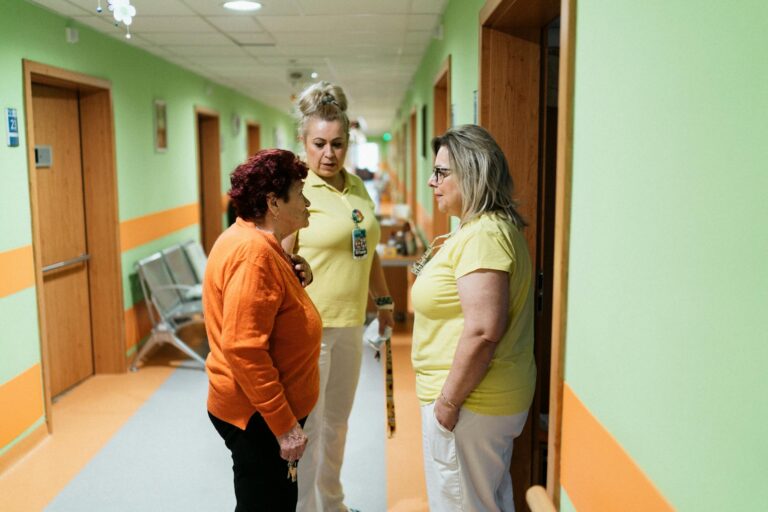
Elderly patients with type 2 diabetes rarely see just one physician. They may have a primary care doctor, an endocrinologist, a cardiologist, a nephrologist, and possibly a geriatrician or memory care specialist. Each may prescribe medications without full visibility into the others’ decisions.
Polypharmacy — the use of five or more medications — is nearly universal in this population and significantly increases the risk of drug interactions and adverse effects relevant to diabetes management. Regular medication reconciliation by a pharmacist or care coordinator is one of the most effective interventions available. The coming years are likely to bring better digital integration between provider systems, but until then, patients and caregivers should maintain a single updated medication list and share it at every appointment. Family members attending medical visits can ask explicitly whether any new medications interact with existing diabetes drugs — a simple question that providers may not volunteer.
Conclusion
Managing type 2 diabetes in elderly patients is fundamentally about balancing effective glucose control against the real-world risks that come with aging: hypoglycemia, falls, cognitive decline, malnutrition, and medication complexity. The key shift from standard diabetes management is accepting looser glycemic targets in exchange for greater safety, simplifying medication regimens as function declines, and regularly reassessing what the patient can realistically manage on their own. No single protocol fits every older adult with diabetes; the approach must be calibrated to the individual’s health status, cognitive capacity, and life situation.
Caregivers play an outsized role in making this management work in practice. Recognizing the signs of hypoglycemia, ensuring consistent meal timing, managing medications, and communicating changes to the care team are tasks that fall largely to family members or professional care staff as the patient’s own capacity diminishes. Working with a geriatric care team rather than a standard diabetes clinic — or at least ensuring the diabetes team is informed about the patient’s broader health and cognitive status — produces meaningfully better outcomes than treating the diabetes in isolation.
Frequently Asked Questions
Is an HbA1c of 8% acceptable for an 85-year-old with diabetes?
Yes, for many elderly patients, particularly those who are frail, have cognitive impairment, or have had hypoglycemic episodes, an HbA1c between 8% and 8.5% is considered an appropriate and safe target by major geriatric and diabetes organizations.
Should elderly patients with type 2 diabetes still take metformin?
Metformin remains a first-line option for most older adults, but it requires dose reduction or discontinuation as kidney function declines. Patients with an eGFR below 30 should generally not take it. Regular kidney function testing is essential.
How do you manage diabetes in an elderly patient who keeps forgetting to take their medications?
Simplifying the regimen helps — fewer medications, once-daily dosing where possible, and pill organizers or blister packs. For patients with significant cognitive decline, caregiver-administered medications become necessary. Insulin pens with memory features can show when the last dose was given.
Can an elderly diabetic patient safely stop taking insulin?
In some cases, yes. If glycemic targets are relaxed and oral medications can provide adequate control, insulin can sometimes be deprescribed. This decision should involve an endocrinologist and requires careful monitoring during the transition period.
What are signs that an elderly diabetic patient is experiencing hypoglycemia?
Common signs include sudden confusion, shakiness, sweating, irritability, and weakness. In elderly patients, particularly those with dementia, hypoglycemia may present as sudden behavioral changes, increased confusion, or unusual sleepiness rather than the classic symptoms seen in younger adults.