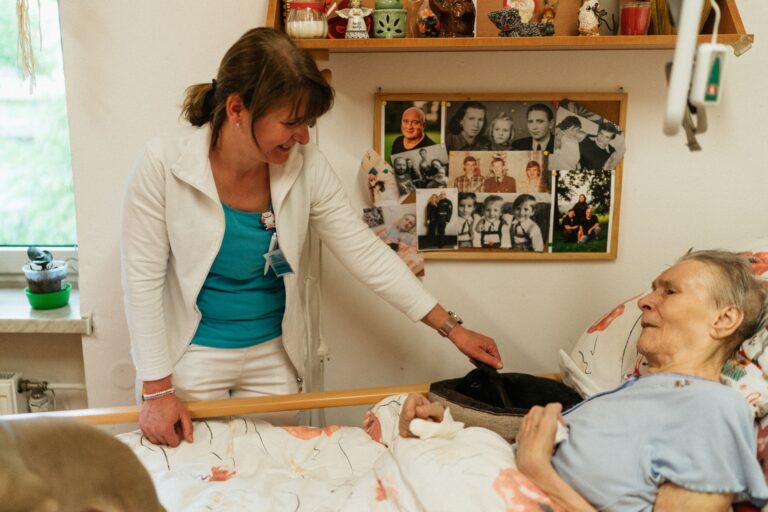
Doctor visits often provoke anxiety in people with dementia because the appointment itself is disorienting—a new environment, strangers in white coats, abstract questions about health, and a break from routine. Making these visits less stressful starts before arrival: give the person with dementia advance notice of the appointment, use simple language to explain what will happen, and plan specific steps like visiting the office beforehand or bringing a familiar object. A person living with mid-stage dementia may forget the purpose of a doctor visit moments after being told, so writing it down on a calendar, showing them the location on a map, or creating a visual schedule of the day helps anchor the event in their mind and reduces fear of the unknown. The second key is enlisting the right people and information.
A trusted family member or consistent caregiver should attend the appointment, both to keep the person with dementia calm and to relay medical history that they may no longer remember accurately. Sending the doctor’s office a detailed summary of the person’s current medications, recent behavioral or cognitive changes, and communication needs before the visit allows the medical team to prepare and spend less time on forms and questions during the appointment itself. Preparation and presence work together to lower stress, but so does timing and environment. Mornings often work better than afternoons for people with dementia because confusion tends to worsen as the day goes on. Choosing a quieter appointment time or asking for a private room can help the person stay calmer and less overwhelmed by waiting room stimuli.
Medical information disclaimer: This article is for general educational purposes only and does not provide medical advice, diagnosis, or treatment. Always consult a physician or other qualified health professional about symptoms, medications, tests, or treatment decisions.
Table of Contents
- Why Dementia Makes Doctor Visits Particularly Challenging
- Creating a Detailed Pre-Appointment Plan
- Assembling the Right Information for the Medical Team
- Timing and Scheduling Strategies
- Managing Anxiety and Behavioral Challenges During the Visit
- The Caregiver’s Role in Communication
- Documentation and Follow-Up After the Visit
- Frequently Asked Questions
Why Dementia Makes Doctor Visits Particularly Challenging
People with dementia experience doctor visits differently than others. Short-term memory loss means that repeated questions from the healthcare provider feel interrogating and confusing rather than routine. A person may not remember why they’re at the office, what their medications do, or what health problems they have been managing for years. Additionally, communication becomes harder: they may struggle to find words to describe symptoms, report pain, or express fears about the visit. A woman with early dementia who has had diabetes for fifteen years may not remember that she has it when the doctor asks, yet feel distressed and confused by the gap between what she senses about her body and what she can articulate. Behavioral changes also intensify during medical visits.
Some people with dementia become agitated when touched by unfamiliar healthcare providers, during blood pressure checks, or when lying back for an examination. Others withdraw or refuse cooperation because they don’t understand what’s happening. Sundowning—increased confusion and agitation in late afternoon—can turn an appointment scheduled at 3 p.m. into a crisis if the person’s cognition deteriorates during the waiting period. Trust and consistency matter enormously. A person with dementia may feel more at ease with the same doctor across multiple visits because familiarity reduces anxiety, even if they don’t consciously remember the previous appointments.
Creating a Detailed Pre-Appointment Plan
Successful doctor visits require a written plan created at least one week beforehand. The plan should include the appointment date, time, location, and the doctor’s name—written and reviewed multiple times with the person with dementia. Some families laminate appointment cards or post a large calendar in the kitchen; others send daily text reminders with a photo of the doctor’s office. The limitation of any reminder system is that it may not eliminate anxiety—repetition builds routine familiarity, not memory, so even if the person forgets the appointment again on the morning of the visit, they often feel less panicked because their nervous system has encountered the information many times. Next, prepare the person for what will happen physically. Explain in simple, concrete language: “The doctor will ask you to sit in a chair and take your blood pressure.
A device will squeeze your arm. It might feel tight, but it doesn’t hurt.” Use pictures if helpful—show photos of a blood pressure cuff or a stethoscope. Let the person practice if they’re willing; some feel calmer after touching or holding the medical device in advance. A critical warning: do not use the word “shot” or “needle” without careful context, because ambiguous language can trigger panic hours before the visit. Instead, be specific and honest: “The nurse will take a small sample of your blood using a thin needle. You might feel a quick pinch.” Vagueness creates space for catastrophic thinking in a brain already struggling with confusion.
Assembling the Right Information for the Medical Team
Healthcare providers need information they would normally extract from the patient, since the person with dementia cannot reliably provide it. Create a one-page summary sheet that includes current medications with dosages, recent cognitive or behavioral changes (increased aggression, new confusion, sleep disruption), relevant medical history, allergies, and how the person communicates best (for example, “speaks quietly and slowly,” “responds better to written instructions,” “becomes upset if interrupted”). Include the person’s name preferences (“She prefers to be called Margaret, not Maggie”) and any touch sensitivities or phobias. Bring this sheet printed to the appointment, and email or fax it to the office at least one week in advance so the doctor has time to read it.
A practical example: if a person with dementia cannot report that they’ve been having tremors in their right hand for three weeks, the doctor must hear this from the caregiver, not discover it by accident during the exam. without structured communication, symptoms are missed and medications aren’t adjusted when they should be. Hand-write or type this document clearly; poor legibility causes information to be overlooked. Also note any communication differences—whether the person is mute or speaks in short sentences, whether they respond to their own name or have stopped recognizing it. A limitation here is that even with excellent documentation, some doctors rush through appointments and may not fully absorb the material before seeing the patient.
Timing and Scheduling Strategies
Book appointments in the morning, ideally before 11 a.m., when most people with dementia are clearest and least fatigued. Afternoon appointments often collide with “sundowning,” a pattern of increased confusion and agitation that typically begins in late afternoon. A person who is calm and articulate at 9 a.m. may be irritable, paranoid, or unintelligible by 3 p.m., making the doctor visit exponentially harder. Ask the doctor’s office for the first appointment of the day or the slot right after lunch, which typically means shorter wait times.
Waiting rooms are overstimulating: fluorescent lights, other patients, unfamiliar sounds, and the absence of routine trigger anxiety. Some families call the office fifteen minutes before the scheduled time to ask if the doctor is on schedule; if there’s a long wait projected, they step outside or take the person for a brief walk rather than sitting in the waiting room. This is a tradeoff—you risk missing your name being called, but you reduce the person’s exposure to a stressful environment. Request a quiet room if the office has one. Sitting in a private exam room while waiting is less stressful than the open waiting area. Be honest with the staff: “My mother has dementia and gets anxious in crowded spaces; is there a quieter place we could wait?” Most offices accommodate this request without resistance.
Managing Anxiety and Behavioral Challenges During the Visit
Bring comfort items: a favorite stuffed animal, a blanket, headphones with calming music, or a photo album. These may seem trivial, but they give the person with dementia something familiar to focus on when they feel lost or frightened. The caregiver should sit close, hold the person’s hand if they’re comfortable with touch, and speak in a calm voice if the person becomes agitated. If they say “I want to leave,” respond with empathy, not contradiction: “I know this is uncomfortable. We’re almost done. The doctor is checking your heart to make sure you’re healthy.” A warning: restraining a person with dementia or insisting they cooperate physically during an examination can escalate agitation into an aggressive episode.
If the person is refusing to allow a blood pressure check or a listening to their lungs, it may be better to defer that part of the exam than to force it and traumatize them. The caregiver should alert the doctor to this dynamic beforehand: “She sometimes becomes frightened when touched. Can we start with conversation and non-invasive checks?” Some doctors will skip procedures that aren’t immediately critical rather than distress the patient. Medication can help in severe cases. Some caregivers discuss with the person’s primary doctor whether a small dose of anti-anxiety medication one hour before the appointment might ease the visit. This is a decision that must involve the doctor, not something caregivers should do independently.
The Caregiver’s Role in Communication
A caregiver present at the appointment serves as translator, advocate, and safety net. They should gently correct any misinformation the person with dementia provides—if they say “I never fall” but the caregiver knows they’ve fallen twice this month, the caregiver should quietly add, “Actually, we’ve had two falls recently.” They should also speak up if the doctor uses jargon or moves too fast. If the doctor launches into a discussion of kidney function and medication interactions, the caregiver can say, “Could you explain that more simply? She has trouble following complex information.” Most doctors respond well to this feedback.
The caregiver should also limit the person with dementia’s anxiety by modeling calm behavior. If you seem rushed, worried, or frustrated, the person with dementia will absorb that emotion and become more anxious themselves. Sit with open body language, speak quietly, and show no sign of impatience.
Documentation and Follow-Up After the Visit
Before leaving the office, ask the doctor to write down the diagnosis, any new medications, and the next steps in language the person with dementia can understand. Many doctors provide aftercare instructions written for a general audience, but a person with moderate dementia may not parse them. Ask the office to provide the same information to the caregiver in detail, or request a written summary yourself. Create a post-appointment summary sheet at home: “You saw Dr. Johnson on July 30.
You are healthy. Here is your new medicine. Take it in the morning with food.” Post this in a prominent place and refer to it if the person asks about the visit in coming days. This reduces repeated anxiety about the appointment and creates a reliable reference for confusion. If medication changed, write the new routine on the pill organizer and on a card the caregiver carries, since verbal instructions alone are rarely retained.
Frequently Asked Questions
What if the person with dementia refuses to go to the doctor?
Do not force compliance. Instead, address the underlying concern—fear, confusion, or past negative experience—by talking about it before the appointment, visiting the office beforehand, or asking the doctor to make a house call for routine checks. If the appointment is truly urgent, the caregiver can frame it differently: “Let’s take a drive” or “Your friend is waiting for you,” then transition to the office.
Should we tell the person with dementia about the appointment days in advance?
It depends on how anxious they become. If advance notice triggers days of worry or repeated questions, waiting until the morning of the visit may cause less overall stress. If they process information better with time, give 3-5 days’ notice and review the details daily.
Can we use video telehealth appointments instead of in-person visits?
Video visits work well for follow-ups and medication reviews, but some physical exams require in-person evaluation. Telehealth does reduce travel stress and waiting room anxiety, so it’s worth asking the doctor if the appointment could be conducted remotely.
What if the person becomes violent or uncontrollable during the visit?
Alert the doctor immediately and pause the exam. Safety comes first—yours and the patient’s. Step outside, let the person calm down, then decide whether to reschedule. Violent episodes during medical care may indicate that the visit needs to happen at home with a visiting physician, or that the person requires a higher level of anxiety support before future appointments.
How do we handle multiple specialist visits when the person has several health conditions?
Coordinate appointments on different days when possible, since multiple visits in one week create scheduling fatigue and confusion. Ask specialists to share information with the primary care doctor so the person doesn’t have to repeat the same medical history and tests to each office.
Should we involve the person with dementia in decisions about their medical care?
Yes, but in simplified terms. Ask their preference about treatment options when feasible, but the caregiver and doctor make final decisions based on what’s medically sound and emotionally tolerable for the person. Respecting autonomy doesn’t mean burdening someone with complex medical choices they can no longer process.