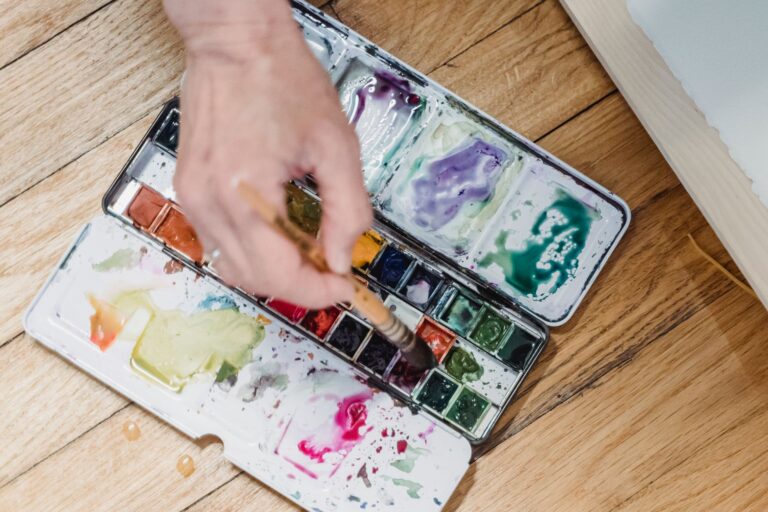
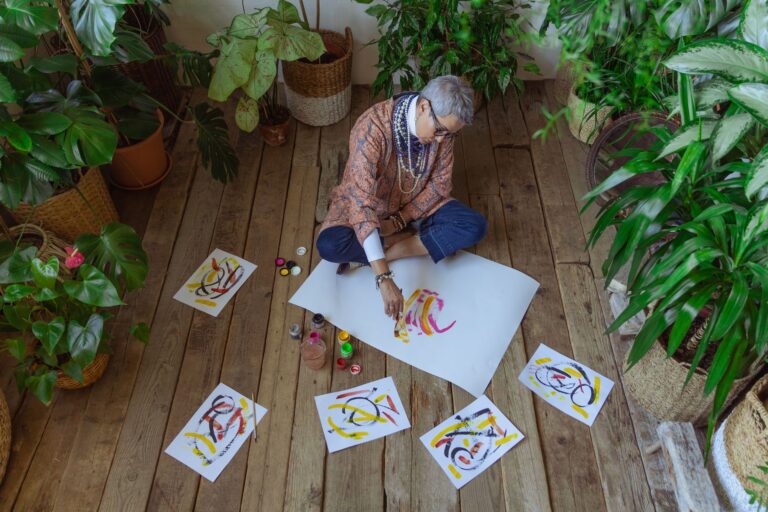
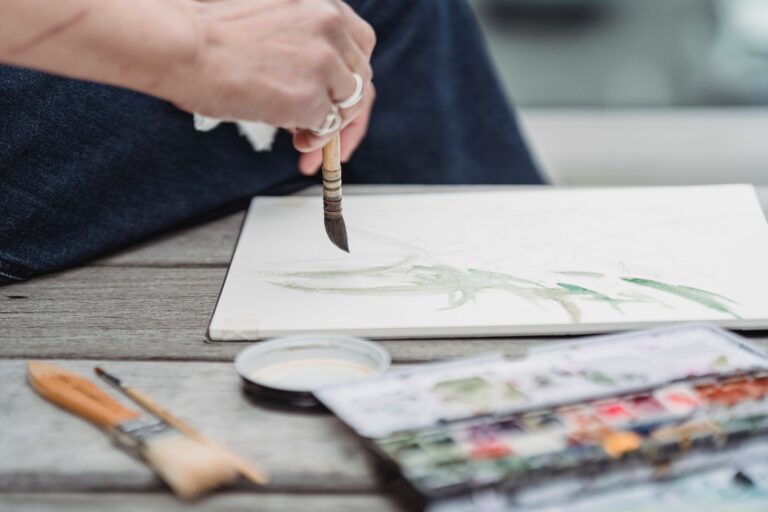
Adapt watercolor painting for dementia home care by offering short, guided sessions with large-grip brushes, heavy paper, and non-toxic washable paints during the person's best time of day. Give one step at a time, start the brushstroke together if needed, and let the person watch, pause, or stop without correction. Adapted watercolor means the materials, steps, and setting are simplified for safety and ease. The Alzheimer's Association says art projects can create a sense of accomplishment and purpose and allow self-expression even after dementia has progressed, according to Alzheimer's Association guidance on art and music.
Medical information disclaimer: This article is for general educational purposes only and does not provide medical advice, diagnosis, or treatment. Always consult a physician or other qualified health professional about symptoms, medications, tests, or treatment decisions.
Table of Contents
- What does adapted watercolor look like?
- How do you set up for safety and success?
- How do you guide without causing frustration?
- What should you expect from the time?
What does adapted watercolor look like?
Adapted watercolor is a shared, supportive activity rather than treatment. The American Art Therapy Association defines art therapy as a mental health profession combining art-making and psychological theory within a psychotherapeutic relationship, so home painting time is creative engagement rather than clinical therapy.
At home, the caregiver handles setup and choices while the person handles color, movement, and expression. Alzheimer's Orange County describes its Memories in the Making program as using painting, including watercolor brushwork, so participants express long-ago memories, hobbies, and passions when verbal communication declines.
How do you set up for safety and success?
Choose a calm moment, good lighting, and a clutter-free table. Caregiver guidance from DailyCaring recommends short sessions during the person's best time of day, large-grip brushes and heavy paper, and one or two steps at a time, according to the DailyCaring guide to art activities for dementia. The Kensington Falls Church dementia activities guide calls for non-toxic washable watercolors, secured water cups and paper, and avoiding sharp tools and small parts that could be mouthed or cause choking.
- Paint in daylight or bright lamplight with only supplies in reach.
- Tape heavy paper down and use a tip-proof cup with little water.
- Offer two or three washable colors and one large-grip brush.
- Keep paper towels nearby and aprons or old shirts for spills.
How do you guide without causing frustration?
Sit beside the person and show each action. The Alzheimer's Association advises helping the person begin, for example by starting the paintbrush movement, giving one clear direction at a time, and building conversation around observations rather than correcting the artwork.
Invite looking, touching the brush, or watching for a while. Allow stopping or switching if frustration appears, as DailyCaring recommends. Name colors, shapes, and brush movement instead of asking for memories or right answers.
What should you expect from the time?
Expect participation, mood, and connection rather than skill or finished pictures. Large washes, dots, stripes, and mixed colors all count.
Offer praise for effort and choice, then display the work where the person can see it. A 2018 Cochrane systematic review found only two eligible randomized trials with 60 total participants and very-low-quality evidence, concluding there is insufficient evidence that art therapy improves memory or most other dementia outcomes, according to the Cochrane review of art therapy for dementia. Use watercolor time to support calm engagement, and end while attention is still positive.