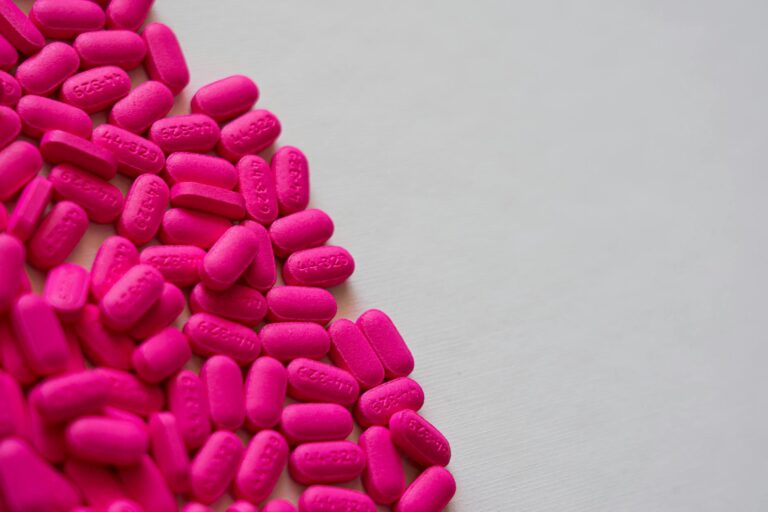
Sustained-release drugs work by trapping medication inside engineered barriers — polymer gels, semipermeable membranes, or osmotic pumps — that meter out the active ingredient over hours instead of minutes. When you crush one of these tablets, you destroy that barrier and release the entire dose at once, a phenomenon pharmacologists call “dose dumping.” For a drug like extended-release nifedipine, which contains a full day’s worth of a potent blood pressure medication behind a single laser-drilled hole, crushing the tablet has proven fatal. One documented case involved a patient who died of severe hypotension after a crushed extended-release nifedipine tablet delivered its complete payload instantly, with concurrent labetalol preventing the compensatory heart rate increase that might have saved them. This is not a theoretical risk or a conservative warning printed on labels out of an abundance of caution.
Sustained-release formulations routinely contain higher doses than their immediate-release counterparts — diclofenac SR packs 100 mg versus 50 mg in the standard tablet, and OxyContin delivers its oxycodone load over a full 12 hours. Crushing either one converts a carefully timed therapy into a potentially dangerous bolus. For caregivers managing medications for someone with dementia who has difficulty swallowing, understanding why these drugs are built the way they are is not optional knowledge. It is a safety imperative. This article explains the three main engineering approaches behind sustained-release tablets, walks through real cases where crushing went wrong, covers the abuse-deterrent technologies the FDA now requires for certain opioids, and offers practical guidance for caregivers who need alternatives when a patient cannot swallow a pill whole.
Table of Contents
- How Do Sustained-Release Drugs Control When Medication Enters Your Body?
- What Happens During Dose Dumping and Who Is Most at Risk?
- Real Cases Where Crushing Sustained-Release Medications Caused Harm
- How Abuse-Deterrent Formulations Changed the Landscape for Opioid Safety
- The ISMP Do-Not-Crush List and Medication Error Prevention
- Practical Alternatives When a Dementia Patient Cannot Swallow Tablets
- Where Sustained-Release Technology Is Heading
- Conclusion
- Frequently Asked Questions
How Do Sustained-Release Drugs Control When Medication Enters Your Body?
Three distinct engineering strategies account for nearly all sustained-release oral medications on the market today. The simplest and most common is the matrix system: the drug is physically embedded within a polymer scaffold. When the tablet hits stomach fluid, hydrophilic polymers on the surface swell into a gel layer, and the drug must slowly diffuse through that gel or wait for it to gradually erode. Manufacturing costs are low, which is why matrix systems dominate the sustained-release market. The tradeoff is that release rates can vary somewhat depending on how quickly the gel hydrates, which is influenced by individual differences in gastrointestinal motility and fluid volume. Membrane-controlled reservoir systems take a different approach. A semipermeable coating completely surrounds the drug core, and the medication diffuses through the membrane at a rate determined by the coating’s thickness and composition. Think of it as a drug surrounded by a controlled leak.
The third and most sophisticated approach is the osmotic pump. Here, a semipermeable cellulose acetate membrane with a laser-drilled orifice — typically 0.5 to 1.5 millimeters — surrounds the tablet. Water enters by osmosis, building internal pressure that pushes the drug solution out through the hole at a constant, zero-order rate. This means the delivery speed does not change based on GI pH, food intake, or gut motility, making osmotic pumps the most predictable of the three systems. Osmotic pump designs have evolved into several subtypes. The Elementary Osmotic Pump uses a single-layer drug core with one orifice. The Push-Pull Osmotic Pump adds a bilayer design — a swellable polymer layer expands against the drug layer, physically pushing it out through the exit hole. The Controlled-Porosity Osmotic Pump eliminates the laser-drilled hole entirely, instead using leachable pore-forming agents embedded in the coating that dissolve on contact with water, creating channels in situ. Each design solves a specific formulation challenge, but all share the same vulnerability: if the outer structure is broken, the entire mechanism fails.

What Happens During Dose Dumping and Who Is Most at Risk?
Dose dumping is the premature, exaggerated release of a drug’s full dose all at once. It occurs whenever the release-control mechanism is compromised — whether by crushing, chewing, splitting, or in some cases, co-ingestion with alcohol. The clinical consequence depends on the drug involved and the size of the dose that gets released, but the core problem is always the same: blood concentrations spike far beyond what the body was designed to handle on the formulation’s intended schedule. The danger is amplified for narrow therapeutic index drugs, where a small increase in blood concentration can push a patient from therapeutic benefit into toxicity. Potent opioids are the most widely discussed example, but certain cardiovascular medications carry equal risk. When OxyContin tablets are crushed, the 12-hour release mechanism is destroyed, causing rapid absorption of the full oxycodone dose and resulting in sedation and respiratory depression. For a dementia patient who may already have compromised respiratory function or reduced metabolic clearance due to age, this kind of spike can be fatal even at prescribed doses.
However, dose dumping is not limited to high-profile controlled substances. Crushing a sustained-release verapamil or theophylline tablet carries its own set of serious consequences, from cardiac arrhythmias to seizures. It is worth noting that not every modified-release medication is equally dangerous to crush. Some enteric-coated tablets are designed to protect the stomach lining or prevent degradation by stomach acid, not to control release rate. Crushing these may cause GI irritation or reduce efficacy without producing the catastrophic dose-dumping seen with true sustained-release formulations. The critical distinction is whether the coating or matrix controls the rate of drug delivery. If it does, crushing is never acceptable without explicit pharmacist guidance.
Real Cases Where Crushing Sustained-Release Medications Caused Harm
The nifedipine fatality is one of the most cited cases in pharmacy safety literature. A patient received a crushed extended-release nifedipine tablet, which released the complete dose immediately. The resulting severe hypotension was compounded by concurrent labetalol therapy, which blocked the body’s normal compensatory increase in heart rate. The patient died. This case is regularly used in pharmacy education to illustrate that administration-stage errors can be as lethal as prescribing errors, and it underscores why the route from pill bottle to patient is a safety-critical chain. The Palladone case led to direct FDA intervention. Palladone was a hydromorphone extended-release capsule that used polymers — ammonio methacrylate copolymer type B and ethylcellulose — to control drug release.
In 2005, the FDA discovered that co-ingestion of a single 12 mg Palladone capsule with just 8 ounces of 80-proof alcohol caused an average six-fold increase in peak hydromorphone blood levels compared to taking the capsule with water. One study subject experienced a sixteen-fold increase. The FDA asked the manufacturer to suspend sales, citing “serious and potentially fatal adverse reactions.” This was not a case of deliberate abuse; the alcohol dissolved the release-controlling polymers, causing the coating to fail. The phenomenon became formally known as alcohol-induced dose dumping and prompted the agency to require alcohol interaction testing for all new extended-release opioid applications. For dementia caregivers, these cases carry a specific warning. Patients with cognitive impairment may chew tablets instead of swallowing them whole, or a well-meaning caregiver may crush medications to mix into food or a thickened liquid for a patient with dysphagia. Both actions can produce the same catastrophic dose dump that killed the nifedipine patient. The intent is irrelevant; the physics and pharmacology respond to the mechanical destruction of the release barrier regardless of the reason behind it.
How Abuse-Deterrent Formulations Changed the Landscape for Opioid Safety
Between 2010 and 2017, the FDA approved 10 brand-name oral opioids with abuse-deterrent labeling, beginning with reformulated OxyContin in 2010. These abuse-deterrent formulations use two primary technological strategies: physical barriers that resist crushing with household tools or by chewing, and chemical barriers that resist dissolution in alcohol, water, or organic solvents. The goal is to make it substantially harder to defeat the sustained-release mechanism, whether the motivation is intentional misuse or accidental mishandling. As of current FDA listings, four extended-release opioids with approved abuse-deterrence claims remain on the market: Hysingla ER (hydrocodone), MorphaBond ER (morphine), OxyContin ER (oxycodone), and Xtampza ER (oxycodone). Earning that abuse-deterrent label is not simple.
The FDA requires in vitro manipulation studies demonstrating resistance to physical and chemical assault, pharmacokinetic studies showing the formulation resists dose dumping under abuse conditions, and human abuse potential studies comparing the reformulated product against the original. This is among the most rigorous approval pathways for any drug labeling claim. However, abuse-deterrent does not mean abuse-proof, and caregivers should not assume these formulations are safe to crush simply because they resist it. A tablet that resists a hammer may still release unpredictably if subjected to sustained grinding in a pill crusher. The abuse-deterrent designation addresses population-level misuse patterns, not the specific scenario of a caregiver trying to administer medication to a patient who cannot swallow. For that problem, the answer is not a tougher tablet — it is a different formulation entirely.
The ISMP Do-Not-Crush List and Medication Error Prevention
The Institute for Safe Medication Practices maintains a widely referenced “Do Not Crush” list cataloging oral medications that should never be crushed, split, or chewed. This list is a critical bedside reference in long-term care facilities and should be equally familiar to home caregivers managing complex medication regimens for people with dementia. The common sustained-release and extended-release suffixes that signal a do-not-crush formulation include: 12-hour, 24-hour, CC, CD, CR, ER, LA, SA, Slo-, SR, XL, XR, and XT. If any of these abbreviations appear after a drug name, the default assumption should be that crushing is prohibited unless a pharmacist confirms otherwise. Nearly 50 percent of all medication errors occur at the prescribing or ordering stage, but crushing a sustained-release medication is a recognized administration-stage error — one that happens after the prescription was written correctly and dispensed properly. This is a failure point that falls squarely on the person giving the medication, which in dementia care is often a family caregiver without clinical training.
Facilities typically have pharmacy protocols to flag these errors, but home settings rarely have such safeguards. A caregiver who has been crushing regular aspirin for months may not think twice before doing the same to a newly prescribed extended-release cardiovascular drug. The limitation of any do-not-crush list is that it requires the person administering the medication to actually consult it. In high-pressure home caregiving situations, where a single person may be managing a dozen medications across multiple daily time slots, the list is only useful if it is integrated into the workflow. Printing the list and taping it to the medication cabinet is a start. Having the pharmacist flag every sustained-release prescription with a physical “DO NOT CRUSH” sticker on the bottle is better. Requesting liquid or orally disintegrating alternatives at the time of prescribing is the most reliable solution.

Practical Alternatives When a Dementia Patient Cannot Swallow Tablets
When swallowing difficulty makes it impossible for a patient to take a sustained-release tablet whole, the answer is never to crush it and hope for the best. The first step is to contact the prescribing physician or pharmacist and ask whether a liquid formulation, orally disintegrating tablet, transdermal patch, or immediate-release version given at more frequent intervals can replace the sustained-release product. Many common medications — including opioid pain relievers, blood pressure drugs, and antiseizure medications — have alternative delivery forms specifically because swallowing impairment is common in elderly and neurologically impaired populations.
For instance, fentanyl patches deliver opioid medication transdermally over 72 hours, completely bypassing the need to swallow anything. Extended-release morphine capsules like Kadian can, with pharmacist guidance, sometimes be opened and sprinkled on applesauce without damaging the sustained-release beads inside — though this is formulation-specific and must be verified for each product individually. The critical point is that alternatives almost always exist, but finding them requires a conversation with a pharmacist, not a pill crusher.
Where Sustained-Release Technology Is Heading
Pharmaceutical companies and academic researchers are actively developing next-generation sustained-release technologies designed to be inherently safer. These include formulations that turn into gels when tampered with, making it impossible to extract the drug for rapid absorption, and 3D-printed tablets that allow personalized release profiles tailored to individual patient needs. For the dementia care population specifically, the push toward long-acting injectables and implantable drug delivery systems could eventually reduce the dependence on oral medications altogether, eliminating the swallowing problem at its root.
The regulatory environment is also tightening. The FDA’s requirement for alcohol-induced dose dumping studies — prompted directly by the Palladone disaster — now applies to all new extended-release opioid applications, and there is ongoing discussion about extending similar requirements to non-opioid sustained-release products with narrow therapeutic indices. For caregivers, the practical takeaway is that the safety infrastructure around these medications is growing more robust, but it will never fully replace the need to understand what these pills are and why they must be treated with respect.
Conclusion
Sustained-release medications are engineered objects, not simply pills with more drug inside. Whether they use a polymer matrix, a membrane-controlled reservoir, or an osmotic pump with a laser-drilled hole, their entire therapeutic value depends on the physical integrity of their release mechanism. Destroying that structure — by crushing, chewing, splitting, or even combining with alcohol — converts a safe, controlled therapy into a potential medical emergency.
For dementia caregivers, the stakes are especially high because the patients most likely to need their pills crushed are also the most vulnerable to the consequences of dose dumping. The practical path forward is straightforward: learn to recognize sustained-release suffixes (ER, SR, XR, CR, LA, and their many variants), consult the ISMP Do-Not-Crush list before altering any tablet, and work with the prescribing physician and pharmacist to find alternative formulations when swallowing is impaired. Never assume that a pill can be safely crushed based on how it looks or how other medications in the regimen are handled. Every sustained-release tablet is a small piece of engineering, and it only works if you leave the engineering intact.
Frequently Asked Questions
How can I tell if a medication is sustained-release just by looking at it?
You usually cannot tell by appearance alone. The reliable indicators are the suffixes on the drug name — look for ER, SR, XR, CR, LA, XL, SA, CD, CC, XT, or prefixes like Slo-. If any of these appear on the label, assume the tablet should not be crushed. When in doubt, ask the dispensing pharmacist before altering the tablet in any way.
What should I do if my family member with dementia chews their sustained-release medication instead of swallowing it?
Contact the prescribing physician immediately to report what happened and watch for signs of adverse effects — which vary by medication but may include excessive drowsiness, low blood pressure, or difficulty breathing. Then request an alternative formulation (liquid, patch, or orally disintegrating tablet) to prevent it from happening again. Chewing a sustained-release tablet produces the same dose-dumping risk as crushing one.
Can I split a sustained-release tablet in half if my family member needs a lower dose?
No. Splitting breaks the release-control structure just as crushing does, exposing the full half-dose for immediate absorption. If a dose reduction is needed, ask the physician to prescribe a lower-strength sustained-release tablet or switch to an immediate-release formulation that can be safely divided.
Are abuse-deterrent opioid formulations safe to crush for a patient who cannot swallow?
No. Abuse-deterrent formulations are designed to resist crushing, but “resist” does not mean they release safely if you manage to break them. Even partial destruction of the release mechanism can cause unpredictable drug delivery. The correct approach is to request an alternative formulation from the prescriber, not to fight the tablet’s engineering.
Does taking a sustained-release medication with alcohol cause dose dumping for all SR drugs?
Not all, but the risk is real for specific formulations. The most dramatic documented case involved Palladone (hydromorphone ER), where 8 ounces of 80-proof alcohol caused up to a sixteen-fold increase in peak blood levels, leading the FDA to pull the drug from the market in 2005. The release-controlling polymers in Palladone were soluble in ethanol, which dissolved the coating. Patients taking any sustained-release medication should discuss alcohol use with their pharmacist.
Where can I find a complete list of medications that should not be crushed?
The Institute for Safe Medication Practices (ISMP) maintains a comprehensive “Do Not Crush” list that is regularly updated. Ask your pharmacist for the most current version, or request that they flag all do-not-crush medications in your family member’s regimen with warning labels on the bottles.