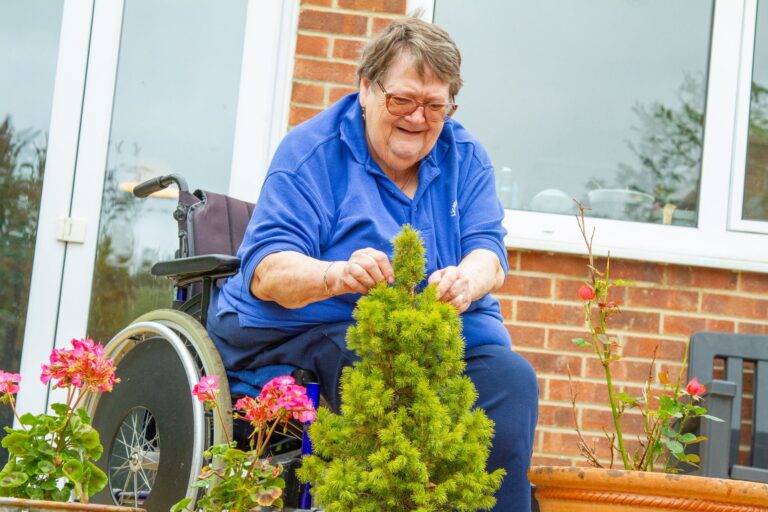
Sensory bins are containers filled with textured materials—rice, beans, water beads, fabric, or familiar household objects—that a person with dementia can touch, sort, and explore. For many people with dementia, handling these materials offers a calm, hands-on activity that invites attention and reduces restlessness without requiring conversation or memory. The appeal is practical as much as therapeutic: a sensory bin asks nothing of a damaged memory and gives the hands and senses something concrete to do. Evidence on sensory-based approaches in dementia care is mixed on how long benefits last, but it consistently points to a short-term calming and engaging effect, and it offers clear guidance on what makes an activity like this work.
Medical information disclaimer: This article is for general educational purposes only and does not provide medical advice, diagnosis, or treatment. Always consult a physician or other qualified health professional about symptoms, medications, tests, or treatment decisions.
Table of Contents
- What Does the Evidence Actually Show?
- Why Design and Delivery Matter as Much as Contents
- What to Put in a Sensory Bin
- Adjusting for the Stage of Dementia
- Setting Realistic Expectations
- Frequently Asked Questions
What Does the Evidence Actually Show?
A 2025 meta-analysis pooling 16 randomized trials and 974 people with dementia found that multisensory stimulation significantly reduced agitation, with a large effect size (Hedges' g = −0.96), and produced modest improvements in apathy, depression, and cognition as well, according to the 2025 meta-analysis published via em-consulte. That is a substantial reduction in one of dementia care's most disruptive symptoms. A separate, earlier Cochrane systematic review of snoezelen and multisensory stimulation programs reached a more cautious conclusion: it found no clear evidence that benefits last beyond the session itself, though it noted short-term gains in adaptive behavior during and right after a session, according to Cochrane's review. Taken together, the two reviews agree on the same basic point: multisensory activity tends to help in the moment, and the stronger recent data suggest it can meaningfully ease agitation, even if nobody has shown the effect persists for days afterward.
One caveat matters here. Most of this research studied broader "multisensory stimulation" programs or snoezelen rooms run by trained staff, not purpose-built tactile sensory bins specifically. No peer-reviewed trial isolating sensory-bin use alone turned up in this research. The bin itself is a tool for delivering sensory engagement; the evidence base speaks to that category of activity rather than to the bin as a distinct, separately tested product.
Why Design and Delivery Matter as Much as Contents
A 2014 practice guide from Kingston University found that sensory rooms in care homes often sit unused, not because the equipment failed, but because of poor design and weak staff facilitation, according to Kingston University's guide. The lesson transfers directly to sensory bins: a bin filled with the right materials still needs someone to introduce it at the right moment and guide the person through it.
This means engagement depends on timing, setting, and facilitation as much as on what fills the container. Penn State Extension, drawing on Alzheimer's Association recommendations, advises choosing a convenient time and a calm setting, and keeping expectations realistic about how long or how actively the person will engage, according to Penn State Extension's caregiver guidance. A bin introduced during a frustrating or overstimulating moment is unlikely to land the way the same bin would during a quiet afternoon.
What to Put in a Sensory Bin
The most commonly described approach fills a container with rice, dried beans, or water beads so a person can immerse their hands and feel different textures, an approach promoted by senior-care providers as a way to prompt sensory exploration and sometimes memory recall, according to BrightStar Care. This claim about memory recall comes from caregiving practice rather than a published clinical trial, but the basic activity—hands moving through a textured medium—is a low-cost, low-risk starting point. Caregivers get better results building a bin around a person's pre-dementia interests rather than generic novelty items.
Goodwin Living recommends using objects tied to familiar routines—gardening tools, sewing notions, cooking utensils—because familiarity raises the odds of a positive, engaged response, according to Goodwin Living. A retired gardener may respond to small trowels and seed packets in ways a bin of generic plastic beads never prompts. For people in later stages who can no longer follow structured activities, the UK's Alzheimer's Society recommends simpler items: fabric, soft toys, "fiddle" items such as twiddle muffs, gentle hand massage, and herbs or fruit to engage smell and taste, according to the Alzheimer's Society. These are worth keeping as a separate, simpler tier rather than scaling down a more complex bin.
Adjusting for the Stage of Dementia
What works changes as dementia progresses, and matching the activity to the stage prevents frustration on both sides. At this most advanced stage, a bin stuffed with many competing textures works against the goal. One consistent material—soft fleece, or a single scent—gives a clearer signal than a mixed assortment.
- Early-to-middle stage: a bin can include multiple textures and small tools tied to a hobby, since the person can still sort, search, and follow simple steps.
- Later stage: the Alzheimer's Society's simpler items—soft fabric, fiddle muffs, scented herbs—work better than a complex multi-object bin.
- Most advanced ("reflex") stage: the Royal College of Occupational Therapists advises a calm environment and an activity that produces one single, clear sensation, paired with one-word prompts and gentle physical guidance from the caregiver, according to the Royal College of Occupational Therapists.
Setting Realistic Expectations
A sensory bin is not a treatment that reverses cognitive decline, and the research doesn't claim it is. What the evidence supports is a short-term reduction in agitation and an increase in engagement during the activity itself.
That is a meaningful outcome for a caregiver managing a difficult afternoon, even without evidence of lasting change. Keep a session brief and let the person's response set its length. Penn State Extension's point about realistic expectations applies directly here: some sessions will hold attention for twenty minutes, others for two, and neither outcome means the bin "failed." The value is in the moment of calm or curiosity it creates, not in a lasting shift that research has not yet demonstrated.
Frequently Asked Questions
Do sensory bins work for every person with dementia?
Response varies by stage and personal history. Items tied to a person's pre-dementia interests, as recommended by Goodwin Living, tend to generate more engagement than generic materials, and people in advanced stages typically respond better to one clear sensation than to multiple textures at once, per the Royal College of Occupational Therapists.
How long should a sensory bin session last?
There's no fixed duration. Penn State Extension's guidance emphasizes picking a calm time and keeping expectations realistic, letting the person's engagement—not a clock—determine when the activity ends, according to Penn State Extension.
Is there proof sensory bins specifically reduce agitation, or just sensory activities in general?
The strongest evidence, including the 2025 meta-analysis's large effect on agitation, covers broader multisensory stimulation programs and snoezelen rooms rather than tactile bins in isolation, per the research synthesis. No study has isolated sensory-bin use alone.