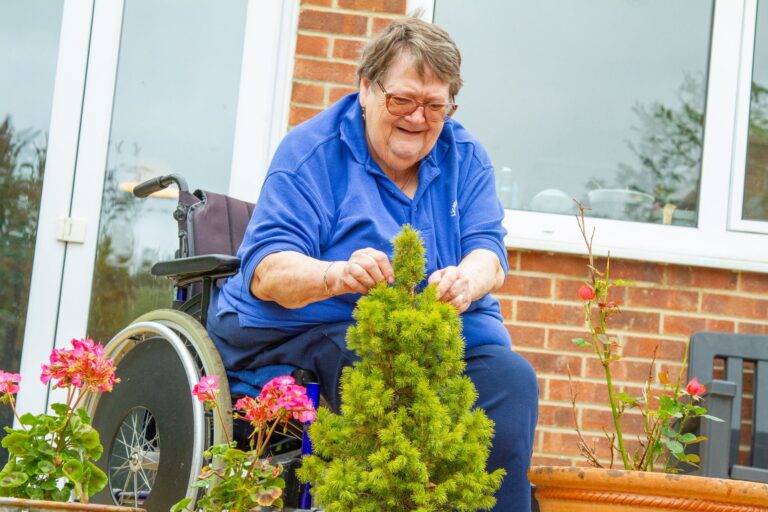
A dementia activity calendar should place sensory bins a few times a week, with each session running about 15 to 30 minutes and scaled to how the person responds that day. That frequency comes from memory-care programming guidance, not a fixed medical rule, so it leaves room to adjust around fatigue, mood, and the stage of dementia. Sensory bins are containers filled with safe, touchable materials — dried rice, fabric scraps, buttons, or seasonal items — that a person sorts, sifts, or handles by hand. The goal is calm, repetitive engagement rather than a task to finish, which is why the right schedule depends more on the person's tolerance than on a universal number.
Medical information disclaimer: This article is for general educational purposes only and does not provide medical advice, diagnosis, or treatment. Always consult a physician or other qualified health professional about symptoms, medications, tests, or treatment decisions.
Table of Contents
- What a typical weekly schedule looks like
- Does the right frequency change by dementia stage?
- When during the day should sensory bins appear on the calendar?
- How intensive sensory programs scale this up
- Building sensory bins into a repeatable calendar
- What a sensory-bin schedule can't be expected to do
- Frequently Asked Questions
What a typical weekly schedule looks like
A memory-care activity program recommends offering sensory bins a few times a week, with sessions lasting roughly 15 to 30 minutes depending on the individual's needs, tolerance, and preferences, according to a memory-care activity resource from Forefront Senior Living. That range gives caregivers room to shorten a session when someone tires quickly and extend it when engagement is strong.
Consistency matters more than exact frequency. A sensory-stimulation guide for dementia care notes that frequency should still vary by individual need, but that folding sensory activities into a daily or weekly routine — rather than offering them sporadically — produces the most benefit, according to a sensory-stimulation guide from PhysioInq. A calendar that repeats sensory bins on the same days each week, rather than whenever time allows, is the practical way to apply that finding.
Does the right frequency change by dementia stage?
Stage matters more than most calendars account for. A cross-sectional study of activity prescriptions in dementia care homes found that average prescribed activity time was shorter for residents with severe dementia — about 15 minutes — compared with 24 minutes for moderate dementia and 28 minutes for mild dementia, and that sensory and sorting activities were the type most often prescribed specifically for residents with severe-stage disease, according to a study on activity prescriptions published in BMC Geriatrics.
That pattern supports shorter, more frequent sensory-bin sessions as dementia advances, rather than fewer but longer ones. For a calendar, this means a person in earlier stages may tolerate a full 30-minute session two or three times a week, while someone with severe dementia may do better with brief 15-minute sessions offered more often. The bin itself does not need to change; the clock does.
When during the day should sensory bins appear on the calendar?
Timing inside the day is as important as the weekly count. Guidance on sifting-and-sorting bins recommends keeping one within easy reach specifically for evening use, because agitation in dementia often rises later in the day, and a bin gives caregivers a ready, low-effort option at that point, according to Golden Carers' guidance on sifting-and-sorting bins.
A calendar built only around morning activities misses this window. A practical approach is to schedule at least one sensory-bin slot in the late afternoon or early evening each week, alongside any daytime sessions, rather than clustering every session earlier in the day.
How intensive sensory programs scale this up
Some structured programs use sensory bins and similar sensory activities far more often than a general home calendar would. The original Namaste Care protocol, developed for long-term care residents with moderate to advanced dementia, calls for sensory-based sessions delivered in two 2-hour blocks per day, five days a week, run by two staff members, according to a Canadian evaluation of the Namaste Care protocol.
That schedule reflects a staffed facility setting, not a home caregiver's capacity. A feasibility study of an adapted home version scaled this down considerably: all 12 participating family caregivers delivered sensory-based sessions at least twice a week over three months, and the program retained 10 of the 12 caregivers, according to a 2022 feasibility study published in BMC Geriatrics. That twice-weekly minimum is closer to what most home caregivers can sustain, and it matches the lower end of the general "a few times a week" guidance.
Building sensory bins into a repeatable calendar
A fixed, repeated time slot works better than an ad hoc one. The Alzheimer's Association's tip sheet on home activities advises building a familiar daily routine and keeping activities simplified, structured, and supervised, rather than scheduling them inconsistently, according to the Alzheimer's Association's home-activities tip sheet.
Placing sensory bins at the same point in the day — for example, right after lunch or before dinner — turns the activity into a predictable anchor rather than a surprise. A simple weekly calendar entry might look like this: Treat the bin itself as flexible material rotated by season or interest, while keeping the time slots fixed on the calendar.
- Monday and Thursday afternoon: 20-minute sensory bin session
- One evening slot each week: shorter 10–15 minute session for agitation management
- Adjust duration downward as dementia progresses, and upward if engagement stays strong
What a sensory-bin schedule can't be expected to do
A calendar entry for sensory bins should be set with realistic expectations about what the activity achieves. A review of multisensory environments for dementia found the evidence on their effect on daily function was inconclusive, with no controlled studies on functional performance identified at the time of the review, according to a review of multisensory environments from the University of Auckland. Sensory bins are a tool for engagement and calm in the moment, not a verified way to improve a person's broader daily functioning, so a caregiver should schedule them for that purpose rather than as a substitute for other care.
Frequently Asked Questions
Can sensory bins be used every day instead of a few times a week?
The reviewed guidance centers on a few sessions a week rather than daily use, though a feasibility study of a home-based sensory program found caregivers sustained sessions at least twice a week over three months, according to the 2022 BMC Geriatrics feasibility study. Daily use isn't documented as necessary; consistency at a lower frequency is what the evidence supports.
Should the sensory bin session length stay the same every time?
No. Session length should track tolerance and dementia stage, since prescribed activity time measured in dementia care homes ran shorter for severe dementia than for moderate or mild dementia, according to the BMC Geriatrics study on activity prescriptions.