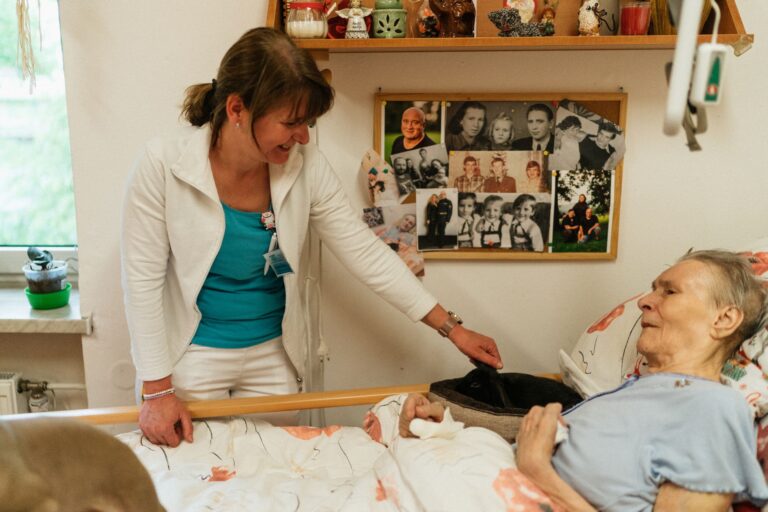
Care partner consent in advanced dementia matters because the person with dementia can no longer participate in decisions about their own care, leaving the care partner as the essential decision-maker. When someone has advanced dementia, the disease has eroded their ability to understand information, weigh options, and communicate preferences—the core elements needed for informed consent. A care partner’s documented wishes and decisions thus become the legal and ethical foundation for everything from medication changes to feeding tubes to end-of-life care.
Without clear care partner consent and involvement, medical teams face legal liability, families experience conflict over contradictory wishes, and the person with dementia receives care that may not reflect their values. For example, a person admitted to a hospital with advanced dementia might receive aggressive interventions—antibiotics for pneumonia, CPR if the heart stops—not because that’s what the person would have wanted, but because the default assumption in acute care is to treat. A care partner who has never documented consent preferences, or who wasn’t consulted, has no way to redirect that care toward comfort instead.
Table of Contents
- Who Makes Decisions When Your Loved One Cannot?
- The Gap Between What Doctors Assume and What Families Want
- Documenting Consent Protects Both the Person and the Care Partner
- How to Give Meaningful Care Partner Consent Before It’s Needed
- Consent Issues Specific to Advanced Dementia
- When Care Partners Have No Legal Authority
- Consent Complexity When the Diagnosis Changes
Who Makes Decisions When Your Loved One Cannot?
In advanced dementia, the person with the disease loses the ability to make informed medical decisions. The cognitive damage progresses beyond memory loss into the destruction of judgment, reasoning, and the ability to process new information. At a certain point—different for every person—they can no longer understand what a test or procedure is for, what the risks are, or even grasp the fact that they are in a medical situation. Medical and legal systems recognize this and grant decision-making power to a surrogate—typically the care partner, often a spouse or adult child.
The surrogate is supposed to make decisions based on what the person with dementia would have wanted if they could still decide. This is called “substituted judgment.” In practice, care partners often must make decisions with incomplete information, high emotional stakes, and pressure from medical teams. A care partner who was never given guidance about the person’s wishes faces an impossible task. Legal documents like a healthcare power of attorney or advance directive create a formal record of who has authority and what the person’s preferences are. Without them, hospitals and facilities may require a court-ordered guardianship before proceeding with non-emergency decisions, or they may fall back on default medical protocols that don’t match the person’s actual wishes.
The Gap Between What Doctors Assume and What Families Want
Medical teams and families often disagree about what “good care” looks like in advanced dementia. Doctors, especially in hospitals and nursing homes, tend toward intervention: treating infections aggressively, managing blood pressure, ordering diagnostic tests. Families, especially those who have spent years watching a loved one decline, often prioritize comfort, dignity, and the person’s quality of life over prolonging it. This gap exists because doctors and families have different information and different goals. A doctor sees a treatable infection and offers antibiotics. A family knows the person’s dementia has progressed so far that they no longer recognize family members, cannot communicate pain or discomfort, and spend their days in bed.
The family’s priority is that the person not suffer during their remaining time, while the doctor’s priority is to treat the medical problem in front of them. Neither is wrong, but without clear consent and communication documented ahead of time, the result is often a stressful negotiation at the bedside, decisions made under crisis conditions, and lingering regret. One limitation of care partner consent is that families’ wishes sometimes conflict with each other. An adult child may believe comfort care is appropriate, while the person’s spouse wants everything attempted. In some cases, state law specifies an order of who decides (spouse, then adult children, then parents, then siblings), but in others, facilities must involve all parties or seek legal resolution. This can delay care and increase family conflict precisely when everyone is most vulnerable.
Documenting Consent Protects Both the Person and the Care Partner
When a person with dementia has made their wishes clear—ideally through an advance directive, healthcare power of attorney, or detailed conversation documented in the medical record—the care partner has legal and ethical protection. Documentation provides a shield against liability and against second-guessing by medical teams or other family members. A specific example: A person in the early stages of dementia tells her daughter, “If I get to the point where I don’t know who you are, and I can’t take care of myself, I don’t want to be kept alive by machines. I want to be comfortable, and I want to die naturally.” That conversation, documented in writing or recorded in the medical record, gives the daughter authority to direct the hospice team not to pursue a feeding tube if the person later develops swallowing problems.
Without that documentation, the daughter might be overruled, or she might face guilt and doubt about her decision. From a legal standpoint, documented consent also protects healthcare providers. If a nursing home follows a care partner’s documented wishes to use comfort care instead of hospitalization for a pneumonia, and the person dies, the nursing home has evidence that the decision was intentional and authorized. Without that documentation, the facility faces potential liability and regulatory scrutiny. The incentive then is for facilities to default toward treatment, even when it’s not what the person would have wanted.
How to Give Meaningful Care Partner Consent Before It’s Needed
The practical challenge is that conversations about end-of-life preferences need to happen before the person is too cognitively impaired to participate. Many families wait until a crisis—a fall, a diagnosis, sudden confusion—to think about what they want. By then, the person with early dementia may or may not still be able to participate in the conversation. Starting these conversations earlier, when the person can still help shape the decision, produces better outcomes and fewer regrets. A useful starting point is a healthcare power of attorney (also called a healthcare proxy or medical power of attorney, depending on the state). This legal document names a person to make medical decisions and, ideally, includes a section where the person with dementia can spell out their values and preferences. Some people prefer to fill in a standard form like the Five Wishes, which addresses not just medical decisions but comfort, dignity, and spiritual care.
Others write a detailed letter to their care partner describing what matters most to them. The limitation is that these conversations are uncomfortable, and many families avoid them. Talking to a spouse or adult child about what you want if you become severely demented feels morbid and distant. Many people, especially those recently diagnosed with early cognitive impairment, experience denial and don’t want to think about progression. A care partner who tries to initiate these conversations may meet resistance, hesitation, or anger. In some cultures, discussions about death and dying are considered bad luck or inappropriate. Providers and care partners need realistic expectations: even an imperfect, partial conversation is better than no conversation, and sometimes multiple attempts over months are needed before the person is ready.
Consent Issues Specific to Advanced Dementia
Once a person is in advanced dementia, new consent issues emerge that care partners often don’t anticipate. One major issue is capacity fluctuation: a person may have moments of clarity or lucidity, appearing to understand and consent to something, only to lose that understanding minutes later. This creates confusion about whether the person actually consented, whether the consent is valid, and whether the care partner should override an apparent preference expressed in a moment of lucidity if it conflicts with the person’s documented wishes from before. Another issue is that the person with advanced dementia may refuse care that the care partner knows is beneficial—refusing medications, refusing to bathe, refusing to eat.
In these situations, the care partner must decide: Is this a genuine expression of preference that should be honored, or is it the disease causing irrational refusal? If the person’s dementia causes them to refuse food, should the care partner use physical restraint or sedation to ensure nutrition? Should they pursue a feeding tube? Medical ethics and law generally say that if the person lacks capacity, the care partner’s authority applies, but this doesn’t resolve the gut-wrenching question of whether forcing care on someone who is fighting against it is the right choice. A crucial limitation: Care partner consent does not give the care partner power to demand specific treatments. A care partner can consent to medical decisions, refuse unwanted interventions, or direct comfort-focused care, but the care partner does not have the authority to demand that a hospital perform a procedure the doctor believes is medically inappropriate or harmful. If a care partner insists on aggressive life support despite advanced dementia and a dire prognosis, and the medical team believes that support is futile and harmful, the case may go to an ethics committee or court. Care partners sometimes discover, too late, that they have less control than they thought.
When Care Partners Have No Legal Authority
In some situations, a person with advanced dementia arrives at a hospital or facility with no family or no one authorized to consent. Guardians can be appointed by a court, but this takes time. Facilities may have ethics committees that can make decisions on behalf of the person. Some states have default hierarchies built into law: if there is no healthcare power of attorney, the spouse can make decisions; if no spouse, the adult children; if none, the parents, then siblings, then others. But this default hierarchy may not match what the person actually would have wanted, and different states have different rules.
An example of this problem: A person with advanced dementia is admitted to a nursing home with no family contact and no advance directive. The facility needs to decide whether to pursue antibiotics if the person develops an infection. Without an authorized decision-maker and without documented wishes, the facility may pursue a medical consultation or an ethics committee review, which can take days. In the meantime, the person’s condition worsens. Some states also allow for a process called “healthcare decision-making by statute,” where certain individuals (such as a close friend or adult foster child) can make decisions on behalf of someone with no family, but the scope of this authority varies and is not universally recognized.
Consent Complexity When the Diagnosis Changes
As dementia progresses, new medical conditions emerge, and the context for care partner consent shifts. A person whose family documented “comfort-focused care” for dementia might develop a treatable condition—heart failure, a hip fracture, cancer—that raises new questions. Should the care partner consent to surgery for a hip fracture that would help the person sit up and reduce pain? Should they consent to palliative chemotherapy for a new cancer diagnosis, which might extend life but involve side effects and hospital visits? These decisions are not straightforward because consent to dementia care does not automatically mean consent to or refusal of other medical problems.
A care partner might have directed that antibiotics not be given for routine infections in advanced dementia, because the goal is comfort, but then face a decision about whether to consent to antibiotics for a urinary tract infection that is causing severe behavioral changes and suffering. The documented wishes about “dementia care” may not address whether to treat infections caused by other conditions or how to balance extension of life against comfort if a new disease enters the picture. The practical reality is that care partner consent is not a one-time decision but an ongoing series of decisions as the person’s condition changes, new medical conditions appear, and the family gains experience with what the person is actually experiencing in advanced dementia. A care partner’s initial consent to a plan of care at the nursing home may need to be reassessed six months later if the person’s condition, suffering, or quality of life has shifted.
- —