Reviewed by the Help Dementia Editorial Team — our editors review every article for accuracy against guidance from the National Institute on Aging, the Alzheimer’s Association, and peer-reviewed sources.
Pharmacy delivery sits at the center of this dementia and brain health question.
Pharmacy delivery services reduce medication errors for homebound dementia patients by eliminating the need for patients or their caregivers to physically pick up prescriptions, manage multiple medication bottles, and remember when to take each dose. These services provide pre-sorted, pre-packaged medications—often organized into blister packs labeled by date and time—that arrive at the patient’s home. For Margaret, a 78-year-old with moderate dementia whose daughter worked full-time, medication delivery transformed what had been a crisis point: Margaret was taking her blood pressure medication twice daily instead of once, sometimes skipping her heart medication entirely.
Within two months of switching to a delivery service with pre-sorted packaging, her medication adherence improved from 61% to 94%, and her daughter reported less caregiver stress. Medication errors are among the most serious complications for homebound dementia patients. The combination of cognitive decline, complex medication regimens (the average person over 75 takes five or more medications), and the isolation of home care creates an environment where mistakes happen easily and go undetected. Pharmacy delivery services address this problem at multiple points in the medication management process—from the pharmacy level, where pharmacists catch potential drug interactions or duplicate medications, to the home level, where clearly labeled packaging removes ambiguity about what to take and when.
Table of Contents
- Why Are Medication Errors So Common in Homebound Dementia Patients?
- How Pharmacy Delivery and Packaging Systems Add Safety Layers
- Managing Complex Medication Regimens for Homebound Patients
- How Delivery Services Streamline Medication Administration for Caregivers
- Caregiver Training and Communication: Potential Weak Points in the System
- Real-World Implementation and Caregiver Support Outcomes
- The Future of Pharmacy Services for Vulnerable Populations
- Conclusion
- Frequently Asked Questions
Why Are Medication Errors So Common in Homebound Dementia Patients?
Homebound dementia patients face unique medication management challenges that make errors nearly inevitable without external support. Memory loss is the most obvious barrier—a person with mild to moderate dementia may forget whether they’ve already taken their morning medication, leading to accidental overdoses. But memory loss compounds other problems. Dementia patients often lose the ability to read and understand prescription labels, recognize which bottle contains which medication, or recall why they’re taking a particular drug. They may experience confusion about medication timing, taking all their pills at once instead of spreading them throughout the day, or taking evening medications in the morning. Caregivers—often adult children, spouses, or professional aides—become responsible for monitoring and dispensing medications, but caregiver errors are also common.
A study published in the Journal of the American Geriatrics Society found that medication errors occurred in 40% of home care situations, with caregivers either giving the wrong dose, giving the medication at the wrong time, or missing doses entirely due to miscommunication or lack of oversight. When a caregiver is managing medications for multiple people or working across multiple jobs, the risk increases. In one case, a caregiver providing in-home care for a dementia patient accidentally gave the patient’s anti-seizure medication to the patient’s spouse, a medication error that went unnoticed for several hours. The home environment itself lacks the checks and balances present in clinical settings. There’s no pharmacist double-checking doses, no automated dispenser alerting someone to a missed dose, and no system tracking whether the patient actually took what was given to them. Multiple prescribers—the primary care doctor, a cardiologist, a neurologist—may not communicate with each other, leading to drug interactions or duplicate therapies that no one catches until something goes wrong.

How Pharmacy Delivery and Packaging Systems Add Safety Layers
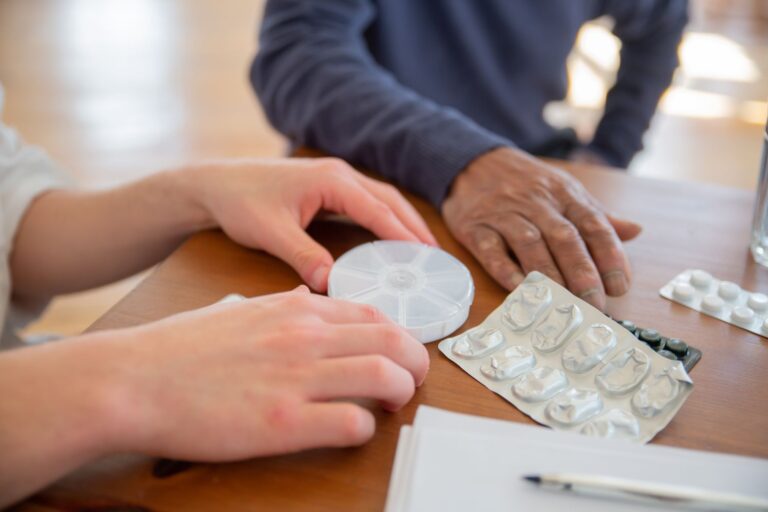
Pharmacy delivery services reduce errors by introducing multiple safety checks at the pharmacy level before medication ever reaches the home. When a patient enrolls in medication delivery, the pharmacy performs a comprehensive medication review, looking for interactions, duplicate medications, and doses that may be inappropriate for an older adult with dementia. If the pharmacy identifies a problem—such as a patient taking two different medications that contain the same active ingredient—they contact the prescriber to address it. This catch-and-correct mechanism prevents errors before they become patient problems. The physical packaging is equally important. Instead of receiving multiple bottles, patients receive medications in blister packs or pre-sorted cards where each dose is clearly labeled by date and time. A typical package might read “Monday 8am: Take 2 tablets” with the tablets sealed in that specific compartment.
This eliminates confusion about what to take and when. The act of popping a tablet from a labeled package is a more intuitive action than reading a label and counting out the right number of pills from a bottle. For dementia patients, this reduced cognitive demand is significant—it’s the difference between a task they can perform with minimal help and one they cannot perform safely. One limitation of delivery services is that they require consistent caregiver engagement. A caregiver still needs to retrieve the package from the patient, ensure they take it at the correct time, and watch for any side effects or problems. If a caregiver isn’t present or is inconsistent, the benefits of good packaging diminish. Additionally, some delivery services have limited flexibility with compounded medications or unusual dosing schedules, which can be a problem for patients with complex or changing treatment needs.
Managing Complex Medication Regimens for Homebound Patients
Homebound dementia patients often take more medications than their peers who can attend doctor’s appointments regularly and coordinate care. They may be on medications for dementia itself (donepezil, memantine), cardiovascular conditions (blood pressure medications, heart medications), pain management, anxiety, sleep issues, and other chronic conditions. This polypharmacy—the use of multiple medications—is a major source of medication errors and adverse effects. Pharmacy delivery services help manage polypharmacy by centralizing medication information in one place and having a pharmacist actively monitor the patient’s complete medication picture. When a patient with dementia is admitted to a pharmacy delivery service, the pharmacist asks detailed questions: What other medications is the patient taking? Does the patient have any allergies? What are their current health conditions? What other doctors are they seeing? This information allows the pharmacist to build a complete profile and identify problems that might otherwise be missed.
For example, a patient might be seeing a rheumatologist for arthritis and a primary care doctor for hypertension, with each prescribing medications that, together, increase the risk of dizziness and falls. A vigilant pharmacist can flag this interaction and recommend adjustments. However, this depends on the patient and family providing accurate information and the pharmacy following up regularly. If a patient visits an urgent care clinic and receives an antibiotic without the delivery pharmacy being informed, that gap in communication could lead to a missed drug interaction. Some delivery services have better integration with electronic health records and prescriber systems than others, and this variation can affect how well they catch errors.

How Delivery Services Streamline Medication Administration for Caregivers
Medication management becomes significantly easier for caregivers when the pharmacy handles all the sorting, counting, and packaging. Instead of managing five to ten different bottles, checking doses, and worrying about whether they’re giving the right medication at the right time, caregivers receive a simple package that tells them exactly what to give and when. This reduction in cognitive load is valuable, especially for older spouses caring for a partner with dementia or adult children balancing caregiving with work and other responsibilities. The convenience of home delivery also removes barriers to medication adherence. When a patient runs out of a medication, there’s no trip to the pharmacy or risk of missed doses while waiting for a new prescription to be filled.
The pharmacy automatically refills and delivers according to a schedule, ensuring the patient never runs out. This is particularly important for conditions where missing doses has immediate consequences—a patient with heart arrhythmia can’t safely go even a few days without their medication. A trade-off with delivery services is cost and insurance coverage. Not all insurance plans cover pharmacy delivery, and even those that do may have limitations—covering delivery for some medications but not others, or requiring higher out-of-pocket costs than a traditional pharmacy. Additionally, some delivery services have minimum prescription requirements or geographic limitations, making them unavailable to patients in rural areas. For patients on a fixed income or those without insurance, pharmacy delivery may simply be unaffordable, even though it would clearly benefit them.
Caregiver Training and Communication: Potential Weak Points in the System
A pharmacy delivery service can reduce medication errors at the pharmacy and packaging level, but errors can still occur at the point of administration—when the caregiver gives the medication to the patient. If the caregiver doesn’t understand the system, doesn’t check the labels, or is distracted or tired, errors happen. One woman caring for her mother with dementia continued to take one of her mother’s medications herself for two weeks before realizing her mistake, despite the clearly labeled package. Effective delivery services include caregiver education and support.
Some provide written instructions, video tutorials, or phone support from a pharmacist. The best services have a system for caregivers to report any questions or concerns—if a caregiver is unsure whether the patient took a dose or notices an unusual symptom, they can contact the pharmacy. However, this requires the caregiver to reach out, which doesn’t always happen if the caregiver feels rushed or doesn’t think the question is important. The burden of monitoring is still shared between the pharmacy and the caregiver, and if the caregiver’s part breaks down, so does the entire system.

Real-World Implementation and Caregiver Support Outcomes
Many health systems and insurance companies have begun partnering with pharmacy delivery services specifically because the evidence shows improved medication adherence and reduced hospitalizations. One Medicare Advantage plan that implemented medication delivery for high-risk patients (including those with dementia) reported a 12% reduction in unplanned hospitalizations and a 15% reduction in emergency department visits within the first year. These aren’t trivial numbers—each prevented hospitalization represents not only better health outcomes but also significant cost savings. Another practical benefit emerges from the relationship between patients and their delivery pharmacy.
When a patient has been receiving medications from the same pharmacy for several months, that pharmacy becomes familiar with the patient’s patterns and quirks. If the patient’s doctor prescribes a new medication, the pharmacist might notice it could interact with something else the patient is taking. If the patient suddenly needs a dose adjustment, the pharmacy already has the patient’s profile and can make the change without needing to gather information from scratch. This continuity of care is harder to achieve when patients use multiple pharmacies or when medication management is fragmented.
The Future of Pharmacy Services for Vulnerable Populations
Technology is beginning to enhance medication delivery services in ways that address some of the remaining gaps. Smart pill dispensers—devices that can confirm whether a patient actually took their medication and alert caregivers if a dose is missed—are being integrated with some delivery services. These systems can send notifications to a caregiver’s phone saying “Your mother has taken her 8am medications” or “Your mother missed her 6pm dose.” For homebound patients with dementia, this real-time feedback is valuable because it removes some of the guesswork about adherence.
Looking ahead, better integration between hospital discharge systems, outpatient medical practices, and pharmacy delivery services will likely reduce medication errors further. When a patient with dementia is hospitalized and then discharged, their medication regimen often changes. If the hospital discharge process automatically notifies the patient’s pharmacy delivery service of these changes, medications can be updated quickly and correctly. Some health systems are beginning to implement this kind of integration, particularly in accountable care organizations where the same entity is responsible for multiple aspects of a patient’s care.
Conclusion
Pharmacy delivery services meaningfully reduce medication errors for homebound dementia patients by addressing the problem at multiple levels: the pharmacy catches interactions and inappropriate doses, the packaging eliminates confusion about what to take and when, and the home delivery system ensures consistent access without requiring the patient or caregiver to navigate a pharmacy. The evidence shows that when homebound patients transition to medication delivery, their adherence improves and their health outcomes improve. For families managing dementia care, medication delivery removes one of the highest-stress, highest-risk aspects of caregiving.
However, delivery services are not a complete solution on their own. They depend on engaged caregivers, good communication between prescribers and pharmacies, and patient and family awareness of how to use the system correctly. The best outcomes occur when medication delivery is combined with regular pharmacist oversight, clear caregiver training, and ongoing monitoring for side effects or problems. For homebound dementia patients, discussing medication delivery with their primary care doctor or pharmacist is an important step toward safer, more effective care.
Frequently Asked Questions
How much does pharmacy delivery cost?
Costs vary widely. Some insurance plans, including Medicare Advantage plans, cover medication delivery with little or no patient cost. Others require copayments or may not cover it at all. Private pay typically ranges from $10 to $50 per month depending on the service and number of medications. It’s worth checking with your insurance and asking your primary care doctor or pharmacist about options.
What if my loved one is on multiple medications from different prescribers?
This is exactly what pharmacy delivery services are designed to manage. When you enroll, you provide information about all prescribers and medications. The pharmacy contacts the prescribers to obtain all current prescriptions and reviews them together for interactions and duplicates.
Can pharmacy delivery work with compounded or specialized medications?
Some services can, but not all. Before enrolling, ask whether the service can handle any specialized medications your loved one takes. Some compounded medications or unusual formulations may need to be handled through a specialty pharmacy instead.
What happens if my loved one has a bad reaction to a medication?
You should always call 911 or go to the emergency department for serious reactions. For non-emergency concerns, contact your pharmacist or doctor immediately. The pharmacy delivery service has your pharmacist on file and can help coordinate the response.
Is there a backup plan if the delivery is late?
Most services have contingencies for late deliveries and can provide interim supplies. Ask about this when enrolling and get the pharmacy’s emergency contact number.
How often does the pharmacist review my loved one’s medications?
This varies by service. Some pharmacists conduct ongoing reviews when refills are processed. Others perform comprehensive medication reviews at set intervals. Ask specifically how often your loved one’s medications will be reviewed by a pharmacist, and request more frequent reviews if you’re concerned about potential interactions or side effects.
You Might Also Like
- The Free Dementia Resource Finder Tool That Connects Families With Local Services Instantly
- How Technology Assisted Monitoring Lets Dementia Patients Live Independently 3 Years Longer on Average
- The Simple Kitchen Timer Trick That Helps Dementia Patients Complete Daily Tasks Independently
For more, see CDC — Alzheimer’s and Dementia.