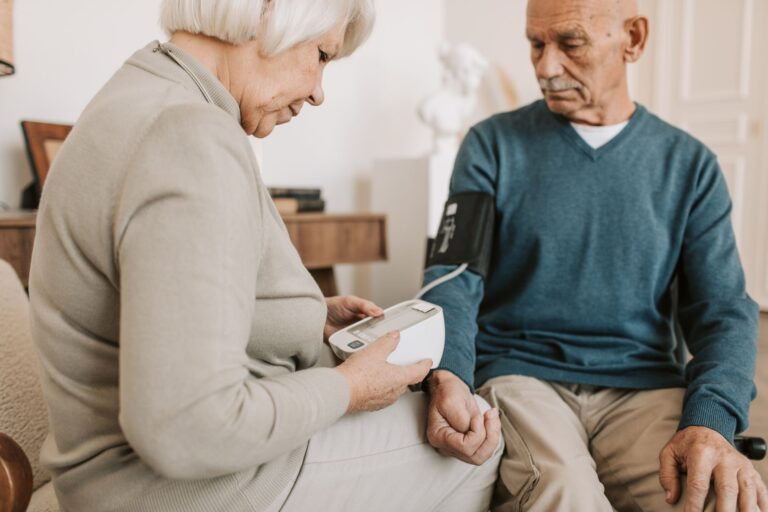
U.S. dementia care costs will reach $818 billion in 2026—a staggering sum that rivals the gross domestic product of many nations. This isn’t projection based on outdated models; it’s the finding of a USC-led study published June 24, 2026, using dynamic microsimulation to capture costs that previous estimates had systematically overlooked. Consider a single family scenario: a 72-year-old woman with Alzheimer’s disease who requires part-time paid care while her daughter reduces work hours to supervise.
The family’s direct medical expenses, unpaid caregiving hours, and lost wages from the daughter’s reduced income together consume hundreds of thousands of dollars over the course of the disease—but this represents just one of 5.7 million Americans currently living with dementia. The reason for such astronomical costs is not simply medical care. Only $222 billion of the $818 billion total comes from medical and long-term care services. The remainder reflects a far more complex burden: $320 billion from lost cognition and independence, $237 billion from unpaid family caregiving, and $23 billion from lost earnings among patients and caregivers. This breakdown reveals that dementia’s true cost extends far beyond hospital bills and prescription drugs into the fabric of family finances and national economic productivity.
Table of Contents
- What Makes Up the $818 Billion Dementia Care Burden?
- The Hidden Cost of Unpaid Family Caregiving
- How Medicare and Medicaid Shape Out-of-Pocket Burden
- The Economic Impact of Lost Earnings on Caregivers and Patients
- Why Previous Cost Estimates Fell Short of Reality
- Geographic Variation and Regional Cost Differences
- What This 2026 Cost Projection Signals for Families and Policymakers
What Makes Up the $818 Billion Dementia Care Burden?
The $818 billion figure breaks down into four major cost categories, each revealing a different dimension of how dementia strains American resources. The largest single component is the $320 billion attributed to quality of life loss—a measure that captures reduced cognition, functional ability, and independence. This isn’t a soft measure; it quantifies the real economic value of cognitive decline, including the loss of ability to work, engage socially, and manage daily tasks. The second-largest component is the $237 billion value of unpaid caregiving, provided by 5.2 million family members and friends who devote 6.8 billion hours annually to care. To put this in perspective, if those 5.2 million caregivers were paid at median wage rates, the annual tab would exceed many of the nation’s defense budgets.
Medical and long-term care services consume $222 billion annually—the domain most commonly tracked in healthcare accounting. Medicare and Medicaid together cover approximately 70 percent of this amount ($154 billion), while patients and families pay roughly 20 percent out of pocket ($46 billion), with private insurance and other sources covering the remainder. A woman in her mid-70s with moderate dementia might spend $6,000 to $12,000 monthly in an assisted living facility, far exceeding what most families can manage without depleting savings. Finally, $23 billion represents lost earnings from patients who can no longer work and from caregivers who reduce work hours or leave employment entirely. A 55-year-old woman who quits her $70,000-a-year job to care for her mother with dementia loses not just that year’s salary but decades of future earnings and retirement contributions.
The Hidden Cost of Unpaid Family Caregiving
The 6.8 billion hours of unpaid caregiving annually are often invisible in national economic discussions, yet they represent a form of labor that would be impossible to replace with paid services. These hours are provided by 5.2 million caregivers—many in their prime working years—who face competing demands from employment, raising children, and maintaining their own health. A limitation of even the latest cost estimates is that they cannot fully capture the psychological toll: caregiver burnout, depression, and health decline among those providing care.
Studies show that family caregivers of people with dementia experience stress levels comparable to those of people with serious chronic illnesses themselves. The $237 billion valuation of these unpaid hours, while substantial, likely underestimates their true economic weight because it applies average wage rates. In reality, dementia caregiving often requires specialized knowledge and skills—medication management, behavioral de-escalation, and round-the-clock availability—that would command premium rates if purchased through professional home care agencies. A family providing full-time care for a relative with advanced dementia might employ a combination of part-time in-home aides ($20–$25 per hour), adult day programs ($50–$100 per day), and occasional respite care, easily exceeding $3,000 to $4,000 monthly for only partial coverage of actual care needs.
How Medicare and Medicaid Shape Out-of-Pocket Burden
Medicare and Medicaid finance approximately 70 percent of the $222 billion in medical and long-term care costs, a seemingly generous arrangement that masks significant gaps in coverage and out-of-pocket exposure for families. Medicare covers acute care hospitalization and skilled nursing care for limited periods but has strict limits on mental health services and does not cover custodial care—the bulk of what dementia patients need as the disease progresses. When a person with dementia reaches the stage where they need assistance with eating, bathing, and toileting, Medicare typically no longer pays; families must then choose between hiring private aides or placing their relative in a nursing home and spending down assets until Medicaid eligibility is achieved.
Medicaid, which finances nursing home care for many dementia patients, requires significant asset depletion first. A widowed man with a house and modest savings who needs nursing home placement may be forced to spend $50,000 to $100,000 annually out of pocket until his assets dwindle to the Medicaid threshold—a process sometimes taking years. Out-of-pocket costs for dementia families average several thousand dollars annually, a burden that studies show increases anxiety around retirement planning and creates financial hardship even in middle-income households. The $46 billion paid directly by patients and families represents only the formal medical costs; actual out-of-pocket spending also includes transportation, home modifications, medical alert systems, and respite care, pushing real family expenditures well beyond official estimates.
The Economic Impact of Lost Earnings on Caregivers and Patients
The $23 billion in lost earnings annually represents a direct reduction in national economic productivity and household income. Of this, a portion comes from people with dementia who must leave work as cognitive decline makes their jobs untenable—a 60-year-old accountant diagnosed with early-stage Alzheimer’s may be forced to retire years before planned, losing decades of potential earnings and causing disruption in her household budget. An even larger portion comes from caregivers, predominantly women, who reduce work hours or leave employment entirely. The average female caregiver who exits the workforce to provide care loses an estimated $300,000 in lifetime earnings and Social Security benefits, a calculation that extends the true cost of a single dementia diagnosis across multiple decades.
A comparison with other chronic illnesses illustrates the magnitude: caregiving for a person with cancer typically involves intense periods of support during treatment followed by recovery or, if terminal, a more defined timeline. Dementia caregiving, by contrast, is often a decade-long commitment with gradually escalating demands and no predictable endpoint. A family facing this reality must make real economic trade-offs: one spouse leaves work while the other maintains employment, reducing household income and retirement security. For self-employed individuals or those in jobs without family leave protections, the choice can be even starker—continue working and risk inadequate care for a family member, or exit the workforce and face years of reduced income.
Why Previous Cost Estimates Fell Short of Reality
The USC study using dynamic microsimulation modeling represents a methodological advance over earlier cost-of-illness studies that typically measured only direct medical expenditures and informal care hours. Earlier estimates, often in the $200–$300 billion range, omitted or severely underestimated the value of quality of life loss and the economic burden of unpaid caregiving. The microsimulation approach builds a mathematical model of the entire population of people with dementia and their caregivers, tracking how costs accumulate across different age groups, disease stages, care settings, and types of care arrangements. A critical warning: even this updated estimate relies on assumptions about wage rates, healthcare utilization, and life expectancy that may shift with demographic changes or policy reforms.
Another limitation is that the $818 billion estimate does not include the full spectrum of indirect costs, such as increased risk of accidents among fatigued caregivers or the long-term health consequences of caregiver stress that may not manifest until years later. The estimate also assumes current patterns of care, institutional use, and family structure. If demographic shifts lead to fewer available family caregivers (due to declining birth rates and geographic dispersion), the portion of care that must be purchased on the market would increase, potentially raising costs further. Furthermore, the study’s publication in June 2026 means data collection and modeling occurred during a specific economic and healthcare policy environment; costs could diverge significantly if Medicare coverage, long-term care facility wages, or medical technology pricing shifts.
Geographic Variation and Regional Cost Differences
Dementia care costs vary dramatically by region, a factor often obscured by national averages. Assisted living facilities in urban areas like New York City or Los Angeles can exceed $8,000 monthly, while the same level of care in rural areas might cost $3,000 to $5,000 monthly. A family in a high-cost metropolitan area faces a markedly different financial reality than one in a lower-cost region.
Rural areas face different challenges—fewer memory care facilities available locally may mean traveling significant distances for specialized care, or relying even more heavily on unpaid family caregiving because professional options are limited. The $818 billion national figure disguises these regional realities. A person diagnosed with dementia in a Sunbelt state with low housing costs and abundant adult day programs may incur total lifetime costs 40–50 percent lower than someone in a high-cost state with expensive facilities and limited community-based alternatives. Policy discussions about funding dementia care must account for this variation; a one-size-fits-all Medicare or Medicaid policy reform may work well in lower-cost regions but leave high-cost areas underfunded.
What This 2026 Cost Projection Signals for Families and Policymakers
The $818 billion estimate, published June 24, 2026, signals that dementia has become a dominating economic and social issue with few precedents in scope. The 5.7 million Americans currently living with dementia—including 5.1 million age 65 and older—represent the active caseload driving these costs today. Dementia incidence continues to rise with aging, meaning costs will likely exceed these 2026 figures within the coming years unless prevention breakthroughs or earlier intervention strategies substantially slow disease progression.
For families, the scale of these costs underscores the importance of early diagnosis, advance care planning, and exploring whether conditions like mild cognitive impairment or early Alzheimer’s disease can be slowed through clinical trials, lifestyle interventions, or emerging treatments. For policymakers, the finding that $320 billion—39 percent of total costs—comes from quality of life loss and $237 billion from unpaid caregiving suggests that solutions cannot rely solely on traditional healthcare financing. Investments in caregiver support, respite care, community-based services, and research into slowing cognitive decline may yield economic returns comparable to or exceeding their costs.
- —