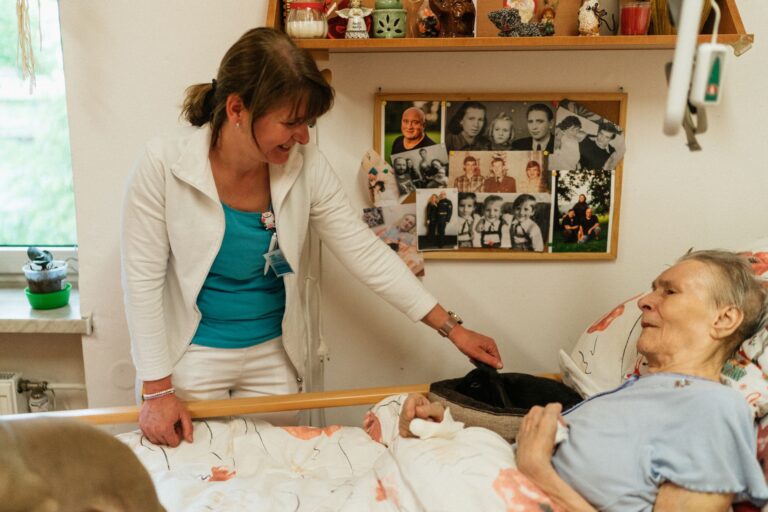
Texas dementia caregivers employed as aides typically earn about $11 to $16 per hour. The statewide median is $11.65 per hour, or $24,230 per year, for home health and personal care aides.
Here, dementia caregiver means a paid aide who helps a person with dementia with daily care and supervision. JustTheSalaries, citing federal wage data for May 2025, places the Texas median at $11.65 across 329,590 workers in its breakdown of BLS May 2025 data. That federal category covers all home health and personal care aides, not dementia aides alone.
Medical information disclaimer: This article is for general educational purposes only and does not provide medical advice, diagnosis, or treatment. Always consult a physician or other qualified health professional about symptoms, medications, tests, or treatment decisions.
Table of Contents
- What statewide pay data show
- Why no separate dementia-care wage exists
- What Medicaid reimbursement supports
- Why bill rates are higher than take-home pay
What statewide pay data show
JobsSearch, citing the U.S. Bureau of Labor Statistics, puts the Texas mean at $26,070 per year, above the $24,230 median in its summary of BLS wage data. Higher earners pull the average up.
Hourly pay ran from about $10.57 for the lowest-paid 10% to over $15.17 for the top 10%. The middle 80% earned $21,980 to $31,560 per year. So most Texas aides cluster near $11 to $15 per hour, with only the top slice above $15.
Why no separate dementia-care wage exists
Federal statistics publish only one combined wage for home health and personal care aides. JustTheSalaries notes, citing BLS and O*NET classification 31.0, that no separate dementia-caregiver wage is published.
Dementia-specific worker pay therefore comes from job ads and agency surveys. Those postings vary more by city, employer, shift, and memory-care duties. Austin and memory-care postings tend to sit higher within the $11 to $16 range.
What Medicaid reimbursement supports
RCM Xpert's 2026 reimbursement guide reports a Texas Medicaid-funded personal-attendant assumption of $13.00 average hourly wage. That wage sits inside a $17.13 hourly base reimbursement effective Sept. 1, 2025.
The same guide ties the rate to a 9.9% increase under the 2026-27 appropriations act. The $17.13 is program funding per hour, not take-home pay. It must cover the wage plus employer costs of delivering the visit.
Why bill rates are higher than take-home pay
What families are billed exceeds worker wages. HomeCareScorecard, citing the CareScout Cost of Care Survey 2025, reports a Texas median of $30 per hour for non-medical in-home care in its Texas cost tables. CareScout collected those rates from July through November 2025.
In Houston in 2026, CareWorks Houston lists roughly $22 to $26 per hour billed for personal care and $26 to $30 for memory and dementia care. That dementia premium is a consumer-price difference, not extra take-home pay. Private-pay bill rates of $26 to $40 per hour go to the agency first, before wages, taxes, and overhead.
- Compare the posted employee wage, not the agency bill rate
- Ask whether memory-care shifts carry a pay differential
- Ask whether the role is Medicaid-funded, agency private-pay, or independent
- Confirm hours, overnight rules, mileage, and benefits before accepting