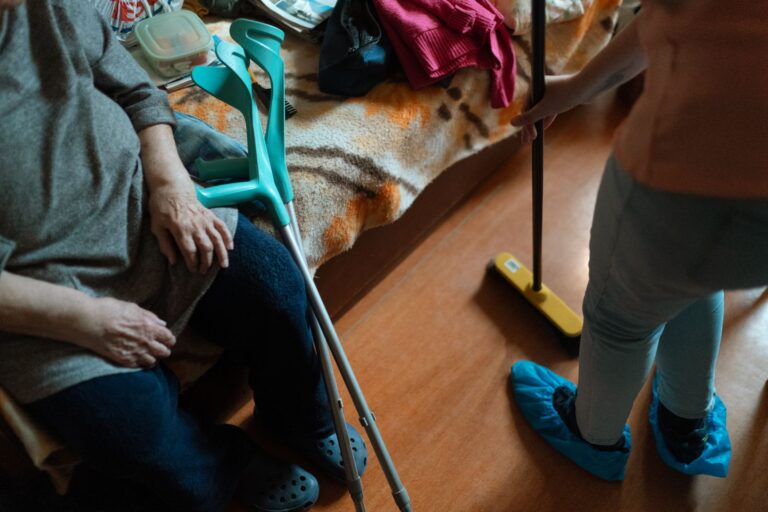
Dementia caregivers rarely get a Christmas bonus because most are unpaid family members with no employer to pay one. A dementia caregiver is a person who helps someone with memory loss with daily tasks, and most do this work for free. According to the Alzheimer's Association, nearly 13 million Americans provided over 19 billion hours valued above $446 billion, as reported in the 2025 Facts and Figures page. That scale means care happens, but no payroll exists for a bonus.
Medical information disclaimer: This article is for general educational purposes only and does not provide medical advice, diagnosis, or treatment. Always consult a physician or other qualified health professional about symptoms, medications, tests, or treatment decisions.
Table of Contents
- No employer means no bonus
- Paid aides earn little and leave fast
- Family workers lose pay leverage
- What to give instead
No employer means no bonus
Dementia care is unusually heavy. By the second year after onset, patients needed three times more family hours, averaging 45 hours monthly versus 13, according to the University of Michigan School of Public Health. Out-of-pocket spending doubled during that time.
Wealth falls fast. Net worth fell over 60% within eight years, according to the same Michigan summary of a JAMA Internal Medicine study. Families give more time while their own cushion shrinks.
Paid aides earn little and leave fast
Paid home care also pays poorly. The U.S. Dept. of Labor O*NET data, sourced to 2024 Bureau of Labor Statistics figures, puts the national median at $16.78 per hour and $34,900 per year, detailed in the national wages page.
Low base pay leaves little room for extra checks. Turnover breaks eligibility. According to PHI data reported by Home Health Care News, median pay was $16.77 hourly in 2024, median turnover was about 75%, and the industry faces about 6.1 million openings by 2034. New hires often miss tenure rules for bonuses.
Family workers lose pay leverage
Many caregivers cut work to provide care. In an AARP and S&P Global survey of 1,200 working caregivers, 27% shifted from full-time to part-time or reduced hours, according to AARP. Half made work changes to provide at least six weekly care hours.
The lifetime penalty is large. AARP's 2026 Hidden Cost of Caregiving report finds caregivers now in their early-to-mid 40s risk about $2 trillion in lost pay plus $140 billion in retirement income and $150 billion in Social Security. Reduced hours and exits weaken raises, promotions, and bonus standing.
What to give instead
Under federal rules, Christmas bonuses are discretionary. The U.S. Dept. of Labor explains they are excludable only when the employer keeps sole discretion over whether and how much to pay until near period-end, stated in Fact Sheet #56C.
Neither family nor agency caregivers can expect one. Plan a direct gift instead. National medians hide wide variation, and surveys rely on self-report, so match the gift to your aide and budget. Hand the gift directly to the caregiver who does the daily work.
- Give cash or a bank gift card in hand before the holiday week.
- Add one paid day off for an independently hired aide.
- Write the amount in a short thank-you note to avoid confusion.