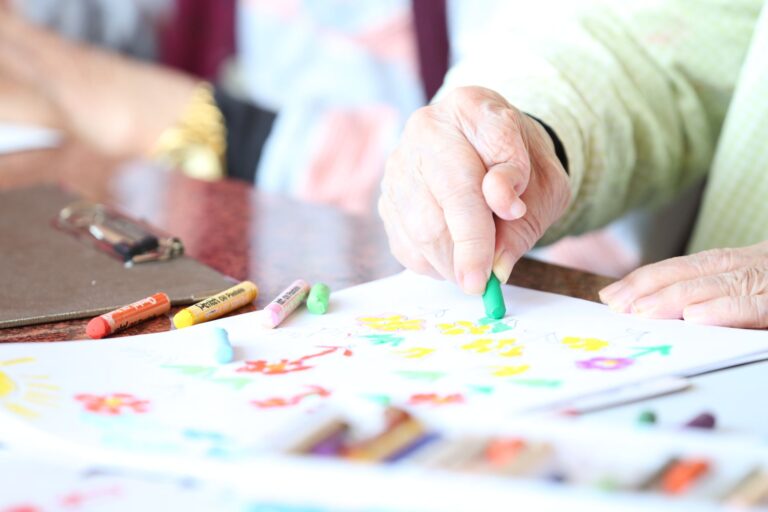
Life story books can support engagement in dementia care by turning personal photos, music, objects and memories into prompts for conversation. They give relatives and care staff meaningful material for helping a person reconnect with past experiences and interact socially. A life story book records important experiences, people and places using paper, photographs or a digital format. The person may create it with relatives or care professionals, according to the Alzheimer's Society guidance on life story work.
Medical information disclaimer: This article is for general educational purposes only and does not provide medical advice, diagnosis, or treatment. Always consult a physician or other qualified health professional about symptoms, medications, tests, or treatment decisions.
Table of Contents
- How does a life story book create engagement?
- What does the evidence show?
- What should go into the book?
- How can it inform everyday care?
How does a life story book create engagement?
The book gives an interaction a personal starting point. Instead of searching for a general topic, a relative or staff member can introduce a familiar photograph, song, object, quotation or story. For example, a photograph of an important place might prompt discussion about people or events connected with it.
A favorite song could offer another way to participate when a direct question does not lead to conversation. The book is therefore more than a record to read from beginning to end. Its individual pieces can become flexible prompts for shared attention, memories and social interaction.
What does the evidence show?
Research generally points toward better communication and engagement. A 2018 systematic review covering 14 studies and 243 people found qualitative evidence of triggered memories, positive emotions, stronger engagement and improved social interaction, communication and relationships. Five controlled studies also found improvements in at least some outcomes, including autobiographical memory, mood, depression or quality of life, as described in International Psychogeriatrics.
A later review examined seven previous reviews rather than one new group of participants. Six of those reviews reported improved communication with relatives, care staff or other residents after life story books were used, according to the 2023 PLOS ONE review. These findings do not mean every book will produce every benefit. The interventions, formats and measured outcomes varied, so the evidence supports life story books as a promising engagement tool rather than a guaranteed treatment.
What should go into the book?
Content should reflect the individual rather than follow a universal template. Reviewed programs used physical and digital formats containing photographs, memorabilia, stories, quotations, songs and music.
A practical starting process is: A large collection is not automatically more useful. A focused selection of personally relevant material may be easier to introduce during conversation than a book crowded with unfamiliar or weakly connected content.
- Choose paper, digital media or a combination that suits how the book will be used.
- Gather a small set of important photographs, stories, people, places, objects or music.
- Invite the person to select or discuss material when they can participate.
- Ask family members for details when the person cannot readily recall them.
- Notice which items prompt conversation or interaction, then give those items more space.
How can it inform everyday care?
Life stories can help care staff learn what matters to a resident and identify material for future conversations. In a pilot involving 170 residents across 16 nursing homes, residents reported positive experiences and depression scores declined over time. Ninety-two staff members also reported greater appreciation of knowing residents' stories for care planning, according to the Benjamin Rose Institute on Aging study. The evidence has important boundaries.
Most studies are small and concentrated in nursing or residential care, while programs do not use one standardized protocol. Stronger long-term research is still needed to establish how reliably life story books improve communication and engagement. Treat the book as an adaptable resource rather than a fixed script. If particular content or a particular format does not encourage interaction, change the prompts, presentation or people involved.