Life story books in memory care can be created through one-on-one interviews or small-group sessions. In either format, each person receives an individual book built from personal stories, photographs, and meaningful artifacts.
The main difference is the creation experience. Individual sessions offer privacy and personal pacing, while groups add peer storytelling and social contact. Research supports both approaches, but it does not establish one standard method or prove equal suitability across dementia stages.
Medical information disclaimer: This article is for general educational purposes only and does not provide medical advice, diagnosis, or treatment. Always consult a physician or other qualified health professional about symptoms, medications, tests, or treatment decisions.
Table of Contents
- How do the two formats differ?
- What does a structured group program look like?
- When is one-on-one work the better fit?
- What can the evidence actually support?
How do the two formats differ?
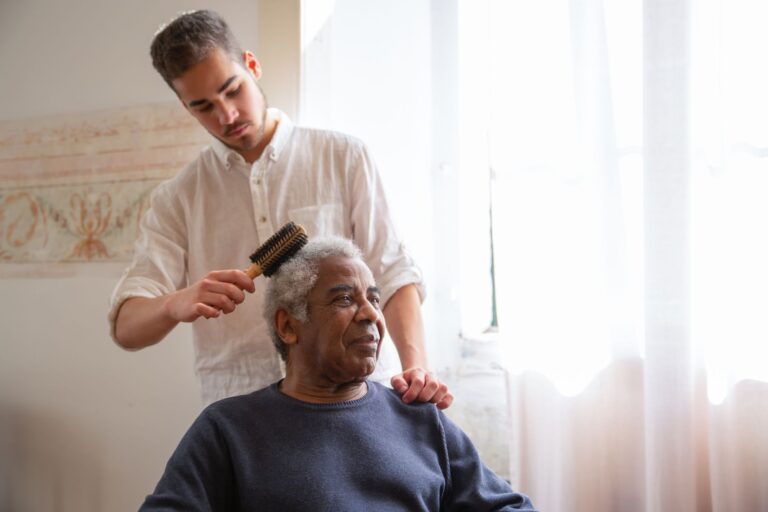
One-on-one work usually pairs a resident with a trained facilitator. They review the person's life over several sessions and select material for a personal book. This format may suit private memories, communication difficulties, or people who become distracted in groups. A North Wales trial involved 23 people with mild-to-moderate dementia. One group completed 12 individual life-review sessions, while relatives created books for the other group without involving residents in the process.
The individual sessions improved quality of life and autobiographical memory before book delivery, according to the Aging & Mental Health trial abstract. Group work still produces an individual book for each participant. Residents gather in a small, facilitated group, recall experiences, and share selected stories. Family members and friends may contribute photographs, objects, or information. Group participation should remain an invitation, not a demand. A resident may enjoy hearing peers' stories but prefer to discuss sensitive experiences privately or leave them out of the book.
What does a structured group program look like?
A Singapore nursing-home protocol provides one practical model. It used eight sessions across three months, with each session lasting about 60 minutes. Groups included no more than five or six residents and had a trained nurse facilitator. During the first four sessions, participants explored their autobiographies through conversation, photographs, and artifacts supplied by caregivers.
During the final four, they shared stories with peers, relatives, and friends. Each participant received a separate book, as described in the 2022 nursing-home study. A care setting adapting this model could organize the work as follows: This is an implementable research model, not a universal protocol. Session length, group size, and the amount of family involvement may need adjustment for each resident.
- Invite a small group whose members can participate without undue pressure.
- Collect photographs and meaningful objects with family or caregiver help.
- Use early sessions to develop each person's story.
- Let residents decide which memories they want to share.
- Use later sessions for voluntary sharing with peers and trusted visitors.
When is one-on-one work the better fit?
Choose one-on-one sessions when privacy, close attention, or flexible pacing matters most. The facilitator can pause, change topics, or return to a photograph without making the person feel responsible for a group's progress. Individual work also gives the resident a direct role in creating the book. That distinction matters because receiving a family-made book is not the same experience as recalling, choosing, and organizing memories with a facilitator.
However, the finished book may still provide value when a relative creates it. In the North Wales trial, differences in quality of life between the two creation methods were no longer significant six weeks after both groups received books. After delivery, relatives reported better relationship quality, while staff showed improved knowledge and attitudes. The study concluded that life review—the guided process of exploring and organizing past experiences—requires training and supervision. families and care teams should not assume that photographs and memory questions are automatically harmless or easy to manage.
What can the evidence actually support?
The evidence is encouraging but limited. A systematic review of 14 studies found that life story books were usually tangible, individually created books used in nursing homes. Programs had a median of six sessions, but the studies were too small and varied to establish best practice, according to International Psychogeriatrics. The Singapore study reported improved depression, quality-of-life, and life-satisfaction scores over three months among 37 intervention participants. Yet eligible residents had normal cognition or mild cognitive impairment.
Those findings cannot be treated as direct evidence for people with moderate or severe dementia. Communication may be the most consistent practical benefit. A 2023 review of reviews found that six of seven included reviews reported improved communication among people with dementia, relatives, staff, and other residents. It also found no standard protocol and called for stronger guidance, training, and research, as reported in PLOS ONE. Before choosing a format, consider whether the person can express preferences, tolerate the session length, and enjoy a group without becoming overwhelmed. Use a trained facilitator when possible, involve relatives without letting them take control of the story, and treat refusal, fatigue, or distress as a reason to pause or change the activity.