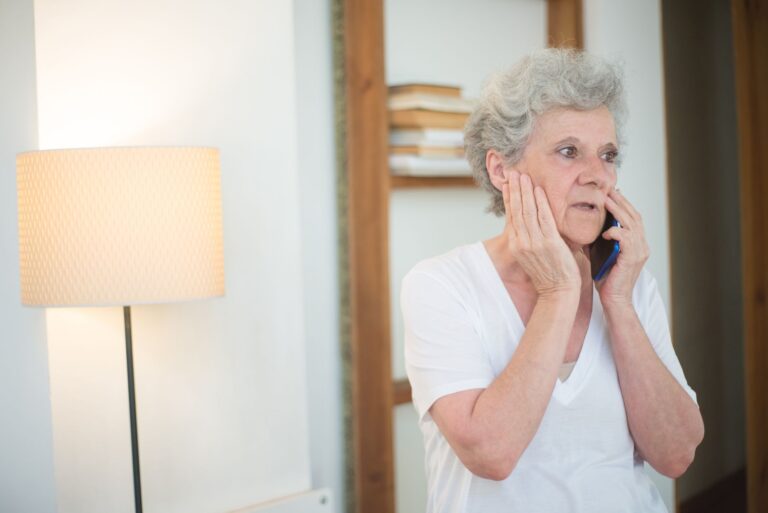
Research over the past two decades reveals a significant and troubling link: people with untreated hearing loss face a substantially higher risk of developing Alzheimer’s disease and other forms of dementia. A landmark 2011 study from Johns Hopkins University found that older adults with hearing loss were significantly more likely to develop dementia compared to those with normal hearing, with the risk increasing proportionally as hearing loss worsened. A 65-year-old with mild hearing loss had roughly double the dementia risk; those with moderate hearing loss tripled their risk; and severe hearing loss carried up to five times the dementia risk.
The connection isn’t coincidental. Hearing loss forces the brain to work harder to process sound, redirecting neural resources away from memory, attention, and cognitive processing. When you’re constantly straining to understand conversations or sounds in your environment, your brain depletes the cognitive reserves that protect against cognitive decline. At the same time, social isolation often follows hearing loss—people stop attending gatherings, restaurants, and social events where they struggle to hear—and loneliness itself is a known risk factor for dementia.
Table of Contents
- Why Does Untreated Hearing Loss Increase Alzheimer’s Risk?
- The Cognitive Load Mechanism and Its Limitations
- Social Isolation and Cognitive Decline
- Hearing Aids, Cochlear Implants, and Dementia Risk Reduction
- Complicating Factors and Interactions
- The Role of Brain Reserve and Protective Factors
- Age-Related Hearing Loss and the Dementia Timeline
- Frequently Asked Questions
Why Does Untreated Hearing Loss Increase Alzheimer’s Risk?
Hearing loss creates a cascade of brain changes that may accelerate cognitive decline. When sound reaches your ears but the signal is degraded, your brain’s auditory cortex receives incomplete information. This triggers “effortful listening”—a metabolically expensive process where your prefrontal cortex (responsible for memory and attention) must work overtime to fill in missing sounds and make sense of what you’re hearing. This is why people with hearing loss often report fatigue after social events: their brains are exhausted from this cognitive strain. Over years and decades, this neural overload may contribute to the structural and biochemical changes that characterize Alzheimer’s disease. A comparison: if a typical brain allocates 30% of cognitive resources to hearing and 70% to other tasks, a hearing-impaired brain might allocate 60% to hearing and only 40% to memory, reasoning, and executive function.
The brain physically shrinks in people with untreated hearing loss—specifically in regions critical for memory formation. Several neuroimaging studies show atrophy in the superior temporal gyrus and other language-processing areas in people with significant untreated hearing loss. The timing matters. Hearing loss most often begins in the 50s and 60s, decades before Alzheimer’s symptoms typically appear. The longer hearing loss goes untreated, the longer the brain endures this cognitive burden. Some researchers propose that by the time cognitive symptoms appear, substantial underlying damage has already occurred.
The Cognitive Load Mechanism and Its Limitations
The “cognitive load” explanation is the leading theory, but it’s important to understand its limitations. Researchers cannot yet definitively prove that the cognitive strain from hearing loss directly causes the neurodegeneration seen in Alzheimer’s, only that the two conditions often occur together and that hearing loss precedes cognitive decline. The correlation is strong, but causation remains unproven—it’s possible that an underlying condition (like vascular disease) damages hearing and cognition independently, or that early, undetected cognitive decline impairs hearing perception.
Additionally, not everyone with hearing loss develops dementia. Many people with severe, untreated hearing loss live into their 90s with normal cognition. This suggests that while hearing loss is a risk factor, other protective factors—education level, cognitive reserve, physical fitness, social engagement—can offset some of the risk. A 75-year-old with a high level of education and active social connections might tolerate untreated hearing loss better than a 75-year-old who is socially isolated and less cognitively engaged, even if their hearing loss is identical.
Social Isolation and Cognitive Decline
Beyond the mechanistic brain changes, hearing loss triggers a secondary pathway to dementia: social withdrawal. When you can’t hear conversations easily, attending a dinner party becomes stressful rather than enjoyable. Family members may become frustrated explaining things repeatedly. Over time, people with untreated hearing loss progressively isolate themselves.
A 70-year-old who once attended book club weekly, went out to restaurants, and chatted with neighbors may stop attending—not because they’ve lost interest, but because they find it exhausting and embarrassing to ask people to repeat themselves constantly. This social isolation is itself a major dementia risk factor, comparable in impact to smoking or sedentary behavior. Loneliness and cognitive disengagement from others accelerate cognitive decline through multiple mechanisms: reduced mental stimulation, increased stress hormones (like cortisol), declining physical activity, and worsening of depression and anxiety. A person can have perfect hearing but severe cognitive decline if they become isolated. Conversely, someone with hearing loss who continues to engage socially—whether through hearing aids, sign language, written conversation, or other accommodations—maintains stronger cognitive reserve.
Hearing Aids, Cochlear Implants, and Dementia Risk Reduction
The hopeful aspect: treating hearing loss appears to reduce dementia risk. Several studies, including a large 2023 study, found that people who used hearing aids or other hearing interventions had substantially lower dementia risk compared to untreated hearing loss—risk levels closer to those of people without hearing loss. However, this is not a simple cause-and-effect story. Hearing aid use may be protective for several overlapping reasons: it restores auditory input to the brain (reducing cognitive load), it enables social re-engagement (combating isolation), and it may serve as a marker of good health literacy and healthcare engagement generally. A tradeoff: hearing aids don’t fully normalize auditory processing. Many users report they still find complex environments (restaurants, crowded events) mentally taxing.
Cochlear implants, which bypass damaged hair cells in the inner ear, can restore more natural hearing in some cases, but they require surgery and carry risks. Neither solution is perfect, and compliance matters—hearing aids only help if you wear them consistently. The cognitive benefits appear to accrue over months and years of use, not immediately. Cost and accessibility present another limitation. Hearing aids have become more affordable, but they still cost $2,000–$6,000 per pair out of pocket in many cases, and Medicare coverage is limited. In lower-income populations with both hearing loss and dementia risk, the barrier to treatment is substantial. Research from the AARP shows that cost is the primary reason people don’t pursue hearing aids, even when recommended.
Complicating Factors and Interactions
The relationship between hearing loss and Alzheimer’s is further complicated by the fact that both conditions often occur together in aging populations, sometimes making it hard to distinguish cause from effect. Someone diagnosed with early cognitive decline might only then discover they have hearing loss, raising the question: did hearing loss accelerate the dementia, or did early cognitive changes affect hearing perception? In some cases, early Alzheimer’s pathology may impair the brain’s ability to process and interpret sounds before cognitive symptoms are noticeable.
Additionally, other conditions that drive both hearing loss and dementia—cardiovascular disease, diabetes, high blood pressure—may be the true underlying cause of cognitive decline rather than hearing loss itself. A 72-year-old with atherosclerosis and poor blood flow may develop both hearing loss and cognitive decline because of the vascular damage, not because one caused the other. This is why researchers often adjust for cardiovascular and metabolic factors in studies examining the hearing-dementia link.
The Role of Brain Reserve and Protective Factors
Cognitive reserve—the brain’s built-in resilience to damage—can buffer against the effects of hearing loss. People with higher education, lifelong learning, bilingualism, and cognitively demanding careers show greater cognitive reserve. A retired neurosurgeon and a retired factory worker might experience the same degree of hearing loss, but the former’s decades of complex cognitive work may protect them better against dementia, even without intervention.
Physical fitness, Mediterranean diet, cognitive engagement, and rich social connections all build cognitive reserve and reduce dementia risk independent of hearing status. A person with hearing loss who is physically fit, socially active, and mentally engaged may have stronger protection than a person with normal hearing who is sedentary and isolated. This underscores that hearing health is one piece of a larger dementia-prevention picture, not the only piece.
Age-Related Hearing Loss and the Dementia Timeline
Age-related hearing loss, or presbycusis, follows a predictable trajectory. It typically begins affecting high frequencies in the 50s and progressively impacts lower frequencies with age. By age 75, roughly half of all adults have hearing loss significant enough to affect communication.
Coincidentally, this is also the age when Alzheimer’s-related neurodegeneration accelerates and cognitive symptoms begin appearing in many people at genetic risk. The 10–20 year gap between the onset of hearing loss (often unrecognized) and the onset of cognitive symptoms provides a critical window for intervention. Detecting and treating hearing loss at age 60 might prevent or substantially delay cognitive decline that would otherwise appear at age 75 or 80. Audiologists and primary care doctors are increasingly recognizing this window as a dementia prevention opportunity, not merely a hearing correction service.
Frequently Asked Questions
Does everyone with hearing loss develop dementia?
No. Many people with untreated hearing loss maintain normal cognition throughout their lives. Hearing loss is a risk factor, not a guarantee. Other factors—education, social engagement, physical health, genetics—significantly influence cognitive outcomes.
Can hearing aids prevent Alzheimer’s disease?
Hearing aids reduce dementia risk in people with hearing loss, but they are not a guarantee against dementia. They appear to work by restoring auditory input, reducing cognitive load, and enabling social re-engagement. Consistent use over months and years seems necessary for benefit.
Is the connection between hearing loss and Alzheimer’s proven?
The correlation is well-established and replicated across multiple large studies. However, scientists cannot yet definitively prove causation—it’s possible an underlying condition damages both hearing and cognition independently, or that early cognitive decline impairs hearing perception first.
What age should hearing be screened?
The American Academy of Otolaryngology recommends baseline hearing screening at age 50, with follow-up every 10 years if normal. Earlier or more frequent screening is recommended if you notice difficulty hearing or have risk factors like noise exposure or cardiovascular disease.
Are there other ways to reduce dementia risk if I have hearing loss?
Yes. Exercise, Mediterranean diet, cognitive engagement, social connection, cardiovascular health, sleep quality, and stress management all reduce dementia risk independent of hearing status. Hearing treatment plus these lifestyle factors offers more protection than any single intervention.
Can hearing loss itself be prevented?
Age-related hearing loss (presbycusis) is largely genetic and cannot be prevented, though it can be slowed. Noise-induced hearing loss is preventable—wear hearing protection around loud equipment or at loud events. Protect your hearing at any age to reduce future risk.