Reviewed by the Help Dementia Editorial Team — our editors review every article for accuracy against guidance from the National Institute on Aging, the Alzheimer’s Association, and peer-reviewed sources.
Families can advocate during hospital stays by serving as a consistent presence, information bridge, and decision-maker on behalf of their loved one—particularly important for dementia patients who may struggle to communicate their needs or understand their surroundings. Hospital staff handle dozens of patients daily and often lack the background knowledge that families possess about a patient’s baseline cognitive function, personality, triggers, and preferences. When your family member has dementia, your role shifts from passive support to active participant in their care, protecting them from medication errors, unnecessary confusion, and preventable complications that can accelerate cognitive decline.
This advocacy begins before admission and intensifies through discharge. You might notice that your mother becomes frightened in unfamiliar settings or that a particular medication makes her agitated—information that floor nurses won’t have on day one. By communicating these insights clearly and consistently, asking specific questions, and maintaining a written record of interactions and decisions, families prevent the dangerous gap between what doctors intend and what actually reaches the patient. Hospital advocacy isn’t confrontational; it’s collaborative problem-solving that protects someone who temporarily cannot fully protect themselves.
Table of Contents
- What Hospital Advocacy Means for Dementia Patients
- Building a Hospital Communication Plan
- Recognizing When Your Input Matters Most
- Creating a Patient Summary to Share with Hospital Staff
- Common Hospital Challenges for Dementia Patients and How to Address Them
- Documentation: Your Advocacy Record
- Preparing for Transitions After Hospital Discharge
- Conclusion
- Frequently Asked Questions
What Hospital Advocacy Means for Dementia Patients
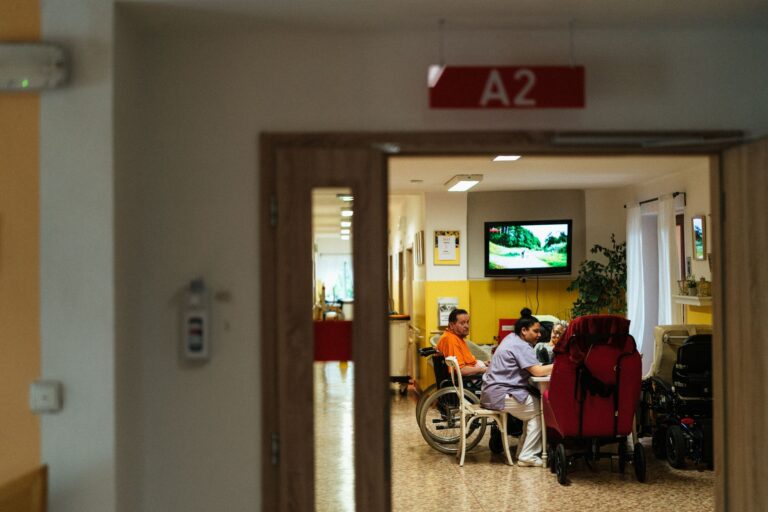
hospital environments are inherently disorienting: fluorescent lighting, constant noise, unfamiliar faces, disrupted sleep schedules, and frequent interruptions to routine. For someone with dementia, these stressors can trigger behavioral changes, increased confusion, and what hospital staff might misinterpret as non-compliance or illness progression. A person who’s never been combative might pull at IV lines. Someone usually calm might become agitated at sunset. These reactions aren’t personality changes—they’re adaptive responses to overwhelming sensory and cognitive stress.
Your role as an advocate is to help staff understand these reactions in context and implement accommodations that reduce that burden. Advocacy also means being the historian and interpreter. You know whether your father takes his time to understand questions or needs them repeated, whether he responds better to calm voices or direct commands, and whether his usual breakfast is oatmeal or scrambled eggs. Hospital protocols assume patients can advocate for themselves, ask questions, and report symptoms accurately. That assumption breaks down with dementia. Without family input, a patient might receive medications at times that conflict with their sleep schedule, be placed in a confusing double room when they need quiet, or have communication attempts dismissed as confusion rather than understood as legitimate needs.

Building a Hospital Communication Plan
Before admission or within the first hours of an emergency hospitalization, identify one or two family members who will be the primary contact points with medical staff. This doesn’t mean constant bedside presence—hospitals can accommodate that differently—but rather one person responsible for checking in at key transition times (shift changes, after procedures, at discharge planning) and being reachable by phone. Multiple family members offering different opinions to different nurses creates confusion and can undermine care decisions. A single clear voice is more likely to be heard and remembered.
Create a one-page written communication about your loved one’s baseline function and preferences. Include: what dementia stage they’re in (early, moderate, advanced), whether they can understand complex sentences or respond to single words, what they can and cannot do independently, and non-negotiable needs like specific toileting routines or comfort items. This document is not a complaint list; it’s a user manual for your family member. Include things like “Dad becomes anxious if he can’t see his wedding ring” or “Mom sleeps better with the light on.” Share it at admission with nursing, ask them to post it at the bedside or in their records, and reiterate the most critical points during each shift change. The limitation of written communication is that busy staff may not read it thoroughly; reinforce key points verbally.
Recognizing When Your Input Matters Most
Certain moments in a hospital stay carry higher risk and warrant more active advocacy. Medication administration is one: dementia patients might not report side effects or might describe them in ways that confuse non-family listeners. If your mother usually takes her thyroid medication at breakfast but a hospital schedule tries to give it at lunch with food, or if she’s prescribed a sedative that makes her more confused rather than calmer, you’re the person most likely to notice the change and connect it to the cause. Before any new medication, ask the nurse: What is it for? What should we expect? What side effects should we watch for? This isn’t distrust; it’s data collection. Shift changes are another critical moment.
During night shifts, staffing is tighter and response time slower. If your family member is restless, confused, or in pain at midnight, fewer people are available to help, and a family member on-site can call for help more quickly than someone counting on the call button. Similarly, hospital discharge planning—the process of figuring out where your loved one goes and what support they’ll need—happens in conversations between doctors, case managers, and families. If you’re not present or represented, discharge might default to an unsafe assumption about what you can manage at home. A family member asking “What medications go home with us?” and “Who will supervise those?” is preventing a medication error waiting to happen.

Creating a Patient Summary to Share with Hospital Staff
A patient summary is a one-page document different from the user manual described earlier—this one is medical and observation-focused. Include: primary diagnosis and relevant secondary health conditions, current medications and why they matter, allergies (including adverse reactions, not just traditional allergies), baseline cognitive ability and communication style, and specific safety concerns. For example: “Mom has moderate Alzheimer’s, uses one- or two-word responses, has moderate hearing loss in left ear so approach from the right, is allergic to penicillin (causes hives), and has a history of wandering off from hospital units when confused.” Include recent hospitalizations and what worked or didn’t work. The advantage of a written summary is that you’ve already done the thinking work—you’re not explaining on the phone to a tired nurse at 2 a.m.
The limitation is that unless you specifically hand it to the doctor, nurse, or case manager and ask them to document it in the chart, it might live only on a clipboard at the bedside. Ask the medical team to photograph or scan it into the electronic medical record. Ask them directly: “Can you add this to Dad’s chart so night shift staff can see it?” Make sure your contact information is included on the summary. A staff member who needs clarification can text or call you rather than making assumptions.
Common Hospital Challenges for Dementia Patients and How to Address Them
One of the most common and preventable problems is delirium superimposed on dementia—a state of acute confusion, hallucinations, and behavioral changes that hospital staff sometimes misattribute to the dementia itself. Delirium is usually reversible and caused by infection, medication, dehydration, pain, sleep deprivation, or constipation. If your family member suddenly becomes more confused, paranoid, or agitated than their baseline during hospitalization, don’t assume it’s disease progression. Ask: Is there an infection? Did anything change with medications? When did they last have a bowel movement? Is pain being managed? These questions matter because the solution might be treating an infection or bowel impaction, not increasing psychiatric medication, which can make delirium worse. Another frequent challenge is the loss of autonomy and dignity in hospital settings.
A person with moderate dementia might be fully capable of using the bathroom with a little help but might be placed on a bedpan and catheter for convenience. Catheters increase infection risk; bedpans increase dignity loss and agitation. Advocate for the least restrictive approach that’s still safe. If your family member needs help toileting, ask if staff can assist rather than relying on medical devices. Similarly, hospital gowns are standard but deeply disorienting—if your family member becomes calmer and more cooperative in regular clothes, ask if they can wear clothing with an open back or easy access for medical exams. These small adjustments reduce the sense that something is happening to them without their understanding, which is a primary driver of behavioral problems.

Documentation: Your Advocacy Record
Keep a simple notebook at the bedside or in your phone. Date and time each entry. Write down: what procedures or tests happened, what staff members you spoke with and what they said, any changes you notice in your family member’s condition or behavior, any concerns you raised and what response you received, and any new medications or medication changes. This is not a grievance journal; it’s a continuity record. If your mother had a fall at 10 p.m.
on Tuesday and then seemed off for three days, that connection is obvious to you but invisible to staff rotating in and out. Your notes make it visible. Documentation also protects you legally if a complication occurs or if you later need to advocate strongly against a proposed plan. If discharge planners suggest your father go to a nursing home and you want to try care at home, your dated notes showing that he walked to the bathroom independently on Friday, ate 75% of his meals on Saturday, and recognized family members throughout the stay are stronger evidence of his functional capacity than a brief clinical summary. Ask the medical team for permission to keep this notebook in the room or assure them it’s for your own records. Most hospitals don’t object, and some appreciate that you’re being organized.
Preparing for Transitions After Hospital Discharge
Hospital advocacy doesn’t end at discharge—it intensifies because your family member is now home without immediate access to staff and you’re responsible for recognizing if something is wrong. Before leaving the hospital, obtain a complete discharge summary that includes: diagnosis and what changed during the stay, all medications with dosages and schedules, any new equipment or supplies you need, restrictions on activity or diet, and follow-up appointments scheduled with specialists. Ask for written instructions on wound care, medication timing, or dietary restrictions. Ask what symptoms would warrant a call to the doctor versus a trip to the emergency room.
Many hospital readmissions in the first two weeks occur because families weren’t clear on discharge instructions or didn’t have the right medications filled. Advocate by asking directly: “Walk me through exactly how I’ll give him this medication” or “If she doesn’t eat much for breakfast, is that normal or should I call?” Write it down. Take photos of medication bottles or written instructions. Set phone reminders for medication times until you develop the habit. The transition home is when your careful hospital advocacy—understanding your family member’s needs, building relationships with staff, asking clear questions—pays off in a safer recovery and your confidence in what comes next.
Conclusion
Advocating for a family member with dementia during a hospital stay is an active, ongoing responsibility that requires you to bridge the gap between clinical care and the human reality of your loved one’s needs, preferences, and baseline abilities. It means showing up physically when possible, communicating clearly and consistently, asking specific questions, maintaining documentation, and recognizing that hospitals are designed for average patients—which your family member is not. The goal isn’t to question every clinical decision or assume mistakes; it’s to be a collaborative partner who helps the medical team see the whole person, not just the diagnosis.
Start now, before a crisis hospitalization, by gathering the information you’d need to explain your family member to strangers: what they understand, what comforts them, what medications they take, and what their baseline behavior and abilities actually are. Keep this information accessible. Know who your primary family contact will be. Then, when hospitalization happens—whether planned or sudden—you’ll move into advocate mode with clarity and purpose, protecting someone you love during a vulnerable time and supporting their recovery in ways that clinical care alone cannot.
Frequently Asked Questions
What if the doctor disagrees with something I’m advocating for?
Ask why. Request a meeting with the medical team and a case manager to discuss your concerns. Bring your written observations. If there’s genuine disagreement about the patient’s safety or capacity, ask if there’s an ethics committee or patient advocate at the hospital who can mediate. Most disagreements come from different information, not different values—clarifying what each side knows often resolves the issue.
How much time should I spend at the hospital bedside?
This varies based on your family member’s needs, your job and family responsibilities, and the hospital’s visiting policies. Even a few hours each day during key times (morning medication, after procedures, evening shift change) can prevent problems. If bedside presence isn’t possible, phone calls to nursing staff or a relative visiting on your behalf can serve the same advocacy function.
Should I hire a patient advocate or medical advocate?
Professional patient advocates are helpful if you work full-time, live far away, or need professional expertise navigating complex medical decisions. They understand hospital systems and can attend meetings you can’t. However, family advocacy—your unique knowledge of your loved one—cannot be replaced. A professional advocate works best in partnership with you, not instead of you.
What if I notice my family member’s condition declining during the hospital stay?
Report it immediately. Don’t wait for shift change or a scheduled visit. Tell a nurse, ask for a doctor to assess your family member, and request specific tests or evaluations if you suspect delirium or infection. Write down what you’ve noticed. Decline is not normal progression during a planned hospitalization—it usually signals a treatable problem.
Can I refuse a medication or procedure the hospital recommends?
You have the right to ask questions, request time to discuss, and seek a second opinion. If your family member is not able to consent and you hold medical power of attorney, you can refuse on their behalf, though hospitals may push back or involve ethics committees. Know your family member’s wishes and your legal authority before hospitalization if possible.
How do I transition a hospital care plan to home care?
Get everything in writing before discharge. Ask for detailed instructions. Schedule follow-up appointments before leaving the hospital. Ask whether your family member needs home health services (nursing visits, physical therapy, equipment). Clarify who to call if problems arise. Follow up with the primary care doctor within a week to reinforce what happened and what you’re watching for at home.