Amyloid PET imaging works by injecting a radioactive tracer into the bloodstream that travels to the brain and binds specifically to amyloid plaques — the abnormal protein deposits that accumulate in Alzheimer’s disease. A PET scanner then detects the radiation emitted by the tracer and generates detailed images showing where plaques are concentrated and how densely they have built up. The result is a kind of biological snapshot of the brain’s amyloid burden, something no other non-invasive test could previously provide with this level of precision. For a neurologist evaluating a 68-year-old patient with memory complaints who scores in a gray zone on cognitive testing, an amyloid PET scan can be the deciding factor between an Alzheimer’s diagnosis and a different cause of decline — information that directly shapes treatment decisions.
The scan does not diagnose Alzheimer’s on its own, and that distinction matters. A positive result in a symptomatic person is a strong indicator of Alzheimer’s pathology, while a negative result is highly useful for ruling it out. But interpretation always requires clinical context, because amyloid plaques also appear in other conditions. This article covers how the technology actually works, what the accuracy numbers mean in practice, which tracers are currently approved, what Medicare now covers, and how recent 2025 guidance from the Alzheimer’s Association has changed who should be getting these scans.
Table of Contents
- What Happens Inside the Brain During an Amyloid PET Scan?
- How Accurate Is Amyloid PET Imaging?
- Which Patients Should Actually Get This Scan?
- What Does Amyloid PET Cost, and What Does Medicare Cover?
- Limitations and Misuses of Amyloid PET Imaging
- How Amyloid PET Fits Into the Broader Diagnostic Picture
- Where the Field Is Heading
- Conclusion
- Frequently Asked Questions
What Happens Inside the Brain During an Amyloid PET Scan?
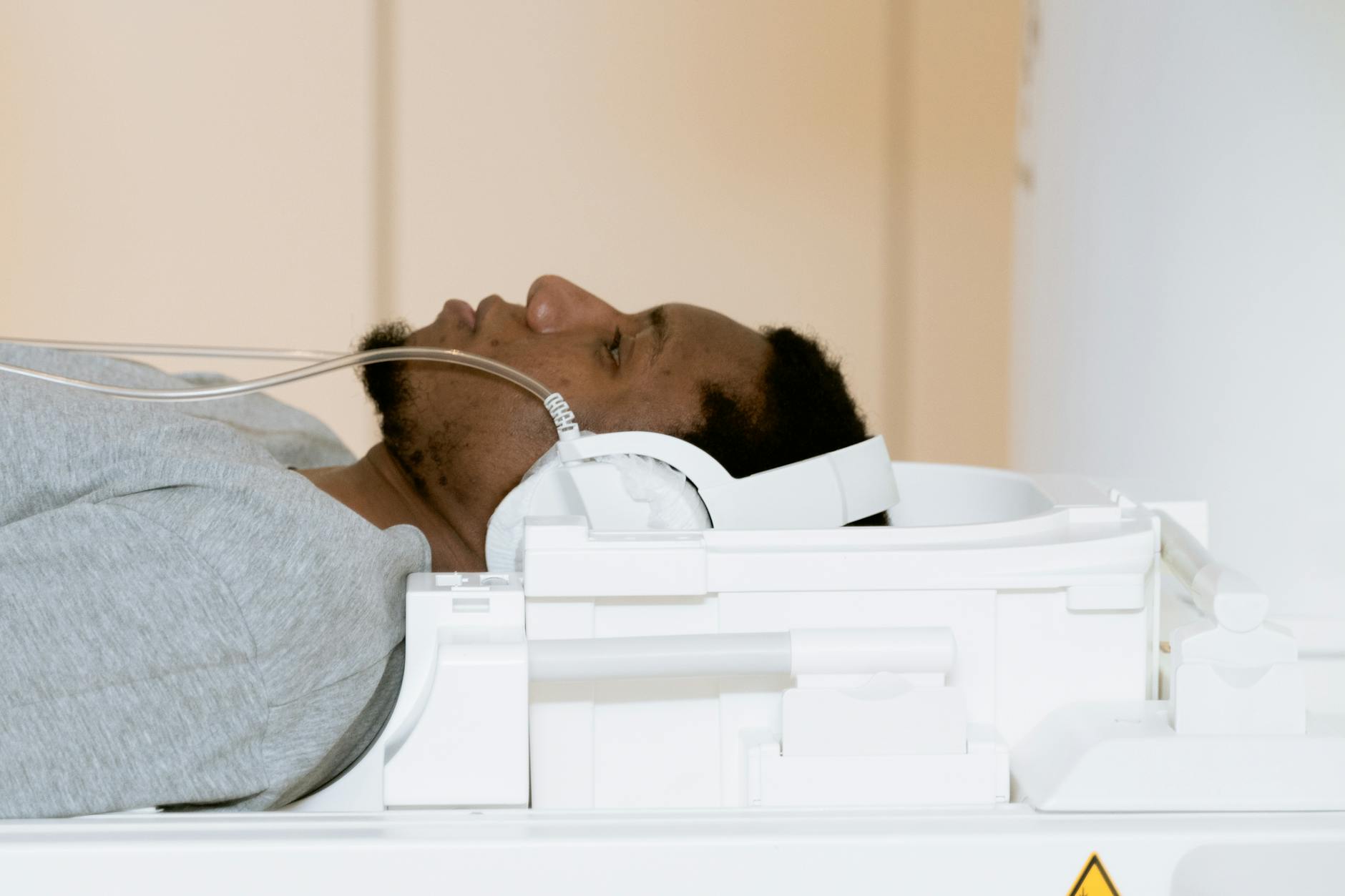
The process begins before the patient ever enters the scanner. A small amount of a radioactive tracer — one of four FDA-approved compounds — is injected intravenously. Over the next 30 to 90 minutes, depending on the specific tracer, the compound circulates through the bloodstream and crosses the blood-brain barrier. Once inside the brain, the tracer molecules bind selectively to fibrillar amyloid aggregates, the dense, sticky plaques that form between neurons in Alzheimer’s disease. The tracer essentially illuminates what cannot otherwise be seen. When the patient then lies in the PET scanner, detectors surrounding the head pick up the gamma rays emitted by the radioactive tracer as it decays.
A computer reconstructs these signals into a three-dimensional image of the brain. Areas with heavy amyloid burden appear as regions of high tracer uptake — bright spots in the image — while a brain with little or no amyloid shows a more uniform, lower-intensity pattern. Radiologists and nuclear medicine physicians compare the uptake pattern against established thresholds to classify the scan as amyloid positive or negative. The four FDA-approved tracers as of 2025 are 18F-florbetapir, 18F-florbetaben, 18F-flutemetamol, and 18F-flutafuranol. All four share high affinity for fibrillar amyloid aggregates, though they differ slightly in their imaging characteristics, the timing of image acquisition after injection, and the visual appearance of the resulting scans. In practice, the choice of tracer often comes down to which one a particular imaging center has contracted with or has available, rather than a meaningful clinical difference in what the scan can detect.

How Accurate Is Amyloid PET Imaging?
The accuracy figures for amyloid PET are genuinely impressive by clinical imaging standards. Sensitivity — the ability to correctly identify Alzheimer’s pathology when it is present — reaches up to 96 percent. Specificity, the ability to correctly identify when amyloid pathology is absent, can reach 100 percent in controlled research settings. That combination puts amyloid PET well ahead of clinical diagnosis alone, which historically has had accuracy rates in the 70 to 80 percent range even in specialized memory centers. However, the real-world performance is more nuanced than research statistics suggest. High sensitivity means very few cases of true Alzheimer’s amyloid pathology are missed, but the specificity figure deserves scrutiny outside the lab.
The critical limitation is that amyloid plaques are not exclusive to Alzheimer’s disease. They also appear in Lewy body dementia, Parkinson’s disease dementia, and cerebral amyloid angiopathy — a condition involving amyloid deposits in blood vessel walls rather than between neurons. A person with Lewy body dementia could receive a positive amyloid PET scan, which would be technically accurate in detecting amyloid but misleading if taken as confirmation of Alzheimer’s. This is precisely why the updated guidelines stress that scans must be ordered with a clear clinical question in mind and interpreted alongside the full clinical picture. The flip side of a negative scan is arguably where amyloid PET delivers its most straightforward value. When a patient with cognitive symptoms tests negative for amyloid, it substantially reduces the likelihood that Alzheimer’s disease is driving their decline, redirecting clinical attention toward other causes — vascular dementia, frontotemporal dementia, depression, medication effects, or reversible metabolic conditions. That diagnostic clarity has real consequences for patients who might otherwise spend years pursuing the wrong treatment path.
Which Patients Should Actually Get This Scan?
In January 2025, the Alzheimer’s Association and the Society for Nuclear Medicine and Molecular Imaging jointly published updated Appropriate Use Criteria — the most comprehensive guidance on amyloid and tau PET imaging issued to date. The central recommendation is direct: these scans should only be ordered when the results will directly change patient management. The concern is not that the scans are unreliable, but that ordering them indiscriminately risks exposing patients to unnecessary radiation, costs, and potentially anxiety-inducing results that do not translate into actionable care decisions. The clearest appropriate uses include situations where the cause of cognitive decline remains uncertain after standard evaluation, where early-onset dementia is suspected in a patient under 65, or where confirming amyloid positivity is required for eligibility for new Alzheimer’s treatments. Lecanemab, sold under the brand name Leqembi, is one such treatment — an anti-amyloid antibody therapy approved by the FDA that specifically targets and removes amyloid plaques.
Before a patient can begin lecanemab, confirmed amyloid positivity is required. Without a scan, that confirmation is not possible, which is one concrete reason the 2025 guidelines identify treatment eligibility as a legitimate indication. The guidance also identifies situations where the scan is generally not appropriate. Ordering a scan purely out of curiosity, to reassure a worried-well patient with no cognitive symptoms, or when the result would not change management is explicitly discouraged. An asymptomatic person who tests positive for amyloid faces a difficult situation — the information creates anxiety but currently offers no proven preventive intervention. As treatments evolve, that calculus may shift, but as of 2025, the guidelines reflect the evidence available now.
What Does Amyloid PET Cost, and What Does Medicare Cover?
The cost picture for amyloid PET changed significantly in October 2023, when the Centers for Medicare and Medicaid Services lifted a restriction that had been in place for years. Previously, Medicare covered only one amyloid PET scan per lifetime, and only through a burdensome Coverage with Evidence Development requirement that effectively tied patient access to participation in approved research registries. That restriction is now gone. The policy shift was driven in large part by the FDA approval of amyloid-targeting therapies like lecanemab, which made confirmed amyloid status clinically essential rather than merely informative. Without insurance, a single amyloid PET scan costs approximately $3,000. Medicare’s reimbursement rate to providers runs between $1,327 and $1,489 per scan, and patients with Medicare typically pay 20 percent of the allowed amount after meeting their deductible — a figure that can still represent several hundred dollars out of pocket.
The tradeoff compared to no scan at all is significant: for patients who qualify for lecanemab or other approved therapies, skipping the scan means skipping potential treatment access entirely. One important caveat: Medicare’s coverage expansion did not come with a single national policy applied uniformly everywhere. Instead, CMS delegated coverage decisions to 12 regional Medicare Administrative Contractors. In practice, this means coverage and prior authorization requirements vary by geography. A patient in one region may face fewer hurdles to getting a scan covered than a patient in another, even with identical clinical presentations. Patients and referring physicians should verify coverage with their regional contractor before assuming the scan will be reimbursed.
Limitations and Misuses of Amyloid PET Imaging
The most significant limitation — one that cannot be repeated often enough — is that a positive amyloid PET scan is not a diagnosis of Alzheimer’s disease. It is evidence of amyloid pathology. Those two things overlap substantially but are not identical. Amyloid accumulation precedes Alzheimer’s symptoms by years or even decades, which means older adults without any cognitive symptoms can have positive scans and never develop dementia. Some researchers estimate that 20 to 30 percent of cognitively normal older adults have elevated amyloid on PET imaging. Telling such a person they have “Alzheimer’s” based on a scan alone would be misleading and potentially harmful.
There is also the question of what happens after a positive result when no disease-modifying treatment is appropriate or accessible. Patients and families who receive positive results report significant psychological distress in some cases, and the clinical benefit of that information depends entirely on whether it leads somewhere actionable. This is why the 2025 Appropriate Use Criteria are framed around the principle of clinical utility — the scan should be ordered because the result will guide a decision, not simply because it can be done or because a family is seeking certainty. Finally, scan interpretation is not entirely standardized across institutions. While established visual read criteria and standardized uptake value ratios help create consistency, inter-reader variability remains a real factor. Training, experience, and access to quantitative analysis tools differ across imaging centers. A scan read as borderline at one institution might be read differently at another, and those differences can carry real consequences for treatment decisions.

How Amyloid PET Fits Into the Broader Diagnostic Picture
Amyloid PET does not exist in a vacuum. Neurologists evaluating a patient for possible Alzheimer’s typically begin with a cognitive assessment, a detailed clinical history, blood tests to rule out reversible causes, and structural brain imaging such as MRI. Amyloid PET enters the workflow when those standard steps leave genuine diagnostic uncertainty — or when confirming amyloid status has direct treatment implications. In that sense, it functions as a high-value adjunct rather than a first-line screening tool.
Tau PET imaging, which detects a different hallmark of Alzheimer’s — the tau tangles that form inside neurons — is increasingly being used alongside amyloid PET in research and clinical settings. The two biomarkers together provide a more complete picture of Alzheimer’s pathology. The 2025 guidance from the Alzheimer’s Association addresses both, recognizing that the field is moving toward a more biological definition of Alzheimer’s disease, one grounded in measurable pathology rather than clinical symptoms alone. Blood-based biomarkers for amyloid and tau are also advancing rapidly and may eventually reduce the need for PET imaging in certain settings, though they have not yet reached the same diagnostic precision as PET for individual clinical decisions.
Where the Field Is Heading
The expansion of amyloid PET coverage and the approval of amyloid-targeting therapies mark a genuine inflection point in Alzheimer’s care. For the first time, there is a pathway from detection to treatment that runs through an objective biological test. That was not true even five years ago. As more anti-amyloid therapies move through clinical trials, the demand for amyloid PET — and potentially for earlier detection — will likely increase.
Researchers are investigating whether identifying amyloid burden before symptoms appear could allow preventive interventions to begin earlier, though that application awaits both effective therapies and refined guidance on how to counsel asymptomatic individuals. Blood-based amyloid biomarkers are the most likely technology to reshape this space over the next decade. If a simple blood test can reliably stratify patients by amyloid status, PET imaging may become a confirmatory step reserved for borderline cases or clinical trial enrollment, rather than the primary detection tool. But for now, amyloid PET remains the clinical standard — the most accurate non-invasive measure of brain amyloid available, and the one required by regulators and clinicians when the stakes of getting the diagnosis right are highest.
Conclusion
Amyloid PET imaging works by introducing a radioactive tracer that binds to amyloid plaques in the brain, producing images that reveal the location and density of those deposits with a sensitivity of up to 96 percent. Four FDA-approved tracers are available, Medicare coverage expanded significantly in 2023, and 2025 guidance from the Alzheimer’s Association has clarified that the scan should be used when results will directly guide patient care — particularly for confirming diagnosis when it is uncertain or establishing eligibility for treatments like lecanemab. A positive scan is meaningful, but it requires clinical interpretation; it is not a standalone diagnosis.
For families navigating a possible Alzheimer’s diagnosis, the practical takeaways are these: if a physician has ordered an amyloid PET scan, ask specifically what decision the result will inform. If the answer is clear — whether to pursue a new therapy, rule out Alzheimer’s, or explain symptoms that standard testing hasn’t resolved — the scan is likely appropriate and may provide genuinely useful answers. If the reason is less defined, that conversation with the physician is worth having. The technology is powerful, but its value lies in being used at the right moment, for the right clinical question.
Frequently Asked Questions
Can amyloid PET imaging diagnose Alzheimer’s disease on its own?
No. A positive amyloid PET scan indicates the presence of amyloid plaques, which are a hallmark of Alzheimer’s pathology, but plaques also occur in other conditions including Lewy body dementia and cerebral amyloid angiopathy. Diagnosis requires combining the scan result with a full clinical evaluation.
How much does an amyloid PET scan cost with Medicare?
Medicare reimburses providers $1,327 to $1,489 per scan. Patients typically pay 20 percent of the allowed amount after meeting their deductible. Without insurance, the scan costs approximately $3,000. Coverage varies by region because CMS delegated decisions to 12 regional Medicare Administrative Contractors rather than issuing a single national policy.
What changed about Medicare coverage for amyloid PET in 2023?
In October 2023, CMS eliminated the previous restriction that limited coverage to one scan per lifetime and required enrollment in approved research registries. Broader coverage became available, driven in part by the approval of amyloid-targeting treatments like lecanemab, which require confirmed amyloid positivity before a patient can begin therapy.
How long does the scan procedure take?
The total time varies by tracer. After the intravenous injection, there is a waiting period of 30 to 90 minutes before image acquisition begins while the tracer distributes through the brain. The scanning itself typically takes 15 to 30 minutes. Patients should plan for a total appointment time of one to two hours.
Can someone have a positive amyloid PET scan without having Alzheimer’s disease?
Yes. Amyloid accumulation can precede cognitive symptoms by years or decades. A meaningful proportion of cognitively normal older adults show elevated amyloid on PET imaging and may never develop dementia. This is one reason the 2025 Appropriate Use Criteria advise against scanning asymptomatic individuals outside of research settings.
Is amyloid PET the same as a standard brain MRI?
No. A standard brain MRI shows the structure of the brain — atrophy, lesions, vascular changes — but cannot detect amyloid plaques. Amyloid PET detects specific protein deposits at the molecular level using a radioactive tracer. The two scans provide different and often complementary information.