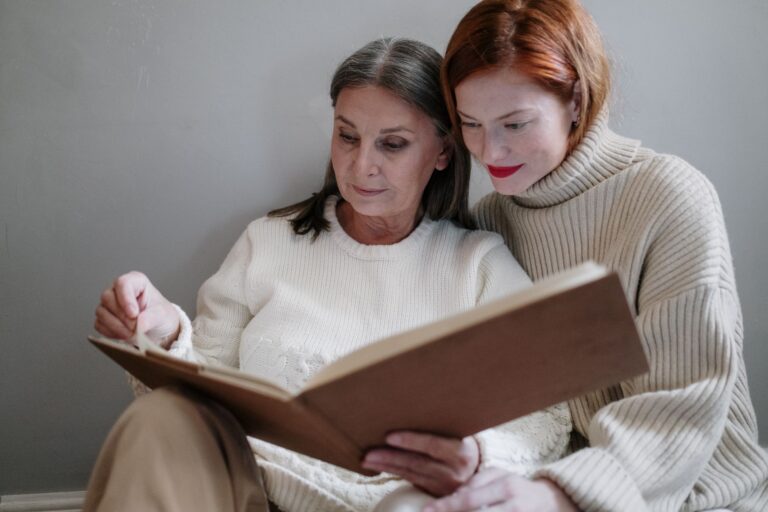
Audiobooks support caregivers of memory care residents by providing a calm shared activity that can ease agitation, lift mood, and strengthen connection. Memory care means residential care for people with Alzheimer's disease or related dementia, and listening lets many residents follow stories without decoding print. A caregiver can press play, sit nearby, and use the story as a bridge to talk, reminisce, and comfort. The task shifts from filling time to sharing attention, which can make visits and routines feel easier for both people.
Medical information disclaimer: This article is for general educational purposes only and does not provide medical advice, diagnosis, or treatment. Always consult a physician or other qualified health professional about symptoms, medications, tests, or treatment decisions.
Table of Contents
- What do shared reading programs improve?
- Can listening reduce agitation?
- How does audio fit into daily care work?
- How can caregivers try audiobooks safely?
What do shared reading programs improve?
The University of Melbourne-led HOMESIDE trial trained family caregivers to use reading aloud, audiobooks, and magazines to connect with loved ones, according to the University of Melbourne Pursuit report. The program treated words and music as practical tools for daily contact, not school lessons.
Participating caregivers reported better cognitive engagement, mood, agitation levels, and connection with the resident. A familiar voice, short chapter, or old magazine story can prompt eye contact, smiles, or memories. The National Institute on Aging also advises turning routines into shared acts like listening to favorite music and reading poems or books together, as described on the National Institute on Aging activities page.
Can listening reduce agitation?
A 2021 randomized trial in 13 long-term care facilities compared personalized music and audiobooks for residents with dementia, as summarized in the Berklee citation record. Residents listened through headphones, and audiobooks reduced agitation on three of four Cohen-Mansfield Agitation Inventory subscales, similar to music. Agitation here means restlessness, vocal outbursts, or distressed movement.
The result has a limit. A review of that trial found non-staff-directed physical agitation often rose over time with audiobooks, so unattended playback is not enough, according to the systematic review. Personal choice, headphones, and close monitoring matter more than hours played.
How does audio fit into daily care work?
In workshops with 18 professional residential-dementia caregivers, staff said audio tools added value by evoking memories and emotions and prompting talk with caregivers and relatives. A short story can start a conversation about childhood, work, faith, or home. Family members gain an easy role: listen, pause, ask one simple question, and listen again.
Audiobooks also help residents who cannot hold books, see print well, or follow long text. Familiar tales, poems, nature writing, or life-story recordings can hold attention when paper fails. Caregivers get a low-effort shared activity and brief calm while staying present.
How can caregivers try audiobooks safely?
Start small and personal. Pick topics the resident already likes, keep sessions short, and use headphones to cut noise.
For late stages, soft sound may relax some people and lessen agitation. A calm bedtime pattern of reading aloud plus soothing music can also help sleep problems. If a story excites rather than settles, end it early and try a slower voice or quieter topic next time.
- Choose one familiar book, poem collection, or magazine topic.
- Play 10 to 20 minutes during a calm part of the day.
- Sit nearby, pause often, and invite a memory or feeling.
- Watch for frowns, pacing, covering ears, or louder vocal sounds.
- Stop or switch the selection if distress rises.