Balloon volleyball can support engagement in dementia care by combining simple movement, shared attention and social interaction. It works best as a flexible activity—a balloon tapped between people—rather than a competitive game everyone must follow. Direct evidence for balloon volleyball is limited, so it should not be presented as a treatment for dementia or a reliable way to sustain attention. Its value depends on the person's interests, current abilities and response during the session.
Medical information disclaimer: This article is for general educational purposes only and does not provide medical advice, diagnosis, or treatment. Always consult a physician or other qualified health professional about symptoms, medications, tests, or treatment decisions.
Table of Contents
- What kind of engagement can it offer?
- What does the evidence actually show?
- How to set up a manageable session
- How should the game be adapted?
- How can caregivers tell whether it is working?
What kind of engagement can it offer?
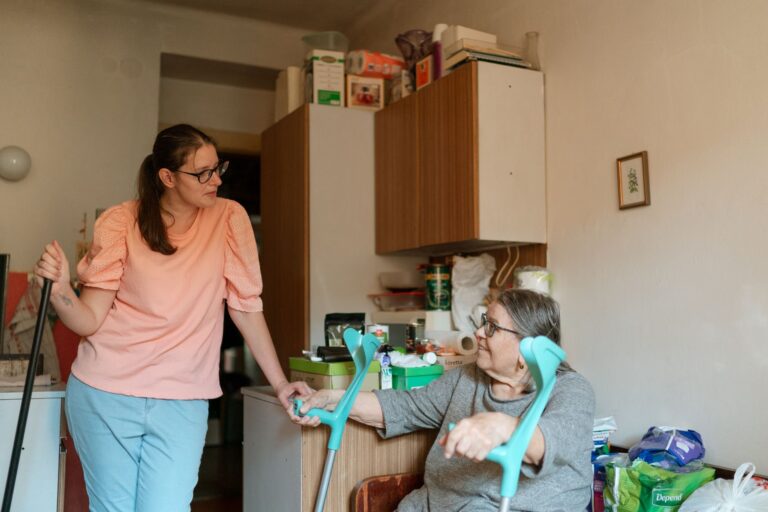
Engagement can mean watching the balloon, reaching toward it, taking a turn, speaking to another player or simply remaining part of the group. These different forms of participation matter because not everyone will want or be able to strike the balloon. A session can also give participants manageable choices: where to sit, whether to serve, whom to pass to or whether to keep score.
NICE says enjoyable activities tailored to a person's preferences, strengths and needs can support social engagement, communication, independence and control in its dementia-care quality guidance. The activity should therefore fit the person, not the other way around. Someone who dislikes group games may prefer passing the balloon with one familiar caregiver, while another person may enjoy a small circle with music or informal scoring.
What does the evidence actually show?
The research does not establish that balloon volleyball improves long-term cognition or engagement. A 1988 Japanese clinical report found faster reaction times after balloon-volleyball play among stroke patients with vascular dementia, but it did not demonstrate lasting cognitive or engagement benefits in the Japanese Journal of Physical Therapy and Occupational Therapy. A 2017 Western Michigan University observation project also presents a mixed picture.
Memory-care residents enjoyed repetitive balloon games, yet those games were the activities in which they most commonly lost interest during the session according to the project report. This means balloon volleyball is a reasonable option to try, not a proven solution. Broader evidence supporting physical activity in dementia care does not show that this particular game produces the same effects.
How to set up a manageable session
Begin with a small group, enough clear space and a simple instruction such as, "Tap the balloon to me." A net, teams and formal scoring are optional. Volunteers or caregivers can join the game, model a turn and return the balloon within comfortable reach.
Keep the opening structure simple: A seated warm-up can help establish the rhythm before the balloon is introduced. For some groups, cooperative goals—such as keeping the balloon moving for several turns—may be more inclusive than identifying winners.
- Seat or position players where they can see one another.
- Demonstrate one gentle tap before adding another instruction.
- Send the balloon directly toward one person instead of relying on quick reactions.
- Allow catching, carrying or assisted tapping if that keeps the person involved.
- Offer non-playing roles, such as serving or tracking a simple score.
How should the game be adapted?
Adapt the activity to current ability, physical limitations and attention span. The Alzheimer's Association recommends simple steps, suitable supervision, and changing or ending an activity when frustration or waning attention appears in its caregiving guidance. Adjust one element at a time. Move players closer, slow the pace, remove scoring or shift from a group circle to one-to-one passing.
A person who cannot tap the balloon may still participate by choosing its color, counting turns or watching beside someone familiar. Do not assume refusal means the person cannot engage. The timing, room, group size or competitive framing may be the problem. Offer an easier role or try again at another time without pressure.
How can caregivers tell whether it is working?
Look for the person's response rather than the number of successful hits. Following the balloon, initiating a turn, speaking to another player or choosing to remain nearby can all indicate participation.
Repeatedly turning away, pushing equipment aside, becoming tense or no longer following the activity suggests that it should change or stop. Brief notes can help caregivers identify patterns: group versus one-to-one play, seated versus standing participation, scoring versus no scoring, and the point at which interest faded. If attention drops, shorten the next round or switch immediately to a preferred activity.