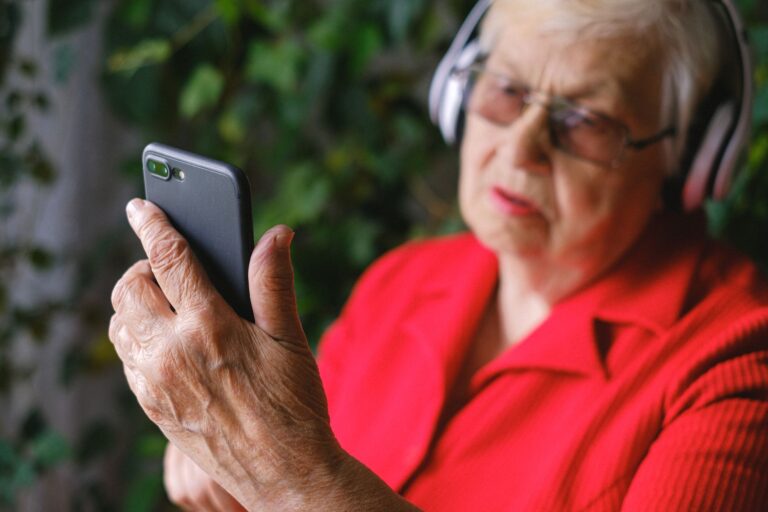
A hearing test after age 60 is a simple, low-risk step that may support brain health by identifying hearing loss that makes conversation, social engagement, and everyday thinking more difficult. Treating hearing loss has not been proven to prevent dementia, but better hearing can reduce communication strain and may help address a potentially modifiable dementia risk factor. For example, someone who repeatedly withdraws from family dinners because speech sounds unclear may participate more fully once the hearing problem is recognized and managed.
Hearing changes often develop gradually, so a person may blame other people for mumbling or assume that crowded restaurants have simply become too noisy. A formal test can distinguish ordinary listening difficulty from a measurable hearing problem and establish a baseline for future comparison. It can also reveal when symptoms need medical evaluation rather than an immediate hearing-aid fitting.
Medical information disclaimer: This article is for general educational purposes only and does not provide medical advice, diagnosis, or treatment. Always consult a physician or other qualified health professional about symptoms, medications, tests, or treatment decisions.
Table of Contents
- Why Can a Hearing Test After 60 Support Brain Health and Dementia Risk Reduction?
- Hearing Loss, Cognitive Load, and Social Isolation
- What Happens During a Hearing Assessment?
- How to Arrange a Hearing Test and Prepare for It
- Common Barriers, Warning Signs, and Hearing-Aid Limitations
- Communication Changes That Help Before and After Testing
- Hearing Care Alongside a Cognitive Assessment
Why Can a Hearing Test After 60 Support Brain Health and Dementia Risk Reduction?
hearing is closely connected to attention, memory, language, and social interaction. When speech is muffled, the brain must devote more effort to identifying words and filling in missing sounds. A person may understand a conversation but have fewer mental resources left to follow its meaning or remember the details. This listening effort can resemble forgetfulness: someone who did not hear an appointment clearly cannot reliably recall it later. Hearing loss is also associated with social isolation and reduced participation in mentally stimulating activities.
Consider two neighbors who both enjoy a weekly card game. One continues attending because conversation is easy to follow, while the other stops going after repeatedly missing jokes and instructions. The difference is not proof that hearing loss causes dementia, but it illustrates how untreated difficulty can narrow a person’s social and cognitive environment. Research has linked hearing loss with a higher likelihood of cognitive decline, yet association does not establish direct causation. Age, cardiovascular health, education, and other factors may affect both hearing and cognition. A hearing test should therefore be viewed as one practical component of brain-health care, not as a dementia prediction tool.
Hearing Loss, Cognitive Load, and Social Isolation
Listening with untreated hearing loss can be compared with reading a faded page: the information may still be recoverable, but it requires extra concentration. This constant effort can produce fatigue, irritability, headaches, or a desire to avoid conversation. family members may interpret delayed answers as confusion when the person is actually trying to reconstruct an incomplete sentence. Reduced access to sound can also affect environmental awareness.
A person may miss a doorbell, timer, warning signal, or approaching vehicle. At home, a television turned unusually loud may create conflict without addressing the underlying difficulty, because greater volume does not always improve speech clarity. There is an important limitation: treating hearing loss does not guarantee protection from dementia, and hearing problems are only one part of cognitive health. New confusion, difficulty managing familiar tasks, major personality changes, or worsening judgment should not be attributed to hearing alone. Those symptoms warrant a separate medical assessment even when hearing loss is already known.
What Happens During a Hearing Assessment?
A typical assessment begins with questions about symptoms, noise exposure, medications, ear infections, balance problems, and situations in which speech is difficult to understand. The clinician may examine the ear canals for wax, irritation, or other visible concerns before testing responses to sounds at different pitches and volumes. Speech testing may also show how clearly words are understood, not merely whether tones can be detected. For example, a person might hear quiet tones reasonably well in a silent room but struggle to distinguish similar-sounding words.
That pattern helps explain why one-to-one conversation at home feels manageable while a busy café is exhausting. It can also guide decisions about communication strategies and hearing-device features. Testing is generally straightforward, but the result represents performance under controlled conditions. Real life includes background noise, unfamiliar voices, poor acoustics, and rapid group conversations. A person whose test suggests mild loss may still experience substantial difficulty at work, in meetings, or during medical appointments.
How to Arrange a Hearing Test and Prepare for It
A primary care clinician can check for obvious ear problems and provide a referral when needed, while an audiologist can perform a detailed hearing evaluation. Some hearing-care providers also offer testing, but the depth of assessment and professional qualifications can vary. A full diagnostic evaluation provides more information than a quick screening, although a screening may be a useful first step when access is limited. Before the appointment, write down specific situations that cause trouble.
Useful examples include misunderstanding grandchildren, missing dialogue on television, hearing ringing in one ear, or struggling when several people speak at once. Bringing a relative or friend can help because gradual changes are sometimes easier for others to notice. There is a tradeoff between convenience and completeness. An online or app-based check can be done quickly at home, but headphone quality, room noise, and device settings may affect the result. It should not replace an in-person examination when symptoms are persistent, unequal between the ears, or accompanied by pain, drainage, dizziness, or sudden change.
Common Barriers, Warning Signs, and Hearing-Aid Limitations
People often delay testing because hearing loss carries stigma or because they believe treatment automatically means wearing a conspicuous device. Others underestimate the problem because they can hear some sounds clearly. High-pitched speech sounds may become difficult before lower-pitched sounds, allowing a person to hear that someone is talking without understanding every word. Sudden hearing loss, especially in one ear, requires prompt medical attention. The same applies to hearing changes with severe dizziness, neurological symptoms, ear injury, discharge, or significant pain.
Wax blockage can cause reduced hearing, but attempting to remove it with cotton swabs or pointed objects may push it deeper or damage the ear. Hearing aids have limitations. They do not restore hearing to its previous state, and the brain may need time to adjust to sounds that have been absent or muted. Background noise, fit, comfort, cost, maintenance, and dexterity can affect consistent use. Follow-up adjustments often matter; a device left in a drawer after one frustrating week cannot provide meaningful benefit.
Communication Changes That Help Before and After Testing
Simple changes can improve communication even before a formal assessment. Face the listener, reduce background noise, speak clearly at a natural pace, and make sure the room is well lit. Rephrasing is often more effective than repeating the same sentence more loudly.
If “Your appointment is Thursday morning” is misunderstood, saying “The clinic visit is on Thursday before lunch” provides different sound and context clues. During important conversations, written support can prevent avoidable errors. A clinician might provide printed medication instructions, while a family member could send the time and address of an event by text. These measures support understanding but do not replace evaluation when hearing difficulty is ongoing.
Hearing Care Alongside a Cognitive Assessment
Hearing status should be considered when someone undergoes memory or cognitive testing. Instructions delivered too quietly can lower performance for reasons unrelated to memory. For example, a person may repeat only part of a word list because several words were not heard accurately, creating the appearance of poor recall.
Tell the assessor about known hearing loss, bring regularly used hearing devices, and confirm that they are working before testing begins. The room should be quiet, the examiner’s face visible, and instructions repeated or presented in writing when appropriate. These accommodations help the assessment measure thinking abilities more accurately rather than measuring the consequences of missed speech.