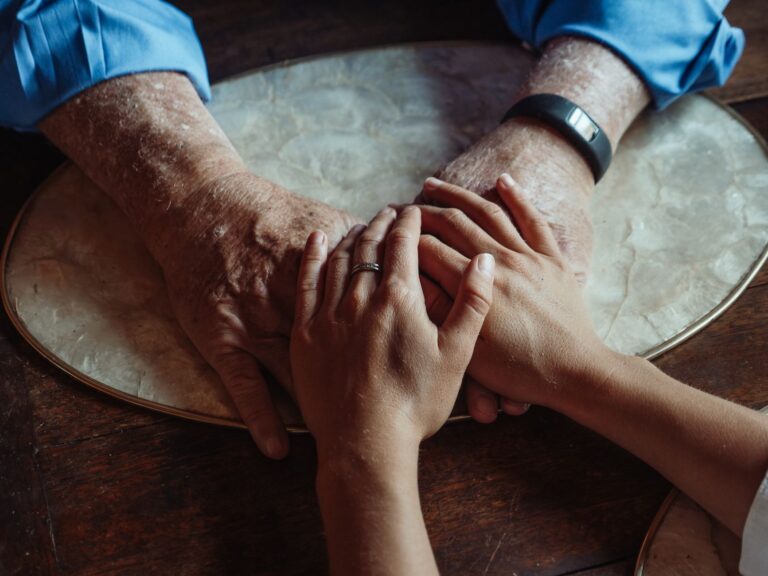
Research increasingly suggests that hand exercise training may play a role in supporting brain health and potentially reducing dementia risk, according to emerging studies examining the connection between motor skills and cognitive function. The idea centers on a simple principle: our hands are densely connected to the brain through complex neural pathways, and keeping these connections active through targeted exercises may help maintain or strengthen cognitive reserves as we age. One example involves older adults who regularly engage in fine motor activities like knitting, woodworking, or specific hand dexterity exercises—studies have observed correlations between such engagement and better preserved cognitive function compared to sedentary peers.
The mechanism behind this connection lies in neuroplasticity, the brain’s ability to form new neural connections throughout life. When you perform coordinated hand movements, multiple brain regions activate simultaneously: the motor cortex controls movement, the somatosensory cortex processes touch and feedback, and the prefrontal cortex coordinates complex sequences. This simultaneous activation appears to stimulate brain regions that also support memory, attention, and executive function—the very cognitive abilities most threatened by dementia. Unlike pharmaceuticals or invasive treatments, hand exercise training is accessible, low-cost, and carries minimal risk for most people.
Table of Contents
- How Do Hand Exercises Connect to Brain Health?
- What Does the Research Currently Tell Us About Hand Exercise and Dementia Risk?
- Types of Hand Exercise Training and Their Cognitive Demands
- How to Incorporate Hand Exercise Training into Daily Life
- Important Limitations and Cautions in Current Research
- The Broader Context of Motor Engagement and Cognitive Aging
- Practical Implementation and Realistic Expectations
How Do Hand Exercises Connect to Brain Health?
The connection between hand dexterity and cognitive function isn’t new to neuroscience. Decades of research have shown that motor activity influences brain development and maintenance. The motor cortex—the brain region controlling hand movement—is disproportionately large compared to other body parts, occupying roughly one-third of the total motor cortex area. This means that hand movements engage a significant portion of your brain’s processing capacity, which in turn may stimulate associated cognitive regions. When someone performs complex hand movements, such as learning a new craft or practicing rehabilitation-style exercises, the brain engages not only movement control but also attention, memory formation, and problem-solving.
Older adults who take up new manual skills, such as learning to play a musical instrument or mastering a new craft, often report improved focus and mental clarity. The repetition and cognitive demand of learning new hand-based tasks appear to be particularly protective, as they combine motor engagement with active learning—a combination that research suggests may slow cognitive decline. A critical distinction exists between passive hand use and active, intentional hand exercise training. Routine daily activities like eating or typing engage the hand-brain connection minimally because they’re automatic and require little cognitive effort. Targeted exercises—those requiring focus, new motor patterns, or increasing complexity—appear to offer greater cognitive benefits. This difference suggests that simply using your hands isn’t sufficient; the brain needs novelty and challenge to derive maximum benefit.
What Does the Research Currently Tell Us About Hand Exercise and Dementia Risk?
While specific large-scale studies directly linking hand exercise training to dementia prevention are still emerging, related research provides encouraging context. Studies examining occupational hand use, motor skill development, and cognitive reserve have consistently found associations between maintained motor skills and slower cognitive aging. Older adults with higher baseline fine motor function tend to perform better on cognitive tests and show slower decline in memory and processing speed over time.
However, it’s important to note a significant limitation: most existing evidence is observational rather than from rigorous randomized controlled trials specifically designed to test hand exercise interventions for dementia prevention. Observational studies can show correlation—people who engage in hand-based activities have better cognition—but cannot definitively prove causation. It remains unclear whether hand exercise itself causes the cognitive benefit, or whether cognitively healthy people are simply more likely to engage in these activities. Additionally, the quality and intensity of hand exercise that provides cognitive benefit remains an open question; researchers haven’t yet established precisely how much training is needed or what specific exercise protocols are most effective.
Types of Hand Exercise Training and Their Cognitive Demands
Hand exercise training encompasses a wide range of activities, each with different cognitive demands. Fine motor tasks—those requiring precise, coordinated finger movements—appear particularly beneficial. Examples include: Each of these activities engages the hand-brain connection differently.
Playing piano, for instance, requires reading music, coordinating both hands independently, maintaining rhythm, and retrieving learned sequences from memory—a highly complex cognitive task. Knitting, by contrast, involves repetitive motion with established patterns, which offers a different type of cognitive engagement: the focus and meditative attention required to maintain stitches. Neither is inherently superior; the value may lie partly in the activity’s ability to sustain engagement and interest over time.
- **Dexterity training:** Programs using small objects, pegboards, or specialized equipment designed to improve grip strength and finger independence
- **Musical instrument practice:** Learning to play piano, guitar, or other instruments engages multiple cognitive systems simultaneously
- **Craft-based activities:** Knitting, pottery, woodworking, or jewelry-making combine motor skills with problem-solving and memory
- **Therapeutic hand exercises:** Occupational therapy protocols designed to maintain or restore hand function after injury or illness
How to Incorporate Hand Exercise Training into Daily Life
Starting a hand exercise routine doesn’t require special equipment or significant time commitment. For those looking to begin, several accessible approaches exist. The simplest strategy involves choosing a manual activity that’s intrinsically interesting—something you’ll actually want to practice regularly—rather than viewing hand exercises as a therapeutic chore. An older adult who finds satisfaction in learning woodworking will likely sustain that practice longer than someone forcing themselves through an uninspiring rehabilitation protocol, even if the latter provides technically superior motor stimulation.
A practical comparison: spending 30 minutes daily on a specific hand dexterity program might offer more concentrated cognitive demand than the same 30 minutes of casual hand use. However, if the concentrated program feels burdensome and leads to dropout while casual engagement in hobbies sustains regular practice, the less intensive but more sustainable approach may ultimately provide greater benefit. Consistency matters more than perfection. Starting with activities already present in your life—gardening, cooking, or home maintenance tasks that require fine motor control—provides a low-barrier entry point. If these feel insufficient, adding a new skill or craft can increase cognitive engagement.
Important Limitations and Cautions in Current Research
Several important caveats should frame any discussion of hand exercise and dementia prevention. First, hand exercise training has not yet been proven to prevent dementia. While research suggests correlations between motor engagement and cognitive health, no study has yet definitively demonstrated that hand exercise training alone reduces dementia incidence in a large, representative population. Marketing claims or media reports suggesting that hand exercises prevent dementia outright overstate current evidence.
Second, hand exercise is unlikely to be a complete dementia prevention strategy, even if future research confirms its benefit. Dementia risk is multifactorial: genetic predisposition, cardiovascular health, cognitive reserve, social engagement, sleep quality, nutrition, and other factors all play roles. Hand exercise training should be viewed as one potential contributor to brain health rather than a standalone solution. Third, certain populations may face barriers or need modifications. People with arthritis, stroke recovery, or other hand-related conditions should consult healthcare providers before starting intensive hand exercise programs, as some protocols could exacerbate existing conditions if not properly adapted.
The Broader Context of Motor Engagement and Cognitive Aging
The interest in hand exercise for dementia prevention reflects a larger paradigm shift in cognitive aging research. Scientists increasingly recognize that the brain is fundamentally embodied—meaning physical movement and sensory engagement directly influence cognitive function, rather than being separate systems. This understanding has led to renewed interest in activities like dance, tai chi, and other movement-based practices, alongside targeted hand training.
Older adults who maintain diverse motor skills—involving hands, balance, coordination, and strength—tend to show better overall cognitive outcomes than those who become sedentary. Notably, the cognitive benefit appears strongest when motor activities also involve learning or novelty, rather than pure repetition of well-practiced tasks. This suggests that the combination of physical engagement and mental challenge—learning a new handcraft, for instance—may be more protective than either element alone.
Practical Implementation and Realistic Expectations
For individuals interested in incorporating hand exercise training as part of a broader dementia-prevention strategy, a reasonable approach involves selecting activities that provide sustained engagement and genuine interest. Working with an occupational therapist can help identify exercises specifically suited to individual needs and health status, particularly for those with existing hand-related conditions or limited mobility.
Documenting your current hand capabilities—grip strength, dexterity, endurance—establishes a baseline and allows you to track improvements over time. Even subtle gains in hand strength or fine motor control may indicate that the activity is engaging relevant brain circuits. The goal shouldn’t be perfection or mastery, but rather consistent, challenging engagement over months and years—the kind of sustained practice that research suggests offers the most benefit for brain health and potentially slows cognitive aging.
- —