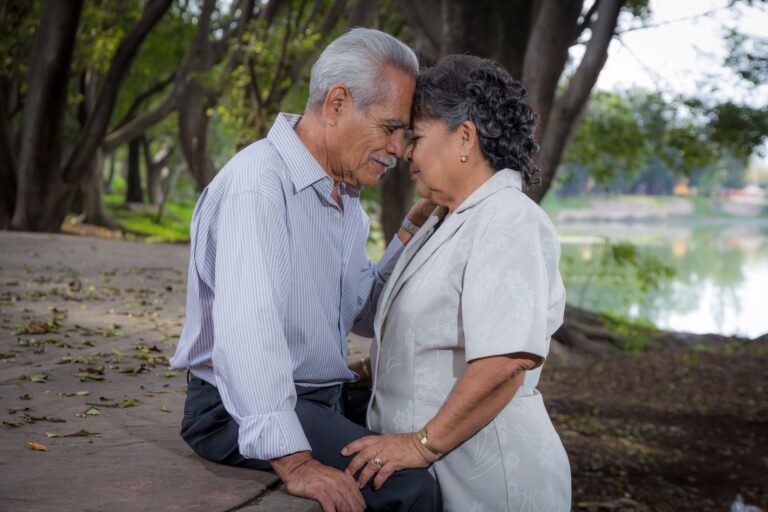
A granddaughter shared the final voicemail recorded before Alzheimer's changed how her grandmother communicated. It preserves an earlier voice, but it cannot reveal when the disease began, its stage, or how quickly it progressed. Alzheimer's is a progressive brain disease that often affects memory early and may disrupt language as it advances, according to the National Institute on Aging's overview of Alzheimer's signs. A recording can document a meaningful moment without serving as medical evidence.
Medical information disclaimer: This article is for general educational purposes only and does not provide medical advice, diagnosis, or treatment. Always consult a physician or other qualified health professional about symptoms, medications, tests, or treatment decisions.
Table of Contents
- What the voicemail can—and cannot—tell us
- How Alzheimer's can change communication
- How families can make conversations easier
- When communication changes need medical evaluation
- What treatment can realistically change
What the voicemail can—and cannot—tell us
The voicemail offers a before-and-after reference for this family. It may preserve familiar word choices, pacing, humor, or tone that later became harder for the grandmother to express. It does not establish a diagnosis or precise timeline.
Communication changes vary, and even people with severe Alzheimer's may have very different abilities from one another. The word "final" also needs context. It describes the last voicemail before a noticeable communication change, not necessarily the last meaningful exchange between grandmother and granddaughter.
How Alzheimer's can change communication
alzheimer's may make it harder to find or understand words, maintain attention, organize speech logically, or keep a train of thought. The National Institute on Aging's communication guidance explains that these problems can emerge as the disease affects the brain. A person might pause frequently, lose track of a sentence, substitute an incorrect word, or struggle to follow a long question.
These changes do not mean the person has nothing to communicate. Communication loss is not a fixed sequence. An old voicemail cannot identify a clinical stage, and one difficult conversation does not show how someone will communicate the next day.
How families can make conversations easier
The goal is not to force speech back to its earlier form. It is to reduce pressure and give the person a workable way to respond. The National Institute on Aging recommends several practical adjustments in its communication do's and don'ts: For example, replace "What would you like to do after lunch?" with "Would you like to sit outside?" A gesture, facial expression, or brief answer may carry more meaning than a complete sentence.
- Make eye contact and use the person's name.
- Allow extra time for an answer.
- Rephrase a question when needed.
- Offer simple yes-or-no choices.
- Avoid arguing, interrupting, or using baby talk.
When communication changes need medical evaluation
Speech or memory changes alone do not prove Alzheimer's. Medication effects, infection, depression, and stroke are among the other causes clinicians may consider. An evaluation can include medical history, cognitive and language testing, laboratory work, and imaging.
The National Institute on Aging's diagnosis guide explains why clinicians combine these sources instead of relying on one symptom or recording. Families can bring a clear timeline to an appointment: when changes started, whether they appeared suddenly or gradually, and how they affect daily tasks. A voicemail may illustrate a change, but it cannot replace an examination.
What treatment can realistically change
Disease-modifying treatment does not restore a person's former voice or guarantee recovered communication. Kisunla is approved for adults with confirmed amyloid pathology who have mild cognitive impairment or mild dementia, the population studied for the drug. The FDA reported a 2.92-point difference on the trial's integrated Alzheimer's Disease Rating Scale after 76 weeks.
Kisunla can cause amyloid-related imaging abnormalities, known as ARIA, which can rarely become serious or life-threatening. Eligibility therefore requires more than noticing forgotten words or comparing old recordings. Treatment decisions belong with a clinician who can confirm the diagnosis, establish disease stage, assess amyloid pathology, and discuss the potential benefit and ARIA risk.