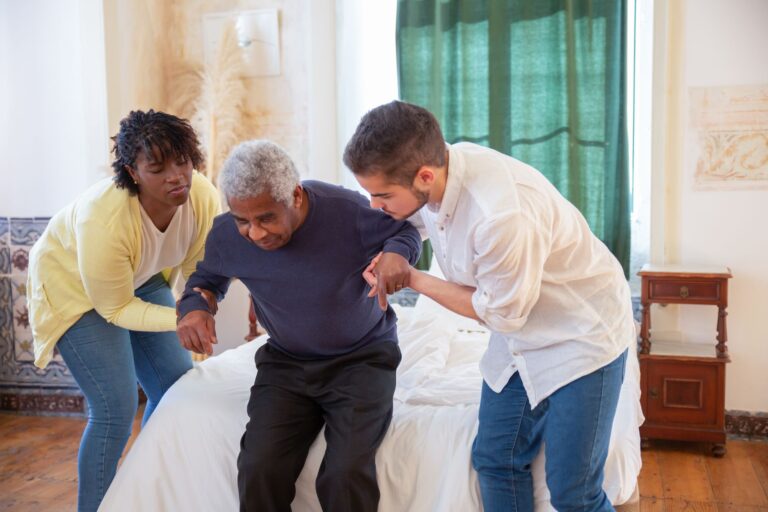
Evidence supports that both physical frailty and a family history of Alzheimer's raise dementia risk, and frailty can bring diagnosis forward by years. For people with a parent, brother, or sister with Alzheimer's, lower frailty is linked to later onset and better tolerance of brain changes.
Frailty here means the body has less reserve to handle stress or illness. It often shows as weakness, slow walking, tiredness, and weight or activity loss. Family history matters because genes and shared risk add to that vulnerability.
Medical information disclaimer: This article is for general educational purposes only and does not provide medical advice, diagnosis, or treatment. Always consult a physician or other qualified health professional about symptoms, medications, tests, or treatment decisions.
Table of Contents
- How much does family history raise risk?
- How does frailty change dementia timing?
- Can a stronger body tolerate more brain change?
- What steps matter when Alzheimer's runs in the family?
How much does family history raise risk?
Having a parent, brother, or sister with Alzheimer's makes a person more likely to develop the disease, according to the Alzheimer's Association Alzheimer's Association risk factors. Risk rises further when more than one family member is affected. That pattern reflects both genes and other shared influences.
One gene involved is APOE. National Institute on Aging experts report that one APOE ε4 copy raises Alzheimer's risk and two copies raise it further. Yet many ε4 carriers never develop disease, many patients lack ε4, and APOE ε2 may delay or protect against disease. Harvard Health Publishing places the added family risk at about 30% in relative terms, with baseline Alzheimer's incidence at age 65 at about 2% per year.
How does frailty change dementia timing?
Frail adults develop dementia more often than robust adults. In a prospective UK Biobank analysis of 489,573 dementia-free adults followed a median 13.58 years, reported by the American Academy of Neurology, 4.6% of frail participants developed dementia versus 1.3% of robust participants, with a hazard ratio of 2.82 Neurology study summary. Frailty is also linked to earlier diagnosis. A University of Queensland-led study found frail older adults received a dementia diagnosis 2-3 years earlier than less-frail peers University of Queensland findings.
Frail people without typical dementia brain abnormalities developed dementia 5-6 years earlier. The gap appears long before symptoms. In four US and UK cohorts, JAMA Neurology researchers found frailty scores were already higher 8-20 years before diagnosis. Scores then rose steeply in the 4-9 years before onset, and higher baseline frailty predicted later dementia.
Can a stronger body tolerate more brain change?
Rush Memory and Aging Project researchers found frailty and Alzheimer pathology each predicted Alzheimer dementia on their own. Greater frailty weakened the direct link between pathology and dementia. People with low frailty tolerated the same amount of brain pathology with less dementia. That finding matters for families with Alzheimer's history.
Inherited risk cannot be changed, but physical reserve may shape when or whether pathology leads to daily impairment. Two people can carry similar brain changes and have different outcomes when frailty differs. The studies cannot prove frailty causes dementia by itself. Neurology study authors caution that frailty may be an early disease marker because reverse causation cannot be excluded.
What steps matter when Alzheimer's runs in the family?
Because frailty is often preventable and treatable, University of Queensland clinicians recommend routine frailty monitoring plus strength exercise, good nutrition, and social engagement to potentially delay dementia onset University of Queensland findings. Small, steady habits protect muscle, balance, mood, and thinking.
Track change over months, not days. Tell a clinician about new falls, slower walking, fatigue, weight loss, or memory concerns.
- Ask for a frailty or function check at a routine visit
- Build leg and grip strength with resistance activity twice weekly
- Eat enough protein, fiber, fruit, vegetables, and fluids
- Stay socially active through clubs, volunteering, family, or classes
- Treat hearing loss, sleep problems, depression, and blood-pressure issues