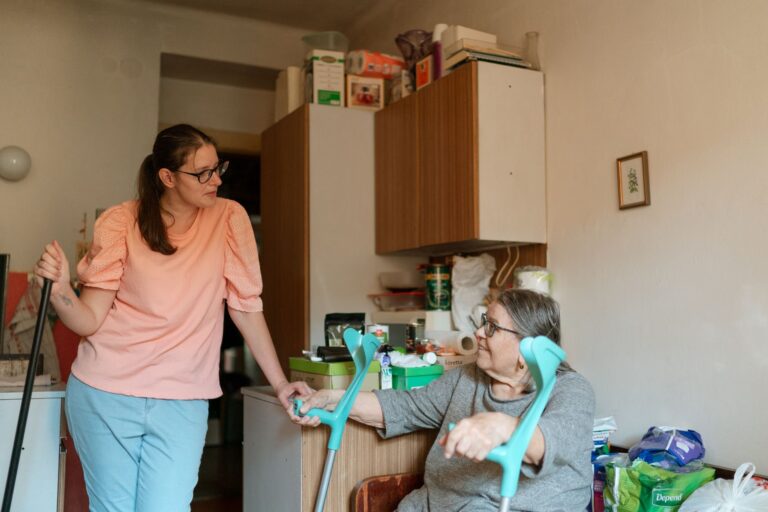
Finding joy in small interactions begins with recognizing that profound connection doesn’t require grand gestures or lengthy conversations—it lives in the pause between words, the warmth of a hand held during an afternoon walk, or the laugh that comes when someone remembers a shared joke, however briefly. For people living with dementia, and for those who care for them, these small moments often become the primary source of comfort and meaning as language and memory fade. The person who no longer recalls their grandchild’s name may still feel the genuine affection in that grandchild’s presence, responding with a smile or a calm settling of their shoulders. A caregiver notices that her mother, who rarely speaks anymore, reaches for her hand at a certain time each day.
Another family finds that their father lights up when a particular song plays—not because he remembers the song’s name, but because something in the melody feels good. These moments aren’t distractions from the larger loss; they are the scaffolding of daily life, and they matter profoundly. The capacity to experience small joys remains intact long after other cognitive abilities change. The challenge is learning to notice them, to slow down enough to let them unfold, and to build a rhythm of daily life around them.
Table of Contents
- Why Small Moments Matter More Than You Think
- The Limits of Assuming Enjoyment
- The Power of Routine and Rhythm
- Practical Ways to Notice and Cultivate Small Joys
- Managing Expectations When Dementia Progresses
- The Role of Physical Comfort and Sensory Experience
- Finding Joy Without Guilt
Why Small Moments Matter More Than You Think
In the early and middle stages of dementia, people often lose the ability to find pleasure in complex activities or lengthy social engagements, but the neurological capacity for immediate, sensory pleasure persists. A person may not follow a movie plot but will enjoy the physical comfort of sitting beside a loved one while it plays. They may not remember a meal afterward, but the taste of a favorite food—the saltiness of a good cheese, the sweetness of ripe fruit—registers as good in the moment, and that moment is real. Research in dementia care has consistently shown that quality of life depends far more on the frequency and authenticity of positive interactions than on memory or cognitive function. This distinction matters because it changes what we’re aiming for. We stop asking “Will they remember this?” and start asking “Are they comfortable? Do they feel connected right now?” The difference is not small.
A caregiver who expects her husband to recall a visit from a grandchild may feel disappointed or exhausted. A caregiver who instead measures success by the fact that her husband seemed calm and present during the visit finds the experience sustaining. This shift in expectation doesn’t erase grief, but it creates space for genuine moments of peace. Small interactions also serve the caregiver in ways that are sometimes overlooked. When the demands of full-time dementia care are relentless, finding joy in a quiet moment—a hand in yours, a moment of laughter—can be the difference between burnout and resilience. The caregiver’s own well-being is not separate from the care recipient’s; they are intertwined.
The Limits of Assuming Enjoyment
One significant pitfall is projecting our own definition of joy onto someone else. A caregiver might arrange an elaborate outing, a visit to a favorite restaurant or park, expecting it to bring happiness—only to find that the person with dementia is overwhelmed by the noise, the disruption to routine, or the sensory chaos. What feels like an enriching activity to the planner may feel stressful to the person living with dementia, and there’s no reliable way to predict this in advance. The person who always loved travel may now find car rides agitating. The social butterfly may now withdraw from group settings. This doesn’t mean stopping all outings or activities.
It means paying close attention to actual responses rather than assumed preferences. A person might seem anxious during a structured visit but genuinely peaceful during an unstructured, quiet afternoon at home. The outing that seemed like a “success” because it was lively and stimulating might leave the person exhausted and unsettled for hours afterward. Conversely, the afternoon of sitting on the porch with someone might look, from the outside, like nothing much at all—yet it may be the most stable and comfortable hour of the day. There’s also a risk of burnout if small moments are treated as a burden or as compensation for larger losses. A caregiver who feels obligated to manufacture joy, to make every small moment “count,” may end up exhausted and resentful. Authentic connection can’t be forced or performed; it emerges when both people are genuinely comfortable in the moment, without pressure.
The Power of Routine and Rhythm
Small interactions gain power when they’re embedded in routine—the same time of day, the same activity, the same person if possible. A person with dementia may not remember yesterday’s morning coffee conversation, but if that conversation happens every morning, the neural pathways for that specific time and place remain strong. The repetition itself becomes comforting. The body learns that at 9 a.m., someone sits down with coffee and there’s a conversation. That expectation, that rhythm, reduces anxiety. For someone whose cognitive calendar is blank, routine becomes the only map they have. Where the day has no schedule, time fragments into disconnected moments.
A person may ask the same question multiple times in one hour, not because of stubbornness or testing, but because each time they ask, they genuinely don’t recall asking. A consistent routine—breakfast at 8, a walk at 10, lunch at noon—creates structure that the mind, even a changed mind, can still feel and rely on. And within that structure, small joys can consistently return: the same caregiver at the same time, the same route during the walk, the same foods prepared in the same way. A family discovered that their mother’s anxiety, which had been escalating through the afternoon, dropped significantly when they established a very simple 3 p.m. routine: a cup of tea, sitting outside (weather permitting), and a quiet conversation or simply sitting together. The routine wasn’t elaborate—it lasted 20 minutes most days. But because it was consistent and predictable, it became an anchor. The mother’s behavior improved across the entire day, not because the underlying condition changed, but because her nervous system learned to anticipate a reliable moment of peace.
Practical Ways to Notice and Cultivate Small Joys
Creating space for small joys often means slowing down and deliberately removing obstacles. This can feel counterintuitive when caregiving is already consuming, but it’s not about adding tasks—it’s about simplifying others. Removing background noise (turning off the television when it’s just meant to fill silence), reducing visual clutter (fewer decorations competing for attention), and minimizing multiple conversations at once all make it easier for a person with dementia to stay present and connected. One practical approach is to observe and record what actually brings calm or pleasure, rather than guessing. Does the person perk up when they’re outside? When it’s quiet? When they’re doing something with their hands, like folding fabric or sorting buttons? When a particular person is present? These observations become the menu from which you draw.
A person who becomes more animated when sorting objects by color has revealed something useful; a caregiver who responds by setting up a small sorting activity is building their day around actual joy, not assumed joy. The tradeoff is that this requires patience and observation—capacities that are already stretched thin in most caregiving situations. Some caregivers find that this kind of attention is meditative and restorative; others experience it as an additional burden. If it feels like the latter, it’s fine to build small joys more simply: sit together, hold hands, play familiar music. You don’t need a elaborate plan. The joy is in the showing up and the presence, not in orchestration.
Managing Expectations When Dementia Progresses
As dementia advances, the range of activities that bring engagement may narrow. The person who once loved reading may no longer be able to track a page. The gardener may no longer tolerate dirt under their fingernails or recognize plants. What feels like loss—the shrinking world—is real, but it’s also a reality that caregivers must navigate without either denying it or surrendering to despair. Small interactions may become even smaller: a pat on the arm instead of a conversation, a moment of eye contact instead of a shared activity. One significant challenge is that caregivers sometimes encounter judgment—from themselves or from others—if they’re not “doing enough” to keep someone engaged or active.
Family members may suggest that more activities, more outings, more stimulation would improve the person’s quality of life, when in fact the person might be most comfortable in quiet, familiar settings with minimal demands. There’s a risk of over-activity and burnout if a caregiver feels obligated to constantly arrange enrichment. Another limit worth acknowledging: sometimes small joys fade. A person may lose interest in activities that once brought pleasure. This isn’t a reflection of the caregiver’s failure; it’s part of the disease process. Learning to accept this, to let go of “should” and adapt to “what actually works right now,” is painful and necessary. A caregiver might grieve the end of an activity that once structured their days together, then discover something new—perhaps something much simpler—that works for this stage.
The Role of Physical Comfort and Sensory Experience
For people with dementia, physical sensation often becomes more meaningful than words or concepts. The warmth of a blanket, the softness of a particular fabric, the smell of familiar cooking, the taste of a preferred food—these register as good or not-good before cognitive interpretation occurs. A person may not remember their spouse’s name but will still respond positively to their touch. The body holds onto comfort even when the mind cannot.
Some families find that small sensory rituals become anchors: a specific lotion applied to hands during a conversation, a soft object to hold, a particular scent. An afternoon of gentle music or a walk in sunlight may shift a person’s mood not because they process and remember it cognitively, but because the sensory experience itself is soothing. One family noticed that their father’s agitation decreased significantly when they began playing soft jazz—the same albums, at the same time of day. He didn’t remember the previous day’s music, but his nervous system remembered the pattern, and his behavior reflected that calm.
Finding Joy Without Guilt
Caregivers sometimes experience guilt when they find small moments of joy—with themselves or with the person in their care—during what feels like an ongoing tragedy. This guilt is a kind of misplaced loyalty, a fear that happiness or lightness somehow betrays the seriousness of loss. But small joys and deep grief coexist. A caregiver can laugh at something funny that happens during the day and still grieve the larger losses of the disease. Both are true.
A person with dementia can feel genuinely happy in a moment and also be progressively losing capacities. Both are true. There’s no expiration date on the value of a small, real moment of connection. A person in the late stages of dementia, no longer speaking, still registers presence and absence, comfort and discomfort. A caregiver sitting quietly beside that person, holding their hand, offering physical comfort and presence—that small interaction is not consolation or distraction from real care. It is the real care, and it matters right up to the end.
- —