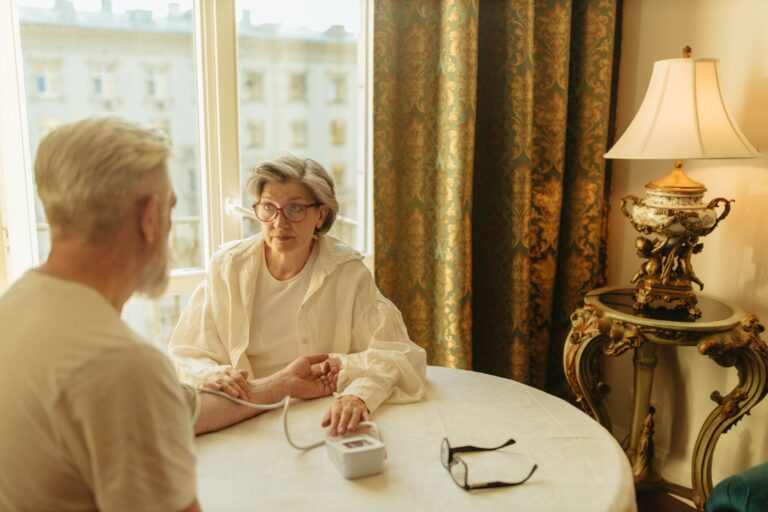
She looks sits at the center of this dementia and brain health question.
Even when life feels tangled and confusing, she chooses to look for beauty. It’s not about ignoring the chaos or pretending everything is perfect. Instead, it’s a quiet strength—a way of seeing that even in the hardest moments, something good can still shine through.
Confusion often clouds our minds like a thick fog. Decisions feel heavy, emotions swirl wildly, and the path ahead seems unclear. But she doesn’t let this fog stop her from noticing small sparks of light around her. Maybe it’s the way sunlight filters through leaves after a storm or how a stranger’s smile breaks through an otherwise tough day.
This act of seeking beauty amid confusion is more than just optimism; it’s resilience in its purest form. It means finding meaning where others might only see struggle or pain. She understands that beauty isn’t always loud or obvious—it can be subtle and hidden in unexpected places.
When everything feels uncertain, looking for beauty becomes an anchor. It reminds her that life isn’t just about problems but also about moments worth holding onto—moments that bring peace, hope, or joy even if they’re fleeting.
Her search for beauty doesn’t erase confusion but softens its edges. It helps her breathe easier and face challenges with a steadier heart because she knows there is always something worth appreciating—even if it takes effort to find.
In this way, she transforms confusion into an opportunity: to grow stronger inside and to discover new reasons to keep moving forward with grace and courage.
For more, see NIH MedlinePlus — cognitive testing.
Why She looks Matters for Families
Understanding she looks helps families ask sharper questions at the next memory clinic visit and make calmer decisions at home. Dementia care decisions often hinge on small details that doctors do not have time to explain in a 15-minute appointment. This section adds the practical context most families never hear.
Most she looks questions come up after a worrying moment at home: a missed bill, a wrong turn on a familiar drive, a name that does not come back, or a doctor’s report that uses words no one explained. None of those moments alone diagnoses dementia, but together they often signal that a real conversation is overdue.
What Doctors Wish Families Knew About She looks
Memory specialists routinely report that families come in late. Average time from first family-noticed change to diagnosis is roughly 3 years in the United States. That delay matters because today’s most effective steps — vascular risk control, sleep apnea treatment, depression treatment, medication review, and exercise — work best when started early.
Doctors also wish families knew that no single test diagnoses dementia. The diagnosis is built from cognitive testing, history, labs, imaging, and observation over time. A score on a test is one data point, not a verdict.
Common Questions Families Ask About She looks
When should we see a specialist about she looks?
When concerns about memory, judgment, language, or behavior have lasted more than a few months and are affecting daily life. Primary care is the right first stop. They will rule out reversible causes and refer to a neurologist or memory clinic if needed.
What should we bring to the first appointment?
A written timeline of symptoms, a complete medication list (including over-the-counter and supplements), a list of medical conditions, and a family member who has observed the changes.
What can we do at home today?
Manage blood pressure, treat sleep apnea, exercise most days, eat a Mediterranean-style diet, stay socially engaged, address hearing loss, and review medications with a pharmacist for cognitively risky drugs.
When to Call the Doctor
Sudden cognitive change, falls, new confusion, fever with confusion, sudden weakness or speech change, or rapid worsening of dementia symptoms over days warrant immediate medical attention. Slow gradual change can be discussed at the next scheduled visit.
For more authoritative guidance on she looks and related dementia topics, the National Institute on Aging and the Alzheimer’s Association are reliable starting points.