Yes, Parkinson’s disease symptoms significantly increase the risk of head injuries, primarily through falls. Research shows that annual fall incidence in Parkinson’s patients ranges from 45 to 68 percent””three times higher than in healthy individuals of the same age. People with Parkinson’s fall an average of four to six times per year, with some experiencing multiple falls daily, particularly those who have freezing of gait. These falls frequently result in serious injuries: approximately 32 percent cause fractures, while an additional 26 percent lead to bruises, lacerations, and other trauma. A 72-year-old man with moderate Parkinson’s, for instance, might navigate his home successfully for months before a single moment of freezing at a doorway sends him forward onto a tile floor, resulting in a concussion that compounds his existing cognitive challenges.
The relationship between Parkinson’s and head injuries runs in both directions, creating a troubling cycle. Not only do Parkinson’s symptoms increase the likelihood of falls and subsequent head trauma, but traumatic brain injuries themselves can increase the risk of developing Parkinson’s disease by 50 to 83 percent depending on severity. This article examines the specific motor and non-motor symptoms that contribute to fall risk, the statistics on injuries and hospitalizations, the bidirectional relationship between head trauma and Parkinson’s, and practical prevention strategies that can reduce fall rates by approximately 35 percent. Understanding this connection matters because falls represent one of the most modifiable risk factors in Parkinson’s care. While the disease itself progresses, the frequency and severity of falls can be influenced through medication management, environmental modifications, and targeted exercise programs.
Table of Contents
- Why Do Parkinson’s Motor Symptoms Lead to More Falls?
- How Cognitive and Autonomic Symptoms Compound Fall Risk
- The Injury Burden: What Happens When Parkinson’s Patients Fall
- The Dangerous Cycle: How Head Injuries Increase Parkinson’s Risk
- Exercise and Movement: The Most Effective Prevention Strategy
- Medication Management and Its Complex Role in Fall Prevention
- Creating a Safe Home Environment
- Looking Forward: Integrating Fall Prevention into Parkinson’s Care
- Conclusion
Why Do Parkinson’s Motor Symptoms Lead to More Falls?
The motor symptoms that define Parkinson’s disease create a perfect storm for instability. Freezing of gait””where a person’s feet suddenly feel glued to the floor””is one of the most dangerous manifestations. This symptom often strikes during turns, when passing through doorways, or when navigating crowded spaces. The delay in limb coordination means that while the upper body continues its forward momentum, the feet remain planted, causing the person to pitch forward with nothing to break their fall. Reduced gait speed compounds this problem.
Parkinson’s patients often develop a shuffling walk with shortened steps, which decreases their ability to recover balance when they stumble. Postural instability””the loss of automatic balance reflexes””means that even minor perturbations that a healthy person would correct unconsciously can send someone with Parkinson’s to the ground. A comparison between early and advanced Parkinson’s illustrates this progression: someone in the early stages might catch themselves on furniture after a misstep, while someone with more advanced disease lacks the reaction time and muscle coordination to mount any protective response. The statistics reflect these vulnerabilities. Fall frequency in Parkinson’s patients is double that of age-matched older adults without the disease. Prior history of falls serves as the strongest predictor of future falls, creating a pattern where one fall often signals the beginning of a recurring problem rather than an isolated incident.

How Cognitive and Autonomic Symptoms Compound Fall Risk
Motor symptoms receive most attention in fall discussions, but non-motor symptoms play an equally critical role. Cognitive impairment affects attention, processing speed, and the ability to navigate complex environments. A person with Parkinson’s-related cognitive decline may fail to notice a rug edge, misjudge the distance to a chair, or forget that a particular area of their home requires extra caution. When cognition is compromised, the mental resources needed to compensate for physical limitations simply aren’t available. Cardiovascular dysfunction presents another hidden danger. Orthostatic hypotension””a sudden drop in blood pressure upon standing””affects many Parkinson’s patients and can cause lightheadedness or fainting.
Someone who stands up from a seated position may feel fine for a few seconds before their vision dims and their legs buckle. Sleep disturbances, including the excessive daytime sleepiness common in Parkinson’s, further impair alertness and reaction time. Psychosis, which can include visual hallucinations, may cause a person to startle or move suddenly in response to something that isn’t there. However, if these non-motor symptoms are well-managed through medication adjustments and careful monitoring, fall risk can be substantially reduced. The challenge lies in recognizing that falls aren’t purely a motor problem. A comprehensive fall prevention approach must address blood pressure management, sleep quality, and cognitive support alongside physical therapy.
The Injury Burden: What Happens When Parkinson’s Patients Fall
When a person with Parkinson’s falls, the consequences tend to be more severe than for other older adults. Approximately 50 percent of falls result in severe secondary injuries. The breakdown is sobering: 32.2 percent of falls cause fractures, with hip fractures occurring at a 10 percent rate and often requiring hospitalization. These aren’t minor events””hip fractures in Parkinson’s patients frequently lead to surgical intervention, extended rehabilitation, and permanent decline in independence. The healthcare system bears significant costs.
A Spanish cohort study found that 5.8 percent of Parkinson’s patients required acute hospitalization during a one-year follow-up period, with 23.7 percent of all acute hospitalizations attributed to traumatic falls. Direct medical costs for Parkinson’s patients who fall are double those of non-fallers, reflecting the cascade of emergency care, surgery, rehabilitation, and ongoing support that a serious fall triggers. Consider a specific scenario: a woman with moderate Parkinson’s experiences freezing while carrying dishes to the sink. She falls forward, striking her head on the counter edge. The resulting traumatic brain injury requires emergency transport, imaging, overnight observation, and weeks of cognitive rehabilitation. Her Parkinson’s symptoms worsen during the recovery period because she can’t maintain her exercise routine, and the head trauma itself may accelerate her disease progression””a consequence explored in the next section.

The Dangerous Cycle: How Head Injuries Increase Parkinson’s Risk
The relationship between Parkinson’s and head injuries flows in both directions, creating a vicious cycle that demands attention. Research demonstrates that traumatic brain injury substantially increases the risk of developing Parkinson’s disease. A single TBI with loss of consciousness can elevate Parkinson’s risk by up to 50 percent. The numbers climb with injury severity: mild TBI increases risk by 56 percent, while moderate-to-severe TBI increases risk by 83 percent. Most striking, TBI with loss of consciousness lasting more than one hour is associated with a 3.5 times increased risk of developing Parkinson’s. A large study of 325,870 veterans provides compelling evidence.
Among the 1,462 veterans who developed Parkinson’s within 12 years of follow-up, 949″”or 65 percent””had a prior traumatic brain injury. While military service carries unique TBI risks, the biological mechanisms linking head trauma to Parkinson’s apply broadly. Head injuries can trigger chronic inflammation, disrupt dopamine-producing neurons, and accelerate the accumulation of abnormal proteins associated with Parkinson’s pathology. For someone already living with Parkinson’s, this bidirectional relationship carries a grim implication: a fall-related head injury doesn’t just cause immediate harm. It may accelerate disease progression or trigger additional neurodegenerative changes. This understanding should intensify the urgency of fall prevention efforts, since every prevented fall may also prevent worsening of the underlying disease.
Exercise and Movement: The Most Effective Prevention Strategy
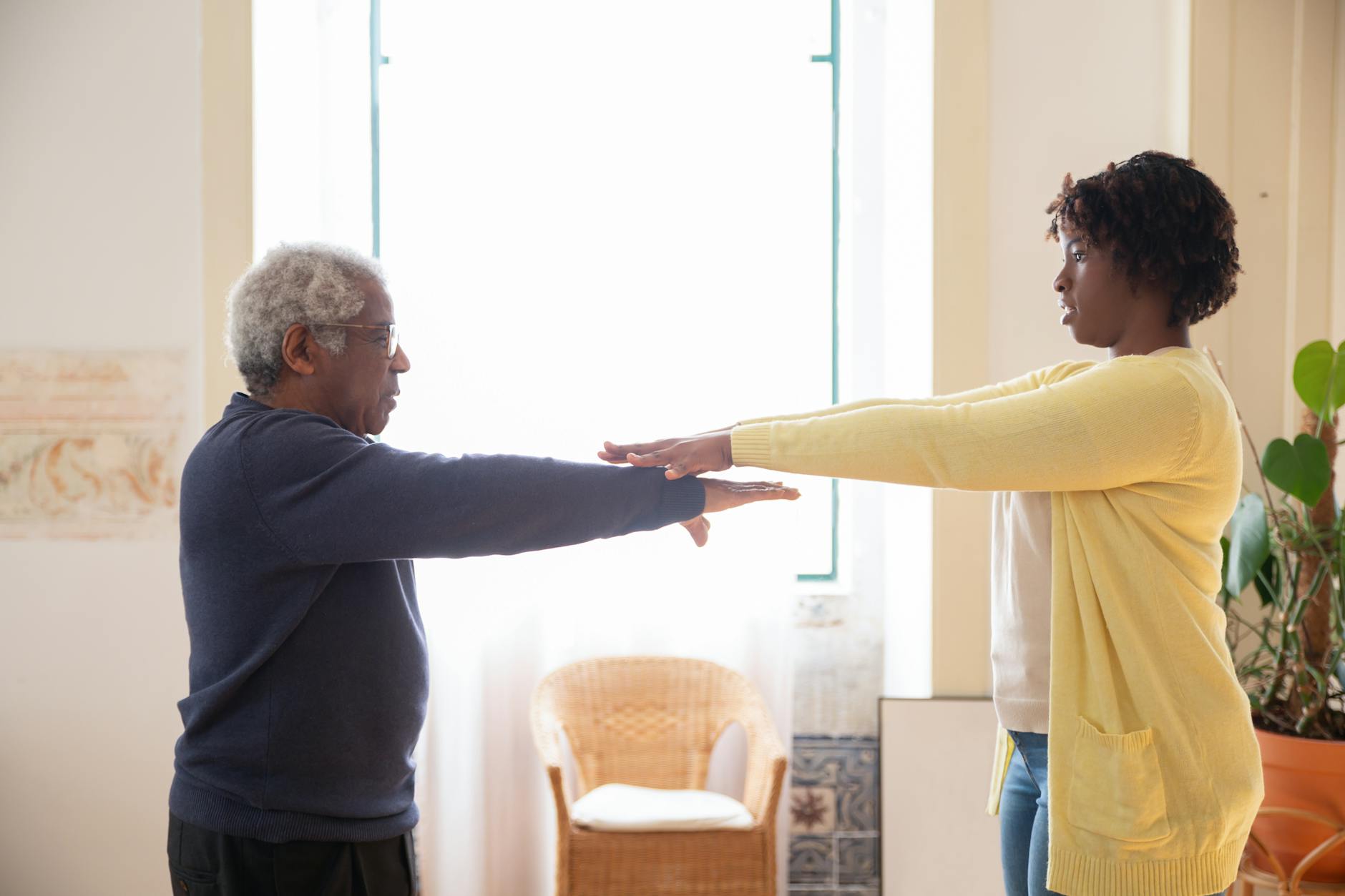
Among all fall prevention approaches, exercise stands out for its documented effectiveness. Research shows that exercise reduces fall rates by approximately 35 percent in early to mid-stage Parkinson’s patients. This reduction is substantial””equivalent to preventing roughly one in three falls that would otherwise occur. The key is consistent, targeted physical activity that addresses the specific deficits Parkinson’s creates. Balance training forms the foundation. Tai chi, for example, challenges postural control in a graduated way, teaching the body to respond to weight shifts and directional changes.
Strength training, particularly for the legs and core, provides the muscle power needed to catch oneself during a stumble. Gait training helps counteract the shuffling steps and reduced arm swing characteristic of Parkinson’s. Aerobic exercise may improve overall alertness and reduce the fatigue that contributes to falls. The tradeoff involves timing and intensity. Exercise programs work best when started early in the disease course, before significant motor decline limits participation. However, someone with more advanced Parkinson’s shouldn’t be discouraged from beginning””even seated exercises can improve strength and reduce risk. The limitation is that exercise benefits diminish in very advanced disease stages, and for those with severe freezing or orthostatic hypotension, exercise sessions themselves require careful supervision to prevent the falls they’re meant to prevent.
Medication Management and Its Complex Role in Fall Prevention
Good medication management represents a second pillar of fall prevention, though the relationship is more complex than it might appear. Optimally dosed Parkinson’s medications improve motor function, reduce freezing, and enhance mobility””all of which should reduce falls. When someone’s medication is wearing off between doses, their symptoms worsen predictably, and these “off” periods carry heightened fall risk. Adjusting medication timing to minimize off periods can meaningfully improve safety. However, medications themselves can contribute to fall risk. Some Parkinson’s medications cause or worsen orthostatic hypotension.
Others may cause involuntary movements (dyskinesias) that destabilize gait. Sedating medications, whether prescribed for Parkinson’s symptoms or coexisting conditions, impair alertness and reaction time. The goal isn’t simply to maximize medication but to find the balance that optimizes function while minimizing side effects that increase fall risk. A warning applies here: changes to Parkinson’s medication should always involve the treating neurologist. Well-meaning attempts to reduce sedating medications or adjust timing without medical guidance can trigger severe worsening of motor symptoms. The complexity of Parkinson’s pharmacology””with its interacting drugs, individual variation, and disease-stage considerations””requires expert management.
Creating a Safe Home Environment
Environmental modification offers immediate, practical fall prevention that doesn’t depend on disease stage or medication response. The goal is to eliminate hazards and create a home that accommodates the specific movement patterns of someone with Parkinson’s. This means removing throw rugs that can catch shuffling feet, ensuring adequate lighting throughout the home, and installing grab bars in bathrooms where wet surfaces multiply fall risk.
Doorways and narrow passages deserve special attention because they commonly trigger freezing of gait. Placing visual cues””such as colored tape on the floor””can help some people step over the threshold rather than freezing at it. Furniture arrangements should allow clear pathways without requiring tight turns. For someone who experiences significant freezing, a home evaluation by an occupational therapist can identify specific trouble spots and recommend targeted solutions.
Looking Forward: Integrating Fall Prevention into Parkinson’s Care
Fall prevention should be as central to Parkinson’s care as medication management and symptom monitoring. The evidence is clear: falls are frequent, often injurious, expensive to treat, and may worsen disease trajectory through head trauma.
Yet fall prevention often receives less attention than it deserves, addressed reactively after a serious fall rather than proactively from diagnosis onward. Emerging approaches include wearable sensors that detect gait changes before falls occur, physical therapy protocols specifically designed for Parkinson’s, and multidisciplinary fall clinics that address motor symptoms, medications, cognition, and environment together. As understanding of the Parkinson’s-head injury cycle deepens, preventing falls may be recognized not just as a safety measure but as a disease-modifying intervention.
Conclusion
Parkinson’s symptoms substantially increase the risk of head injuries, with fall rates three times higher than in healthy older adults and approximately half of all falls resulting in significant injuries. The combination of motor symptoms like freezing of gait and postural instability with non-motor factors including cognitive impairment and blood pressure dysregulation creates persistent vulnerability. When falls do occur, the consequences extend beyond immediate injury””head trauma may accelerate disease progression through the same mechanisms that link prior TBI to increased Parkinson’s risk.
Prevention is possible and effective. Exercise programs reduce falls by roughly 35 percent, and medication optimization, environmental modification, and attention to non-motor symptoms can further improve safety. For caregivers and people living with Parkinson’s, the practical implication is clear: fall prevention deserves sustained attention starting at diagnosis, not just after the first serious injury. Consulting with a neurologist about medication timing, engaging a physical therapist for balance training, and conducting a thoughtful home safety evaluation represent concrete steps that can meaningfully reduce risk.