For dementia word games in a second language, choose enjoyment over difficulty. A second language means a language learned after childhood, used here for simple naming, matching, and guessing games. Older adults who studied Spanish improved key thinking skills as much as peers doing brain training, and they reported greater enjoyment. The Baycrest and York University study reported by MedicalXpress found that trade-off worth noting for caregivers (MedicalXpress report on the language study).
Medical information disclaimer: This article is for general educational purposes only and does not provide medical advice, diagnosis, or treatment. Always consult a physician or other qualified health professional about symptoms, medications, tests, or treatment decisions.
Table of Contents
- Why does enjoyment beat difficulty?
- What kind of second-language play works best?
- How often should you play?
- What limits should you keep in mind?
Why does enjoyment beat difficulty?
Play that feels easy keeps attention longer than play that feels like a test. A person who laughs, watches, or helps a little is still taking part. The U.S.
National Institute on Aging advises matching activities to what the person can still do and picking things fun for everyone. Its caregiving guidance says help them start and let them watch if they prefer (NIA guidance on adapting activities). Shift the goal from score to comfort. Tailor each task to present abilities so failure and frustration stay low.
What kind of second-language play works best?
Keep words concrete, familiar, and tied to sight, sound, or touch. Use the stronger language to explain, and the second language only for short playful turns.
Good choices are picture naming, food words, color matching, simple bingo, and finishing a known song line. Change one thing at a time, such as fewer cards, larger print, or more time.
- Start with 5 to 10 known words around one theme, like fruit
- Say, show, and point together, then invite one word back
- Keep rounds to 10 minutes and stop while mood is good
- Repeat favorites before adding new words
How often should you play?
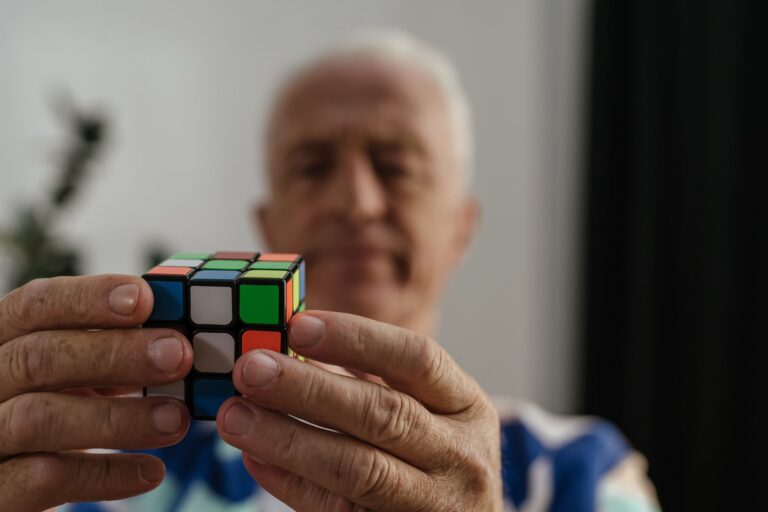
Short and often beats long and rare. Frequent active mental play such as games, cards, chess, puzzles, and crosswords was linked to 9 percent lower dementia risk over 10 years in 10,318 healthy Australians age 70 and older. The JAMA Network Open study reported by PubMed Central tracked that pattern across a decade (PubMed Central summary of the Australian study).
Treat that link as support for routine, not proof of prevention. Pick a calm time of day and play two to four brief sessions per week when energy is best. Watch for tired eyes, restlessness, or silence. Those signs mean pause, offer a drink, or switch to listening.
What limits should you keep in mind?
Evidence for mental activity and brain training to prevent decline remains promising but inconclusive. The Alzheimers.gov summary of a National Academies review reaches that careful finding (Alzheimers.gov summary of the National Academies review).
So treat second-language games as supportive care and shared time, not treatment. Do not correct every error or push for harder words when recall slips. End each session with one easy win, like a favorite song word or a matched pair, and save that same easy opener for next time.