Reviewed by the Help Dementia Editorial Team — our editors review every article for accuracy against guidance from the National Institute on Aging, the Alzheimer’s Association, and peer-reviewed sources.
The short answer is no—dementia researchers do not warn against eating walnuts regularly. In fact, current scientific evidence points in the opposite direction. A common misconception circulates online suggesting that walnuts harm brain health, but this claim contradicts decades of nutritional research and recent clinical trials. For someone like Margaret, a 68-year-old concerned about cognitive decline, worrying about walnuts would actually mean avoiding one of the most well-researched brain-protective foods available.
Understanding what the actual research says, rather than viral health claims, is essential for making informed dietary decisions about dementia prevention. The confusion likely stems from incomplete social media posts or misinterpreted headlines. Researchers studying dementia prevention have instead identified walnuts as a potentially protective food. A 2024-2025 UK Biobank cohort study involving thousands of participants found that adults consuming nuts once or twice daily had a lower risk of all-cause dementia compared to those who didn’t eat nuts. This large-scale research represents the type of evidence that dementia specialists actually recommend when counseling patients on brain-healthy eating patterns.
Table of Contents
- What Does Current Dementia Research Actually Say About Nuts?
- The Specific Cognitive Benefits Evidence and Research Limitations
- Comparing Walnuts to Other Brain-Protective Foods and Dietary Approaches
- How Walnuts Fit Into a Practical Dementia-Prevention Diet
- Addressing Myths About Nuts, Fat Content, and Dementia Risk
- Why Misinformation About Walnuts Spreads in Health Communities
- Moving Forward With Evidence-Based Dementia Prevention
- Conclusion
What Does Current Dementia Research Actually Say About Nuts?
The scientific consensus on nut consumption and brain health is remarkably clear: nuts appear to be protective, not harmful. A 2020 meta-analysis published in Annals of Medicine reviewed multiple studies on walnut intake and found consistent evidence that walnuts are associated with better cognitive outcomes across age groups—in young adults, middle-aged adults, and older adults. This isn’t a single small study; it’s a synthesis of existing research showing patterns across diverse populations. The evidence isn’t speculative or based on lab tests alone; researchers have observed these cognitive benefits in real people following nuts-inclusive diets.
One particularly rigorous study called the WAHA trial (Walnuts and Healthy Aging) involved 708 healthy elderly participants in a randomized controlled trial lasting two years. Researchers found that walnuts may delay cognitive decline in subgroups at higher risk, offering a measurable, time-bound benefit. While the effects were modest in the healthiest older adults, the trial demonstrated that walnuts didn’t cause harm—they provided potential protection. This distinction matters: a food that offers even modest cognitive benefits is fundamentally different from one that researchers warn against.

The Specific Cognitive Benefits Evidence and Research Limitations
Research on nuts and cognition has identified several proposed mechanisms. Walnuts are rich in omega-3 fatty acids (specifically alpha-linolenic acid), polyphenols, and vitamin E—all compounds with evidence suggesting neuroprotective properties. When neurons receive better nutritional support, inflammatory markers in the brain may decrease, and cellular communication may improve. These aren’t theoretical benefits; they’re measurable changes in brain chemistry that researchers can track through biomarkers in blood and cerebrospinal fluid. That said, one important limitation exists: most walnut and nut research shows association rather than definitive causation. A person who eats walnuts regularly may also exercise more, sleep better, or manage stress more effectively—all factors that independently protect cognition.
The WAHA study, being randomized and controlled, provides stronger causal evidence than observational studies, but even it found modest effects rather than dramatic cognitive rescue. This limitation is important to acknowledge: walnuts are part of a brain-healthy pattern, not a standalone dementia cure. Another limitation involves individual variation. Some people’s brains may benefit more from nut consumption than others, depending on genetics, existing diet quality, and overall health status. A person already eating a Mediterranean diet rich in fish, vegetables, and healthy fats might see smaller additional benefits from adding walnuts compared to someone eating a processed-food-heavy diet. Researchers continue studying which populations benefit most.
Comparing Walnuts to Other Brain-Protective Foods and Dietary Approaches
In the context of brain-healthy eating patterns, walnuts fit alongside other well-researched protective foods. Mediterranean and MIND diets—both extensively studied for cognitive protection—include nuts as a regular component. The MIND diet (Mediterranean-DASH Intervention for Neurodegenerative Delay) specifically recommends nut consumption. When researchers compare people following these diets to those eating typical Western diets high in processed foods, the difference in cognitive outcomes is substantial and consistent. A 2023 study published by the National Institute for Health Research found that swapping one serving of processed red meat for nuts or beans daily may lower dementia risk by approximately 20%.
This comparison illustrates the relative power of dietary choices: it’s not about walnuts versus nothing, but about walnuts as a replacement for foods with demonstrated cognitive risks. Processed meats contain compounds linked to inflammation and vascular damage; nuts contain compounds linked to cellular protection. From a dementia prevention standpoint, this swap represents meaningful risk reduction. Other protective foods—berries, leafy greens, fatty fish—have similar research profiles to walnuts: they show consistent associations with better cognitive aging and plausible biological mechanisms, but rarely produce dramatic, immediate changes. Dementia prevention is cumulative; it involves multiple dietary and lifestyle choices adding up over years and decades.
How Walnuts Fit Into a Practical Dementia-Prevention Diet
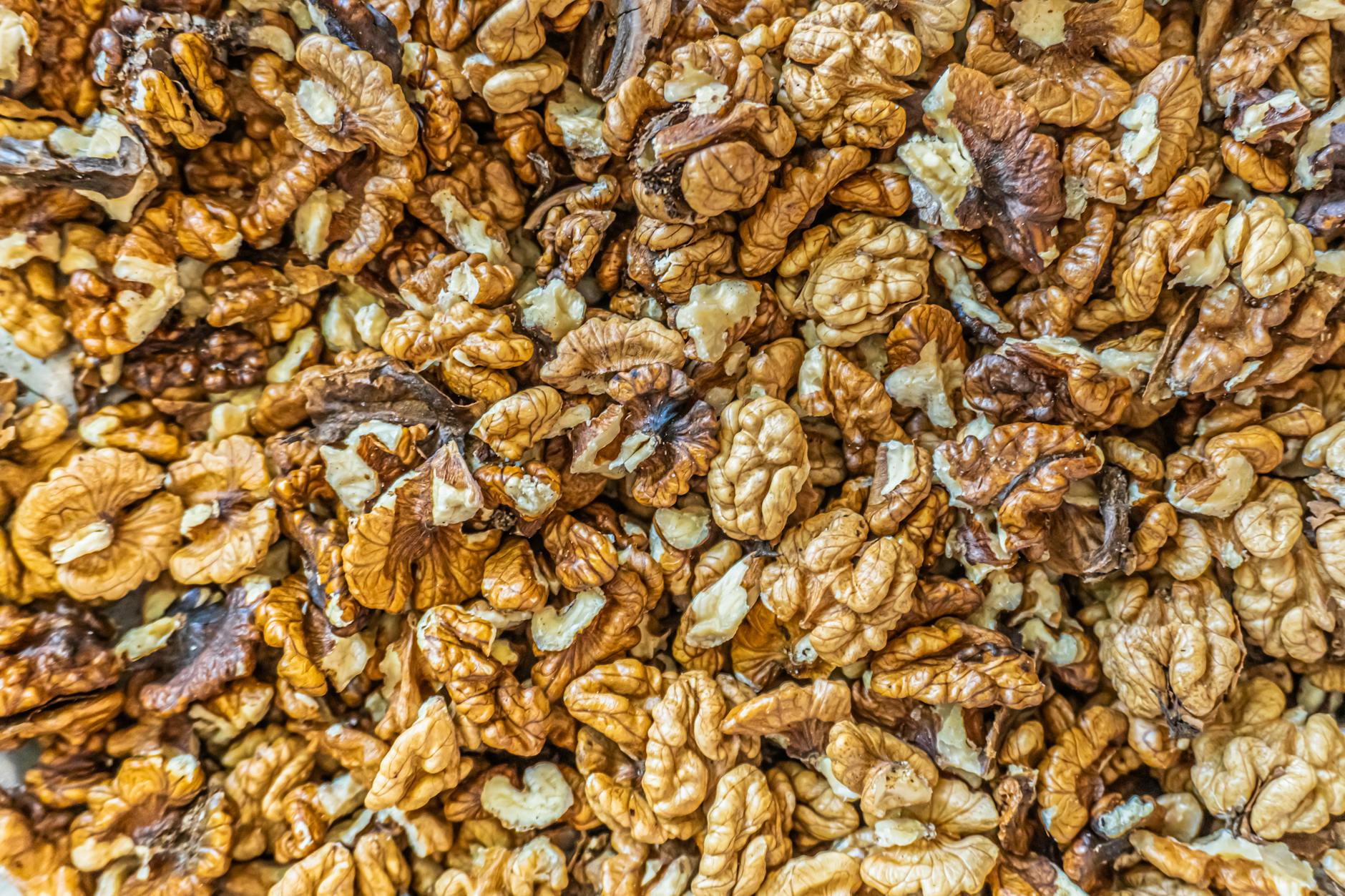
For practical implementation, the research suggests including a modest amount of walnuts regularly rather than avoiding them entirely. The WAHA study and observational research suggest benefits at consumption levels around one ounce daily—roughly a small handful. This amount is manageable for most people and provides approximately 185 calories and 4.3 grams of omega-3 fats. Someone starting a brain-protective diet might add walnuts to oatmeal, include them in salads, eat them as a snack, or use walnut oil in dressings. The practical consideration isn’t whether to eat walnuts, but how to incorporate them into an overall dietary pattern that emphasizes whole foods. Someone on a dementia-prevention journey should prioritize fish twice weekly, consume abundant colorful vegetables, include whole grains, moderate wine consumption if desired, and yes, include nuts.
Cost is one practical tradeoff: walnuts and other nuts cost more per serving than many processed snack foods, which may limit access for people on tight budgets. However, they’re often cheaper than supplements promoted for brain health and offer broader nutritional benefits. Another practical aspect is consistency. The benefits observed in research come from regular consumption—weekly or daily—not occasional use. Someone eating walnuts three times yearly won’t experience the cognitive benefits seen in people who eat them regularly. Building a sustainable habit matters more than finding the perfect brain food.
Addressing Myths About Nuts, Fat Content, and Dementia Risk
One persistent myth suggests that nuts, being high in fat, contribute to weight gain and subsequently to dementia risk through obesity. This concern misunderstands both the research and the type of fat involved. Studies comparing nut-eaters to non-nut-eaters actually find lower obesity rates among regular nut consumers, not higher. The fat in walnuts—primarily polyunsaturated fat—doesn’t behave metabolically like saturated fat from processed foods. People who add walnuts to their diet tend to maintain or lose weight, partly because nuts provide satiety and partly because they often replace less healthy foods. A second myth warns against nuts due to their caloric density.
While true that walnuts contain calories—roughly 185 per ounce—the research evidence doesn’t support avoidance. In the observational studies showing cognitive benefits, people who ate nuts had better cognitive outcomes than those avoiding them, regardless of weight status. The important variable is whether nuts replace something harmful (processed snacks, sweet beverages, processed meats) or add to excess calories without displacement. One legitimate consideration, though not a warning, involves choking risk and chewing difficulty in people with advanced dementia or swallowing disorders. Someone with dysphagia might need finely chopped or ground walnuts, or walnut butter as an alternative. This is a practical accommodation, not a reason for general dementia prevention advice to discourage walnut consumption.

Why Misinformation About Walnuts Spreads in Health Communities
Health misinformation often circulates through incomplete social media posts, misinterpreted news headlines, or sponsored content from supplement companies promoting alternatives. An article titled “Surprising Foods to Avoid” gets shared more readily than “Eat More Walnuts.” This algorithmic favoring of surprising claims means accurate but unsensational research gets less visibility than catchy falsehoods.
When someone’s aunt shares a concerning post about walnuts, it often stems from this information ecosystem rather than actual research. News outlets sometimes contribute by creating dramatic headlines that don’t match the research described in the article itself. A cautious study finding “walnuts may affect cholesterol in people with existing high cholesterol” becomes “Warning: Walnuts Linked to Health Problems” in a headline, and the nuance vanishes by the time it’s shared across social networks.
Moving Forward With Evidence-Based Dementia Prevention
As dementia research continues, the picture for walnut consumption seems likely to strengthen rather than weaken. Ongoing trials are examining nut consumption in diverse populations, including people with mild cognitive impairment and those at genetic risk for Alzheimer’s disease. The mechanisms by which nuts might protect cognition are being clarified through neuroimaging and biomarker studies.
Within the next few years, researchers expect more precise recommendations about optimal nut types, quantities, and timing for specific populations. For now, someone concerned about dementia prevention can confidently include walnuts as part of a comprehensive lifestyle approach. The evidence supports eating them regularly, the mechanisms explaining why are plausible, and the risks are minimal. Unlike dementia prevention strategies that are burdensome or expensive, adding walnuts to one’s diet is straightforward and accessible.
Conclusion
To summarize: dementia researchers do not warn against eating walnuts regularly. The opposite is true. Current evidence from large cohort studies, meta-analyses, and randomized trials supports regular walnut consumption as part of a brain-protective diet. Walnuts contain compounds linked to better cognitive aging, may help prevent cognitive decline, and fit naturally into established dietary patterns like the Mediterranean and MIND diets.
The myth that researchers warn against walnuts likely stems from misinterpreted headlines and the internet’s tendency to amplify surprising claims over accurate ones. If you’re concerned about dementia prevention, including walnuts in your diet is one of the simpler, evidence-supported steps you can take. A small handful of walnuts daily, incorporated into meals or eaten as a snack, aligns with current research recommendations. Pair this with other protective factors—regular physical activity, cognitive engagement, adequate sleep, and a diet rich in vegetables, fish, and whole grains—and you’re following a path supported by decades of research. The goal is sustainable, whole-life prevention, and walnuts are genuinely part of that picture.