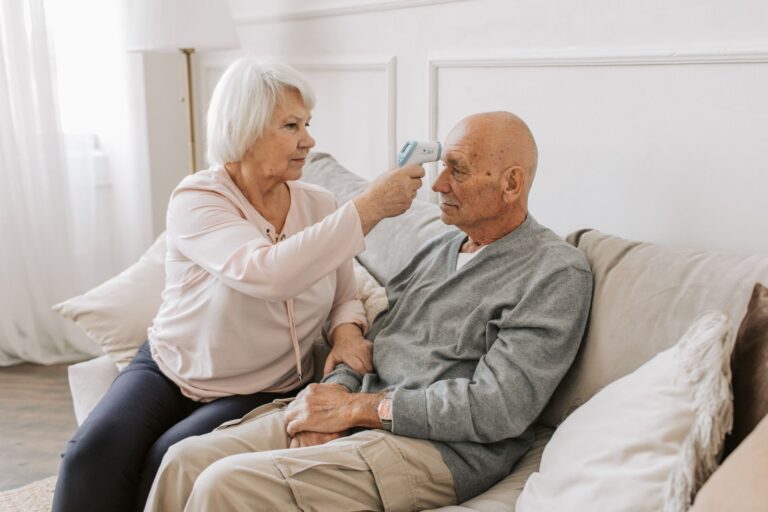
A dementia device trial should measure four core outcomes—implementation feasibility, staff and resident practicality, stakeholder acceptability, and workflow integration—before committing to bulk purchase. A Swedish nursing home study identifies these as the foundation of feasibility assessment.
Proceeding to large-scale deployment requires at least 65% approval from questionnaire responses and more than 50% positive feedback in open-ended comments, confirmed through real-world testing with actual dementia users rather than benchmark datasets alone. The stakes are high: devices purchased without proper pilot validation often sit unused because they don't fit the way care actually happens, staff lack the skills to maintain them, or they don't account for how dementia changes movement and cognition. A structured trial catches these gaps before you invest in units that won't be used.
Medical information disclaimer: This article is for general educational purposes only and does not provide medical advice, diagnosis, or treatment. Always consult a physician or other qualified health professional about symptoms, medications, tests, or treatment decisions.
Table of Contents
- Measure Four Specific Feasibility Dimensions
- Set Acceptability Thresholds Before Scaling
- Validate Data Accuracy on Real Dementia Users
- Ensure Informed Consent Complies with Capacity Assessment
- Assess Staff Readiness, Training, and Workflow Integration
- Track Quantifiable Pilot Success Metrics
- Frequently Asked Questions
Measure Four Specific Feasibility Dimensions
Don't assume that because a device works in theory, it will work in your care setting. Feasibility assessment must answer four distinct questions: Can it be incorporated into daily care routines without disrupting schedules? Can staff and residents actually use it without excessive support? Do stakeholders—administrators, care staff, residents, and family members—actively support it? Does it integrate with existing equipment and workflows, or does it create extra work? Each dimension requires measurement through structured observation and feedback, not guesswork. These four measures protect you from expensive purchases that fail silently.
A wearable device that measures activity but requires staff to manually sync data daily will eventually stop being synced. A monitoring system that alerts caregivers to falls but contradicts an existing safety protocol will generate alarm fatigue and distrust. Testing these dimensions during the pilot exposes them while you can still modify or abandon the approach.
Set Acceptability Thresholds Before Scaling
Gather formal feedback from all stakeholder groups—residents (or their family representatives), direct care staff, nurses, administrators, and activity coordinators—using both questionnaires and open-ended interviews. Acceptability requires at least 65% approval on returned questionnaires and more than 50% positive feedback in open-text responses to proceed. If you reach only 60% questionnaire approval or 45% positive comments, redesign the device or your implementation plan and retest before purchasing units.
Ask specific questions: Is the interface usable for people with cognitive decline? Does it add burden to already stretched staff? Does it respect resident dignity and privacy? Dyadic interviews with both users and their caregivers together reveal which components work well and which need redesign before you're locked into a purchase. Capture feedback that quantitative metrics alone miss by asking residents and caregivers what they liked and what frustrated them..
Validate Data Accuracy on Real Dementia Users
Sensing technologies—step counters, activity trackers, fall-detection systems—perform differently in real users than in benchmark testing. Research shows these devices may significantly underestimate steps in people with the slower, more variable gait typical of dementia, a gap that only real-world testing reveals. Run your pilot on actual residents with your target level of cognitive and physical decline, not on young staff or healthy volunteers. Check the device's core function under the exact conditions you'll deploy it: Can it detect falls reliably in residents who walk with walkers or have shuffling gaits? Does the interface remain usable when a resident's attention fluctuates? Does the battery last through a typical care routine, or does frequent charging create opportunities for it to be forgotten? Build in measurement timepoints—such as days 1, 15, 42, and 84—with standardized tools to assess whether the device achieves its intended outcomes before scaling.
Ensure Informed Consent Complies with Capacity Assessment
People with dementia may lack the cognitive ability to provide fully voluntary informed consent, so your trial must include IRB-approved assessment of each resident's capacity to consent and identification of appropriate legal representatives. This is not optional; it's foundational to ethical trial design and also protects your organization from liability. Document who provided consent (the resident, a proxy, or both), whether the resident demonstrated understanding, and how you offered withdrawal.
Some residents retain the capacity to decide about participation even if they cannot make other medical decisions; your assessment should be specific to the trial, not global. This careful approach at the pilot stage establishes a clear consent model you can scale confidently.
Assess Staff Readiness, Training, and Workflow Integration
Technology adoption fails in care homes primarily due to lack of resources, staff tech-skill gaps, and incompatibility with existing routines. Before expanding, verify that your site has: Successful scaling requires post-pilot support: small-group training sessions, flexible scheduling, remote technical assistance, and willingness to adapt the device to how your facility actually works rather than expecting your facility to reorganize around the device. These support structures predict long-term success far better than the purchase itself.
- Staff available and willing to learn the device, not just nominally assigned to it
- Clear protocols for troubleshooting and who holds responsibility if it malfunctions
- A realistic workflow that actually accommodates the new device without abandoning other tasks
- Buy-in from charge nurses and direct care staff, not just administrators
Track Quantifiable Pilot Success Metrics
Recruitment, enrollment, retention, and completion rates during the pilot are concrete feasibility markers. If you planned to enroll 20 residents and recruited only 8, or if 4 of 10 dropped out because they found the device uncomfortable, you have data to act on before expanding. Strong completion rates and low dropout indicate your implementation model works with your population; weak numbers point to redesign needs.
Measure outcomes relevant to your device's purpose—behavioral and psychological symptoms, caregiver burden, quality of life, fall prevention, activity levels—using the same standardized tools throughout your pilot so you can compare results over time. If the pilot shows a reduction in falls or improved sleep without increasing staff workload, you have evidence that expansion makes sense. If the device works for some residents but not others, document why so you can target it appropriately at scale.
Frequently Asked Questions
What if stakeholders are lukewarm but not outright opposed?
Lukewarm feedback (50–65% approval) signals you need to modify the device, the implementation plan, or both before expanding. Proceed only when you reach the 65% threshold with majority positive open-text feedback; otherwise, you're betting that resistance will fade after purchase, which rarely happens in care settings.
How long should the pilot run?
Run long enough to capture behavioral patterns and workflow integration—typically 6 to 12 weeks. Shorter pilots miss seasonal or cyclical patterns in resident behavior. Build in measurement checkpoints at days 1, 15, 42, and 84 to track outcomes over time rather than relying on a single end-of-trial assessment.
Can we pilot on a subset of residents and generalize to the whole facility?
Yes, if your pilot sample reflects your facility's dementia severity mix and care model. If you pilot only on early-stage residents living in the independent wing, results may not translate to advanced dementia populations in memory care units. Document your pilot sample carefully so results inform, rather than mislead, your scaling decision.