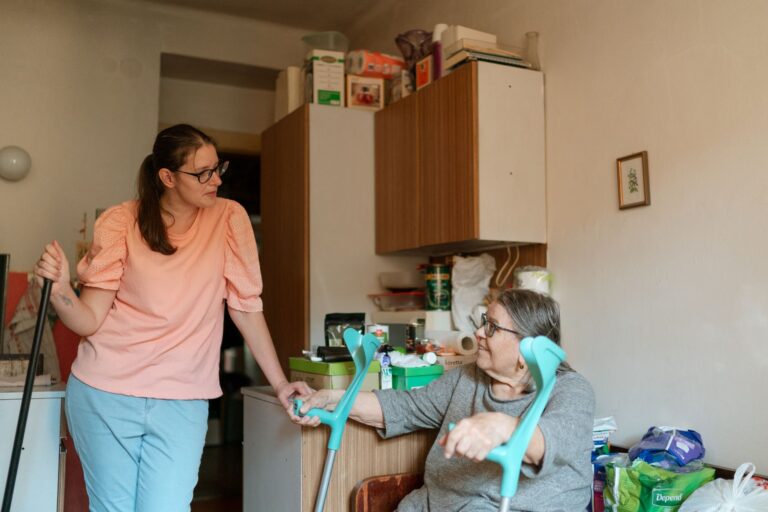
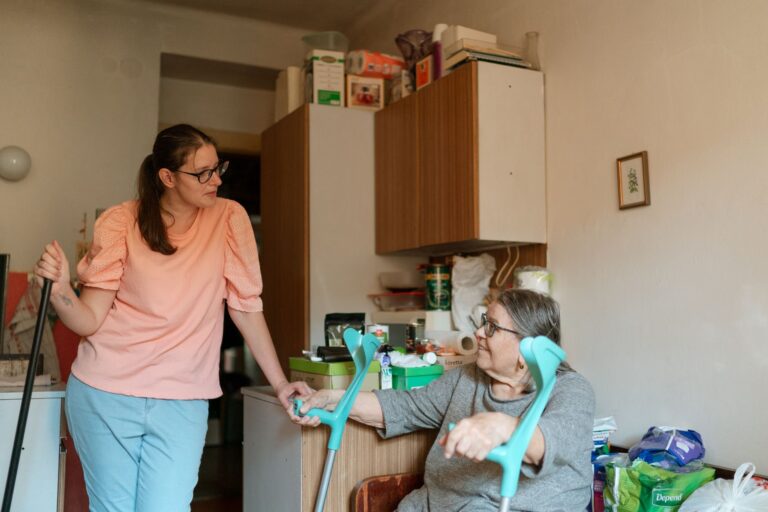
If someone with dementia refuses a walker, ask their primary-care doctor or GP for a mobility assessment. A mobility assessment is a gait, strength and balance check that guides aid selection, home safety changes and exercise. Refusal is common in moderate to severe dementia. The Centre for Studies in Aging & Health reports that people often forget why they need the aid, misjudge their abilities, and refuse or misuse it without supervision and cueing.
Medical information disclaimer: This article is for general educational purposes only and does not provide medical advice, diagnosis, or treatment. Always consult a physician or other qualified health professional about symptoms, medications, tests, or treatment decisions.
Table of Contents
- Why does refusal happen?
- Why is refusing a walker high-stakes?
- What should families request?
- What helps safe walker use?
Why does refusal happen?
Dementia affects memory, judgment and step-by-step action at the same time. A person may not remember a fall, may feel steady while sitting, and may insist they can walk alone. The walker then feels unnecessary, confusing or in the way.
In later-stage dementia, mobility, speech, memory and concentration commonly decline together, according to the Alzheimer's Society UK. That mix makes new routines hard to learn. A person may leave the walker behind, push it ahead too far, or lean on furniture instead.
Why is refusing a walker high-stakes?
Falls are frequent and hip fractures are closely tied to falls. According to CDC STEADI clinical resources, more than 1 in 4 older adults falls each year and more than 95% of hip fractures are caused by falls, through CDC fall prevention resources.
A fall, near-fall or clear change in walking should prompt medical review. The National Institute on Aging advises that a fall should prompt review for new illness, medication or vision problems, and says a doctor may prescribe physical therapy, a walking aid, or other prevention steps, in National Institute on Aging falls guidance. Refusal matters most after these warning signs: holding walls, shuffling, swaying, needing help to stand, or taking 12 seconds or more on CDC's STEADI Timed Up and Go test to stand, walk 10 feet, return and sit, described in the Timed Up and Go assessment.
What should families request?
Ask the primary-care doctor or GP for a gait, strength and balance check and a physiotherapy or physical-therapy referral. The referral can cover aid selection, home safety, and strength-balance exercises. Bring short notes to make the visit concrete: Ask whether the person needs a different aid, a refit, a home-safety review, or dementia-adapted practice rather than reminders alone.
- when refusal started and what happens without the walker
- falls, near-falls, dizziness, new medicines or vision changes
- where walking looks unsafe, such as stairs, bathroom or night trips
- the current walker, shoes and home layout, if available
What helps safe walker use?
People with dementia can learn and retain safe walker use with tailored instruction, repeated practice, and professional fitting and maintenance. Family persuasion alone is often not enough. A therapist can match handle height, brakes and walker type, then rehearse one clear routine with cues.
Stronger legs alone may not fix unsafe technique. A dementia and mobility clinical review notes that stronger legs, balance and gait alone may not fix unsafe walker technique in dementia, so strength gains do not reliably lower fall risk without dementia-adapted mobility training. When walking is no longer safe alone, the Alzheimer's Society advises supporting continued movement through assisted walking or chair-based exercise when able.