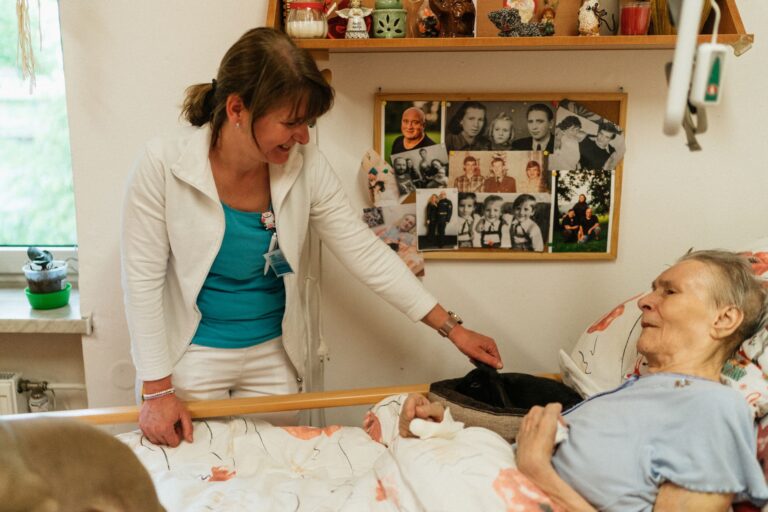
Include one or two structured reminiscence conversations—a guided use of past memories to encourage connection—each week. There is no universal "right" frequency, so adjust that starting pattern to the person's interest and comfort. Informal reminiscence does not need a fixed calendar slot. A photo, song, keepsake, scent, or familiar place can prompt a brief conversation whenever the person seems receptive.
Medical information disclaimer: This article is for general educational purposes only and does not provide medical advice, diagnosis, or treatment. Always consult a physician or other qualified health professional about symptoms, medications, tests, or treatment decisions.
Table of Contents
- Build a flexible weekly schedule
- Separate structured sessions from everyday reminiscence
- Choose a format that fits the person
- What the evidence can—and cannot—promise
- Stop or redirect when memories cause distress
Build a flexible weekly schedule
The Alzheimer's Association describes structured reminiscence therapy as 30- to 60-minute sessions, once or twice weekly for three to eight weeks. This makes one or two sessions per week a research-tested starting pattern, not a rule for every person in its dementia care practice recommendations. A simple calendar might reserve Tuesday afternoon for one session and add Saturday morning only if the first session goes well.
Leaving several days between sessions gives the caregiver room to notice whether the activity remains welcome. Treat the scheduled time as an invitation rather than an obligation. Shorten, postpone, or skip the conversation if the person is uncomfortable or uninterested.
Separate structured sessions from everyday reminiscence
A structured session has an intended time, a set of prompts, and enough space for an extended conversation. Informal reminiscence may last only a few minutes and arise naturally during another activity.
The Alzheimer's Association suggests using photos, keepsakes, music, familiar scents, and familiar places. It emphasizes connection rather than testing whether the person remembers names, dates, or details in its reminiscence guidance. Useful calendar entries can be simple: These informal moments can supplement weekly sessions without turning every conversation into a memory exercise.
- Look through a small photo album together.
- Listen to several familiar songs.
- Handle a meaningful object and invite comments.
- Visit or talk about a familiar place.
- Follow an unplanned memory when the person appears interested.
Choose a format that fits the person
Reminiscence can take place one-to-one or in a group. A professional, friend, or family member may guide it, using music, photos, or objects as prompts. The right format depends on the person's response.
Someone who becomes quiet in a group may engage more comfortably with one familiar companion. Another person may respond to shared music or objects without wanting to answer direct questions. Avoid correcting details or repeatedly asking, "Do you remember?" Instead, comment on the prompt and leave room for any response. The aim is a comfortable exchange, not proof that the person can retrieve a particular memory.
What the evidence can—and cannot—promise
Reminiscence should not be scheduled on the assumption that more sessions will always produce greater benefits. A 2018 Cochrane review of 22 studies involving 1,972 people found that results varied by delivery method and setting in its evidence summary. The review found no important overall immediate quality-of-life effect.
Care-home studies showed a probable small benefit after treatment, while community studies showed little or no difference. The Alzheimer's Association reports evidence of short-term benefits involving mood, depression, and agitation or distress. However, it also identifies small samples, varied interventions, limited blinded assessment, and limited adherence data. Those limits prevent the evidence from establishing an ideal long-term frequency.
Stop or redirect when memories cause distress
Reminiscence can bring up sad or difficult memories. If that happens, acknowledge the person's feelings and continue only while the person remains comfortable.
Possible responses include: When distress is possible, steer the conversation toward positive memories. A missed or shortened session is preferable to pushing through visible discomfort.
- Set aside the prompt without asking for an explanation.
- Shift to a different photo, object, song, or subject.
- End the session early.
- Try again another day only if the person seems receptive.