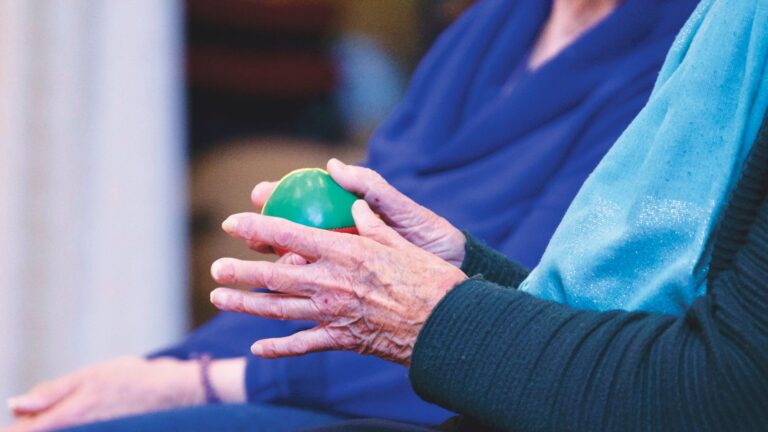
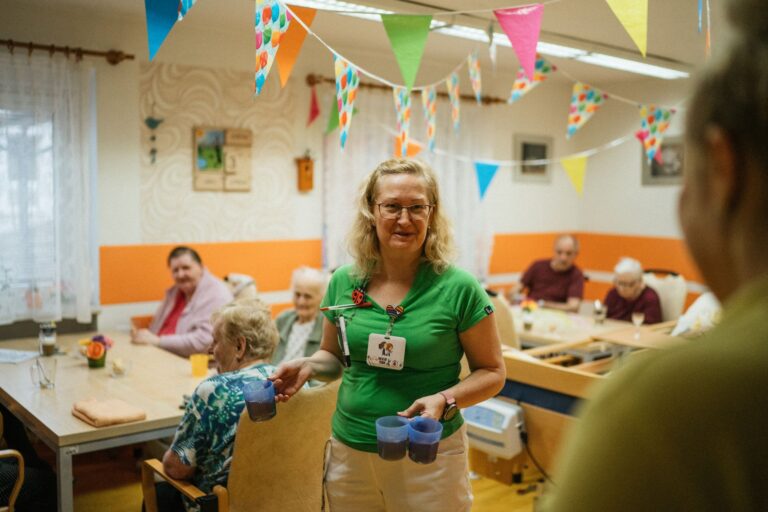
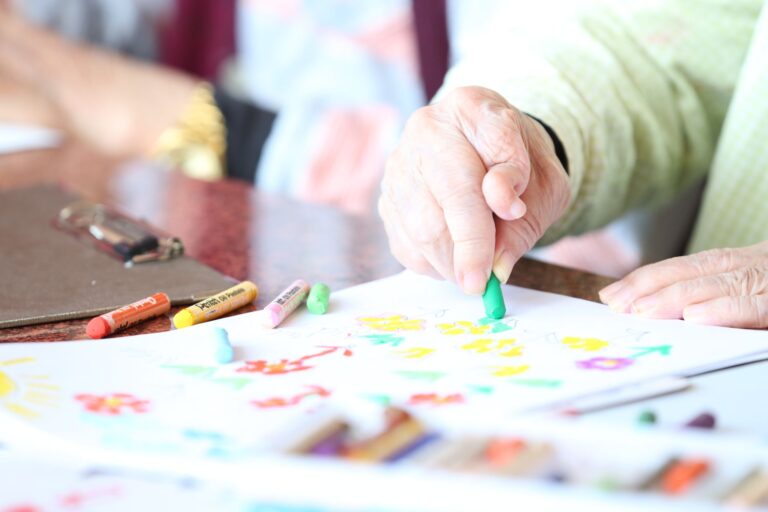
If knitting, puzzles with small pieces, or other fine handwork hurt, stop that handwork and switch to music, photos, sorting objects, and short supervised tasks matched to ability. Dementia, a decline in memory and thinking that interferes with daily life, does not require painful finger work to stay engaged.
Pain changes the choice. Sore joints need larger grips, warm hands, brief sessions, and rest, not pushing through small tight movements. The goal is calm attention during the activity, repeated often.
Medical information disclaimer: This article is for general educational purposes only and does not provide medical advice, diagnosis, or treatment. Always consult a physician or other qualified health professional about symptoms, medications, tests, or treatment decisions.
Table of Contents
- Why stop painful handwork?
- What calms without gripping?
- How can you protect sore hands?
- How do you pace the day?
Why stop painful handwork?
Small buttons, needles, and thin brushes load finger joints. For hand osteoarthritis, strain raises pain and ends the activity early. The National Institute on Aging advises caregivers to replace fine handwork with adapted engagement such as playing familiar music, singing or dancing, discussing photos, sorting objects, and doing short supervised tasks in its adapting activities guidance.
Those options use eyes, ears, voice, and large arm movements instead of tight pinching. Watch the face and hands during any task. Grimacing, rubbing knuckles, dropping items, or withdrawing means the grip is too small, the session is too long, or the step is too hard.
What calms without gripping?
Familiar music needs no grip at all. Play a loved song, sing together, clap, sway, or march in place while seated. Tailored music therapy for advanced dementia rapidly reduces agitation and anxiety while increasing attention, engagement, alertness and mood, according to researchers at Anglia Ruskin University in their report on music therapy and dementia stress.
Use playlists from teen and young-adult years. Keep volume moderate and watch for a smile, humming, or steadier breathing. Other low-grip choices include looking through photo albums, naming people, sorting large laundry items by color, folding towels, or watering plants with a light cup. Music during bathing and gentle sensory input such as pleasant scent or hand massage can also lower verbal agitation during care.
How can you protect sore hands?
Warm hands first with a warm towel or warm water. Choose tools with large, soft handles and let the person use two hands instead of one.
For hand osteoarthritis, non-drug measures that ease pain include splints or braces to reduce joint strain, adapting hand movements, specific hand exercises, and hot or cold therapy, according to the Arthritis Foundation in its guide to hand osteoarthritis care. Ask a clinician or therapist which brace, exercise, or heat routine fits the person. Set up the task to spare joints:.
- place items within easy reach to avoid tight grasping
- use large picture cards, chunky sorting bins, and easy lids
- keep wrists straight and move from the shoulder
- allow rest before pain builds
How do you pace the day?
Short and repeated beats long and rare. Trials show music and sensory activities reduce agitation mainly during the session, not later, so plan brief contact often rather than one long project. Joint-friendly low-impact activity is safe for adults with arthritis and improves pain, physical function, mood and quality of life while causing no or little pain, according to the U.S. Centers for Disease Control and Prevention in its physical activity guidance for arthritis.
Walking, water exercise, and similar options count. If pain rises, shorten the time, lower the effort, or switch to water activity with a proper warm-up and cool-down. End while mood is still good. Note what song, photo topic, or sorting task worked, keep hands warm for the next try, and repeat that short success tomorrow.