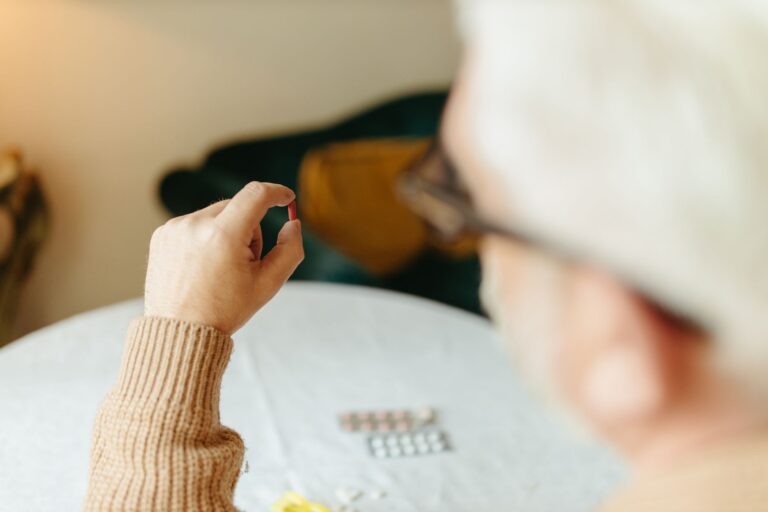
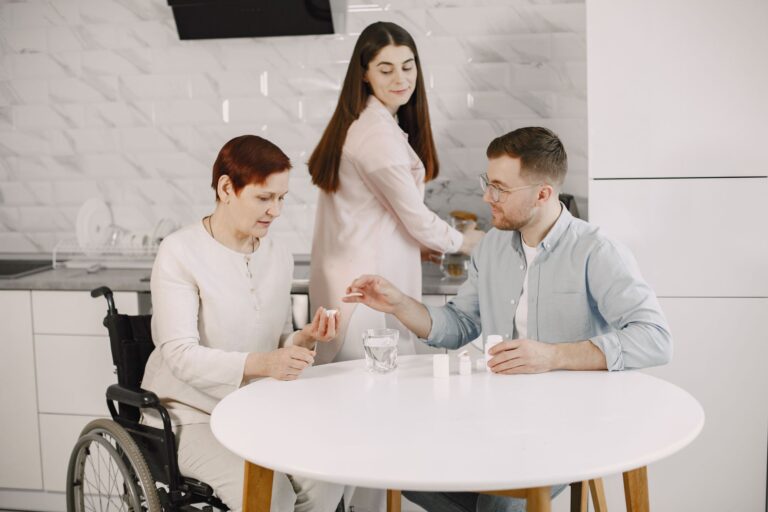
The most common caregiver mistake with food pocketing is not checking the mouth after meals to confirm it's empty. Food pocketing is the involuntary holding of chewed or unchewed food in the cheeks without swallowing, and the person often doesn't realize any is left behind, according to University Health Network's guidance for dementia caregivers. Beyond that single oversight, a cluster of related habits — serving too much food at once, skipping fluids, and treating pocketing as a one-time annoyance rather than a warning sign — compound the risk. Each mistake is specific and fixable, and recognizing them matters because unaddressed pocketing can lead to choking or aspiration pneumonia.
Medical information disclaimer: This article is for general educational purposes only and does not provide medical advice, diagnosis, or treatment. Always consult a physician or other qualified health professional about symptoms, medications, tests, or treatment decisions.
Table of Contents
- Not Checking the Mouth After Eating
- Serving Meals the Wrong Way
- Forgetting Fluids and Choking Preparedness
- Overlooking Swallowing Problems
- Why This Gets Worse as Dementia Progresses
- Frequently Asked Questions
Not Checking the Mouth After Eating
The single most frequent error is ending a meal without confirming the person's mouth is actually empty. UHN's handout instructs caregivers to prompt the person to swallow and then check, because pocketed food left in the cheek can go stale, trigger choking later, or be inhaled into the lungs when the person lies down or talks.
This step takes seconds but is easy to skip, especially when a meal already feels like it's wrapped up once the plate is clear. A clear plate is not the same as a clear mouth — food can sit tucked against the cheek or under the tongue well after the utensils are put away. Making the mouth check a fixed, final step of every meal — not an occasional one — closes the gap most directly tied to later complications.
Serving Meals the Wrong Way
Offering three large meals a day is a common structural mistake. The Alzheimer's Association recommends several small meals instead, since appetite and eating ability typically decline as dementia progresses, and a large plate can be harder to manage safely than a smaller one.
A related error is piling multiple dishes onto the plate at once. The Alzheimer's Association's mealtime tip sheet advises serving only one or two foods at a time, in a calm, quiet setting with simple place settings, because a crowded plate and a busy environment both pull attention away from the act of chewing and swallowing. Together, oversized portions and complicated presentations make it more likely that food gets started but never finished — left in the cheek instead of swallowed.
Forgetting Fluids and Choking Preparedness
Caregivers often focus only on solid food and forget to offer liquids alongside it. The same Alzheimer's Association tip sheet recommends small cups of water or other fluids throughout the meal, or high-water-content foods, because fluids help food move through the mouth and reduce both dehydration and choking risk.
A separate gap is not knowing what to do if pocketed or poorly chewed food causes choking. The Alzheimer's Association directly instructs caregivers of people with dementia to learn the Heimlich maneuver ahead of time, rather than figuring it out in the moment. Neither mistake is about what happens during a meal — both are about preparation that should already be in place before the meal starts.
Overlooking Swallowing Problems
Treating pocketing as a one-off nuisance rather than a sign of a swallowing disorder is a mistake with real consequences. Food or drink that isn't swallowed correctly can enter the lungs instead of the stomach, raising the risk of chest infection or pneumonia, according to the Public Health Agency Northern Ireland's carer's guide to eating, drinking and swallowing in dementia. The guide instructs caregivers to monitor food and fluid intake daily rather than assume meals are going fine.
The clinical stakes are documented directly: a study of 98 dementia patients with dysphagia published in the Egyptian Journal of Neurology, Psychiatry and Neurosurgery found that risk factors for aspiration pneumonia included severe penetration-aspiration, combined tube-and-oral feeding, malnutrition, comorbidities, and advanced dementia stage. Persistent pocketing fits the same pattern and is a reason to seek a formal swallowing evaluation, not just adjust how a meal is served. Pocketing that happens once in a while is different from pocketing that happens at most meals. The second pattern is the one that warrants a referral rather than another round of mealtime tweaks.
Why This Gets Worse as Dementia Progresses
Caregivers sometimes assume pocketing is a fixed problem that responds to one solution and then stays solved. In reality, the cognitive deficits behind it — in attention, initiation, recognition, and apraxia (difficulty planning and executing the physical steps of an action) — tend to worsen as dementia advances, according to a dysphagia-in-dementia review published on PMC, the National Library of Medicine's archive.
These deficits disrupt the planning needed to chew food and trigger a swallow, so pocketing tends to become more frequent in moderate-to-severe stages. That means a strategy that worked months ago — smaller portions, one food at a time, mouth checks — may need to be revisited rather than assumed to still be sufficient. The mistake isn't picking the wrong strategy once; it's not reassessing as the underlying ability to eat safely continues to change.
Frequently Asked Questions
How soon after a meal should a caregiver check the person's mouth?
Immediately, before the person leaves the table — UHN's guidance frames the swallow prompt and mouth check as the last step of the meal itself, not something done later.
Does food pocketing always mean a swallowing disorder?
Not necessarily, but the Public Health Agency Northern Ireland's guide treats persistent pocketing as a reason to monitor intake daily and seek evaluation, since it can signal that food is entering the airway rather than the stomach.
Is pocketing more common at certain dementia stages?
Yes — the PMC review on dysphagia in dementia links it to attention, initiation, recognition, and apraxia deficits that intensify in moderate-to-severe stages.