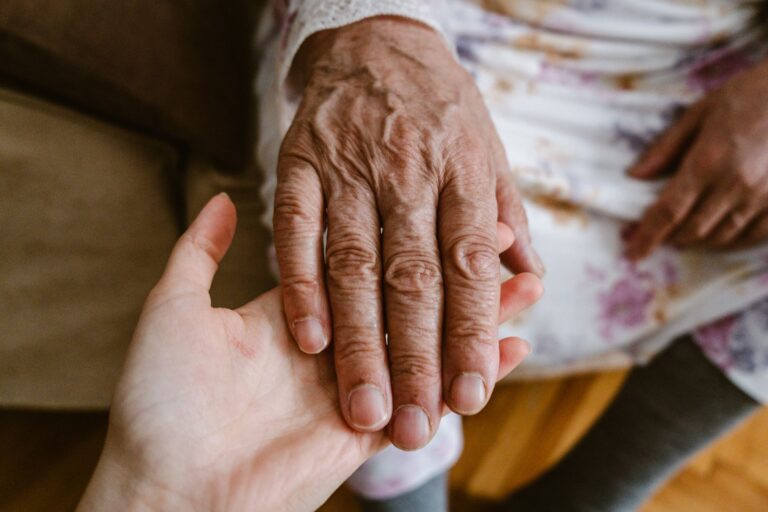
Collagen loss sits at the center of this dementia and brain health question.
Collagen loss is the progressive decline in collagen production that accelerates with age, starting in your mid-twenties and compounding year after year. What this means for your skin is straightforward: the structural protein that keeps skin firm, elastic, and youthful gradually breaks down, leading to wrinkles, sagging, loss of elasticity, and a thinner, more fragile appearance. If you’re 40 and notice your skin doesn’t bounce back the way it used to, or you’re 60 and see deeper lines around your eyes and mouth, collagen loss is the primary driver behind those changes. This article explains exactly how much collagen you lose at different ages, why it happens, how gender and lifestyle factors shape the process, and what current research suggests about slowing or supporting the skin’s collagen production.
Table of Contents
- How Much Collagen Do You Lose Each Year?
- What Causes Collagen to Break Down?
- Does Gender Change How Fast You Lose Collagen?
- What Lifestyle Factors Speed Up Collagen Loss?
- What Happens to Skin Structure As Collagen Breaks Down?
- Can You Slow or Support Collagen Production?
- Collagen Loss in Aging: What the Long-Term Picture Shows
- Conclusion
How Much Collagen Do You Lose Each Year?
Your skin loses approximately 1% to 1.5% of its collagen per year starting in your mid-twenties, a decline that compounds steadily over time. By age 40, you have roughly 15% to 20% less collagen than you did in your twenties—a gap that may not sound dramatic until you stand in front of the mirror and notice your skin looks less plump or fine lines are more visible. The decline accelerates further in later decades.
Research shows that people in their eighties have about 68% less type I procollagen (the building block of collagen) compared to people aged 18 to 29, and their overall collagen production has declined by approximately 75%. This isn’t a sudden cliff—it’s a gradual, cumulative process that affects everyone, but at different rates depending on genes, sun exposure, lifestyle, and other factors. To put this in perspective: if you started with 100 units of collagen at age 25, you’d have about 85 units at age 40, 70 units at age 55, and potentially as little as 25 units by age 80. The math is relentless, but understanding this trajectory helps explain why anti-aging strategies need to start earlier rather than later.
What Causes Collagen to Break Down?
The primary drivers of collagen breakdown are enzymes called matrix metalloproteinases, or MMPs. These enzymes naturally degrade collagen fibers as part of normal skin turnover, but their activity increases with age, sun damage, and inflammation, causing more collagen to be destroyed than replaced. type I collagen makes up 80% to 85% of your skin’s structural foundation, so when MMPs ramp up their degradation of this protein, the effects are visible and cumulative.
Over time, the collagen that remains becomes fragmented and disorganized, losing its tight, organized network structure—which is why aged skin often looks not just thin but also textured and less resilient. However, if you’ve protected your skin from sun exposure, maintained a healthy lifestyle, and avoided major inflammatory triggers, your MMP activity may be lower than average, potentially slowing collagen loss somewhat. The problem is that even with perfect prevention, the underlying mechanism of aging still proceeds—you’re just working to minimize acceleration rather than eliminate the process entirely. This is why dermatologists emphasize that sun protection, diet, and sleep matter: they reduce the *rate* of collagen breakdown, but they don’t stop it.
Does Gender Change How Fast You Lose Collagen?
Yes, significantly. Men’s epidermis (the outer layer of skin) thins at a rate of 7.2% per decade, while women’s thins at 5.7% per decade—meaning men experience structural skin changes faster than women for most of their lives. However, this advantage for women shifts dramatically after menopause.
Women lose up to 30% of their skin collagen within just five years after menopause begins, a sudden acceleration driven by the rapid drop in estrogen, which plays an important role in collagen synthesis and skin hydration. A 55-year-old woman entering or recently entered menopause may experience more visible skin changes in a five-year window than she did in the previous decade. This doesn’t mean men don’t experience aging—they do, at a steady, predictable rate—but women often face a more compressed, intense period of collagen loss in midlife. Understanding this pattern is important for setting realistic expectations about skin changes and timing interventions like skincare adjustments or dermatological treatments.

What Lifestyle Factors Speed Up Collagen Loss?
Smoking is one of the most damaging modifiable factors. Smokers show a 18% reduction in type I collagen synthesis and a 22% reduction in type III collagen, along with doubled levels of MMP-8, the enzyme that degrades collagen. The comparison is stark: a 50-year-old smoker may have skin that structurally resembles a non-smoking 60-year-old’s skin. Sun exposure, chronic inflammation, poor sleep, high stress, and a diet lacking in vitamin C and antioxidants all accelerate MMP activity and reduce collagen production.
The tradeoff is real—quitting smoking, protecting yourself from sun damage, managing stress, and eating well require discipline and lifestyle changes that aren’t always convenient. But the payoff is measurable. A person who quits smoking, uses sunscreen daily, and maintains antioxidant-rich nutrition will have noticeably better skin elasticity and fewer deep wrinkles than someone who doesn’t, even if both are the same age. The caveat: these lifestyle improvements slow decline but don’t reverse years of accumulated damage. Someone who smoked for 30 years won’t wake up with 25-year-old skin after quitting, but their skin will stop deteriorating at an accelerated rate.
What Happens to Skin Structure As Collagen Breaks Down?
As collagen production slows and existing collagen degrades, several visible and structural changes occur simultaneously. Wrinkles form where the skin has lost enough collagen that it can no longer spring back to its original position. Sagging develops because the supportive matrix beneath the skin thins, and gravity’s effect becomes more pronounced. Loss of elasticity happens because collagen and elastin work together to keep skin taut—when collagen declines, elasticity suffers even if elastin levels haven’t changed as dramatically.
The skin also becomes more fragile, bruises more easily, and takes longer to heal from minor injuries. A warning worth noting: the changes aren’t uniform across your face and body. Sun-exposed areas like your face, neck, and hands show collagen loss faster than protected areas like your inner arm or scalp. This is why someone’s hands often look noticeably older than their face—decades of UV exposure without the same level of sun protection. Additionally, if you have a medical condition that causes chronic inflammation (like rheumatoid arthritis or certain autoimmune conditions), your skin may show accelerated collagen loss compared to someone without inflammation, because inflammation drives MMP activity.

Can You Slow or Support Collagen Production?
While you cannot stop the underlying aging process, emerging research suggests that dietary approaches may support skin’s ability to maintain collagen. A 2025 trial by the University of Otago found that consuming two SunGold kiwifruit daily for eight weeks—providing approximately 250 mg of vitamin C—significantly increased skin vitamin C levels and skin thickness, correlating with enhanced collagen production.
This doesn’t mean eating kiwifruit will erase wrinkles, but it suggests that targeted, bioavailable forms of collagen-supporting nutrients may help your skin maintain better structure as you age. Other approaches with some evidence include collagen peptide supplementation, adequate protein intake, and skincare products containing retinoids or vitamin C. However, topical products work primarily on the surface—they can improve the appearance of fine lines and skin texture, but they cannot restore deep structural collagen loss the way that maintaining overall skin health (sleep, hydration, stress management, sun protection) can over time.
Collagen Loss in Aging: What the Long-Term Picture Shows
By the time someone reaches their seventies or eighties, collagen loss has accumulated to a point where the skin shows visible signs of dermal atrophy—fragmented, disorganized collagen fibers that have lost their tight structure. This isn’t just a cosmetic issue; thinner, less resilient skin is more prone to injury, infection, and slower healing. For people with dementia or other neurodegenerative conditions, skin fragility becomes a medical concern, as pressure ulcers, bruising, and wound care become more challenging to manage.
The takeaway is that collagen loss is not an overnight transformation but a decades-long process. Someone in their twenties today who understands this can make lifestyle choices—sun protection, avoiding smoking, managing stress, eating well—that will compound into noticeably better skin quality by their fifties and sixties. For those already experiencing significant collagen loss, the goal shifts to supporting the remaining collagen, protecting skin from further damage, and accepting that some aging is inevitable while managing what can be controlled.
Conclusion
Collagen loss is an inevitable part of aging, beginning in your mid-twenties and accelerating with each passing decade. By age 40, you’ve already lost 15% to 20% of your skin’s collagen compared to your twenties, and this decline compounds to dramatic levels by your seventies and eighties.
The process is driven primarily by increased activity of matrix metalloproteinases—enzymes that break down collagen—along with declining collagen synthesis, and it’s influenced by gender, lifestyle factors like smoking and sun exposure, and overall health. While you cannot stop aging, you can measurably slow collagen loss through sun protection, avoiding smoking, managing inflammation, maintaining good nutrition and sleep, and potentially supporting collagen production through vitamin C and other targeted nutrients. Understanding how and why collagen loss happens is the first step toward making informed choices about skincare, lifestyle, and realistic expectations about aging skin.
You Might Also Like
- Sun Damage Explained What It Means For Your Skin Health
- Skin Texture Explained What Uneven Skin Means For Your Health
- Dry Skin Explained What It Means For Barrier Health
For more, see Alzheimer’s Association.