Safe board games for a loved one with Alzheimer's are simple, familiar games matched to current abilities, interests, and mood. Choose large, sturdy pieces, simple rules, and low pressure so play stays failure-free. Alzheimer's is a brain disease that slowly impairs memory, thinking, and daily function. The right game supports connection and calm, not testing or winning.
Medical information disclaimer: This article is for general educational purposes only and does not provide medical advice, diagnosis, or treatment. Always consult a physician or other qualified health professional about symptoms, medications, tests, or treatment decisions.
Table of Contents
- What makes a game safe?
- Which games fit early stages?
- How do you adjust play as needs change?
- What can games realistically do?
What makes a game safe?
Look for simple rules and little demand on short-term memory. The safest choices use large, high-contrast, easy-to-handle pieces with rounded edges and sturdy, non-toxic materials, according to DailyCaring's guide to games for seniors with dementia. Avoid small detachable parts.
The U.S. Consumer Product Safety Commission warns that pieces fitting entirely inside its small-parts test cylinder pose a fatal choking hazard, in its toy safety tips. Check each game before play with these steps:.
- Confirm pieces are too large to swallow and have no sharp points.
- Confirm colors and print are bold and easy to see.
- Remove extra cards, timers, scoring pads, and complex rules.
- Supervise closely if the person still mouths objects.
Which games fit early stages?
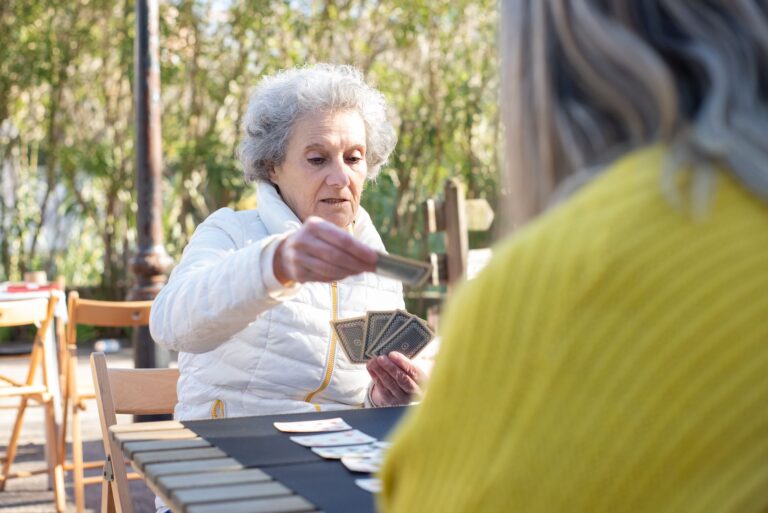
Familiar low-pressure classics often work best early. Good options include Bingo, checkers, Snakes and Ladders, Go Fish, Crazy Eights, card-matching, sorting by color or suit, and large-piece dominoes. Pick what the person already liked.
A former card player may enjoy sorting suits or matching pairs more than learning a new board. Simplify as abilities change. The Alzheimer Society of Canada advises matching activities to current abilities and simplifying steps to keep participation failure-free, in its guidance on finding suitable activities.
How do you adjust play as needs change?
Shorten sessions and let the person set the pace. Allow rule changes, team play, open hands, or taking turns together. In later stages, drop winning and losing.
Shuffling cards, sorting dominoes by color, or placing Bingo chips can still offer touch, rhythm, and company. Watch mood closely. Offer one clear choice at a time, reduce noise and clutter, and play at a rested time of day.
What can games realistically do?
Games improve engagement, mood, social connection, and quality of life. They do not treat or stop Alzheimer's. Research links frequent mentally and socially active leisure with lower dementia risk.
People over 75 who frequently played board games were over 35% less likely to develop dementia signs in a five-year study of nearly 500 participants. Keep expectations kind and practical. Keep sessions short, stop if frustration appears, and count a few peaceful minutes as meaningful.