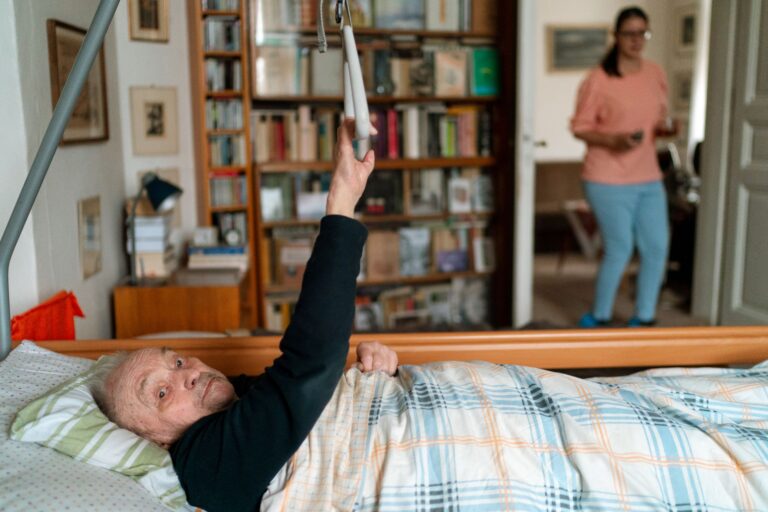
Recent care home legal disputes underscore a troubling pattern: institutions entrusted with protecting some of society’s most vulnerable people are frequently failing in that basic duty. When families pursue legal action against care facilities, the cases that emerge reveal not isolated incidents but recurring institutional breakdowns—inadequate staffing, poor training, ignored warning signs, and a culture that prioritizes cost-cutting over resident safety. These legal battles serve as a window into how systemic failures accumulate until a single incident or persistent pattern of neglect forces the issue into court.
The gravity of these failures cannot be overstated for families navigating dementia care. A resident in a care home is already facing cognitive decline that limits their ability to advocate for themselves or report abuse. When institutional oversight fails, that vulnerability becomes a critical liability. The legal cases that reach public attention represent only the fraction of care home problems significant enough to warrant litigation—many more residents endure substandard care without their families having resources or evidence to challenge it.
Table of Contents
- What Do Care Home Legal Battles Reveal About Systemic Failures?
- Why Do Care Home Institutions Often Prioritize Cost Over Safety?
- How Do Communication Breakdowns Compound Institutional Failure?
- What Are the Gaps in Regulatory Oversight of Care Homes?
- What Vulnerabilities Exist in Dementia Care Specifically?
- How Do Staffing Shortages Directly Harm Dementia Residents?
- What Can Families Do to Protect Residents and Document Problems?
- Frequently Asked Questions
What Do Care Home Legal Battles Reveal About Systemic Failures?
Legal disputes expose patterns that individual facility inspections may miss. When multiple families from the same care home pursue claims, it suggests the problem is not a single staff member’s misconduct but rather a structural issue: perhaps understaffing that prevents adequate monitoring, training gaps that leave staff unprepared for dementia behavior, or management decisions that subordinate safety to profit margins.
Courts and legal discovery processes force institutions to produce internal documents, incident reports, and staffing records that would otherwise remain private. These cases frequently center on preventable harms: residents falling due to inadequate supervision, medication errors from rushed pill distribution, malnutrition from insufficient feeding assistance, or pressure injuries that develop without proper repositioning and skin care. The fact that these harms are preventable makes institutional failure particularly damaging—it suggests not negligence in an isolated moment but negligence built into daily operations.
Why Do Care Home Institutions Often Prioritize Cost Over Safety?
The economics of care home operation create structural incentives toward cutting corners. Labor is the largest expense, and staffing ratios directly affect profitability. A facility that maintains one caregiver per six residents can appear profitable; one that maintains one per four residents operates at lower margins. When ownership or management shifts to prioritize quarterly returns, the pressure to maintain lean staffing intensifies—yet lean staffing in dementia care is inherently dangerous.
A caregiver managing six residents with advanced dementia cannot possibly monitor each person’s safety, nutrition, and emotional state adequately. A critical limitation of relying on legal action to drive change is that lawsuits are expensive, slow, and reach only the families with resources to pursue them. A family dealing with a parent’s cognitive decline may not have the bandwidth or finances to hire an attorney, gather evidence, and navigate litigation that can take years. Meanwhile, the facility may continue operating with the same unsafe patterns affecting other residents whose families never litigate.
How Do Communication Breakdowns Compound Institutional Failure?
When a dementia resident cannot report problems—cannot say they’re hungry, that their pain medication isn’t working, that another resident is aggressive toward them—the care home’s internal communication systems become that resident’s voice. Families must rely on staff to report concerns, shift supervisors to document incidents, and management to act on reports. When these communication channels are weak or ignored, problems escalate silently. A resident’s declining mood or increased confusion might signal a medical issue, medication error, or psychological distress, but if staff lack time to observe and report these changes, the resident deteriorates without intervention.
Legal cases frequently reveal that families tried to raise concerns through normal channels first. They reported problems to nursing staff, asked supervisors to investigate, or requested family meetings—only to find their concerns dismissed, minimized, or never documented. The legal battle became necessary not because the problem was hidden but because internal accountability failed. This pattern appears across multiple cases and facilities, suggesting an institutional culture problem rather than isolated miscommunication.
What Are the Gaps in Regulatory Oversight of Care Homes?
Regulatory agencies typically inspect care homes on a scheduled basis—often annually or less frequently unless complaints trigger an investigation. This inspection schedule means that serious problems can persist between visits. A staffing shortage, a medication dispensing error, or the early signs of a resident’s neglect may not be visible during a single day of inspection.
Moreover, facilities often prepare intensively for announced inspections, temporarily adjusting staffing or practices in ways that don’t reflect daily operations. The tradeoff is significant: more frequent, unannounced inspections would catch more problems but require substantial regulatory resources and would increase compliance costs for facilities. Some jurisdictions have adopted risk-based inspection models, focusing more intensive oversight on facilities with poor records. However, this approach only helps if previous violations or complaints have already been documented—which requires that families report problems and that reports are recorded.
What Vulnerabilities Exist in Dementia Care Specifically?
Dementia residents represent a subset of care home populations with particular vulnerability. They cannot reliably report problems, may not remember incidents to tell family members, and may display behavioral changes that staff attribute to disease progression rather than responding to the actual problem causing those changes. An increase in agitation might signal pain, infection, medication side effects, or psychological distress—or it might indicate abuse or neglect.
Without careful observation and documentation, the cause remains unknown and untreated. A critical warning: families should be alert to sudden behavioral changes, unexplained bruising or injuries, signs of malnutrition (weight loss, loose clothing), or marked decline in hygiene or appearance. These can signal care failures more reliably than a resident’s verbal report, which may be confused or incomplete. However, families who visit infrequently may not notice gradual changes, and the care home staff observing daily changes may normalize them or attribute them to disease rather than care quality.
How Do Staffing Shortages Directly Harm Dementia Residents?
Inadequate staffing in dementia care is not merely an inconvenience—it directly enables harm. When one caregiver manages too many residents, basic tasks like toileting, bathing, and feeding cannot be completed carefully. Residents may be left in wet incontinence briefs for hours, leading to skin breakdown. Meals may be rushed, with residents not given enough time to eat or swallow safely.
Medications may be distributed by staff who are too busy to verify they’re giving the right medication to the right resident. Residents experiencing distress—pain, confusion, fear—may not receive prompt response because staff are overwhelmed. Legal cases involving inadequate staffing typically center on preventable injuries from falls, medication errors, or neglect-related conditions like pressure injuries. These cases often reveal that the facility knew staffing was below recommended levels but maintained those levels to preserve profitability. Internal communications discovered during litigation frequently show management receiving complaints about understaffing and choosing not to hire additional caregivers.
What Can Families Do to Protect Residents and Document Problems?
Families cannot rely solely on the care home’s internal systems to protect residents. Regular, unannounced visits at varying times can reveal patterns—whether staff greet residents warmly or seem rushed and irritable, whether residents are clean and appropriately dressed, whether the facility smells clean. Detailed notes of observations and concerns create documentation that can be invaluable if problems later require intervention. Photos of living conditions, descriptions of specific incidents with dates and times, and records of communication attempts with staff build a record.
Understanding your resident’s baseline—their normal mood, appetite, mobility, and behaviors—helps you recognize changes that might signal problems. Keeping a written log of health changes, medication adjustments, and facility responses creates accountability. If concerns arise, put them in writing to the facility management rather than relying on verbal conversations, and keep copies of all correspondence. For residents with dementia, this documentation may be the only reliable record of what actually happened, because the resident cannot provide a coherent account themselves.
- —
Frequently Asked Questions
What should I do if I suspect my family member is being neglected in a care home?
Document specific observations with dates and times, photograph conditions if possible, report concerns in writing to facility management, request a family meeting to discuss your observations, and if the facility does not respond appropriately, contact your state’s long-term care ombudsman or regulatory agency. Consider consulting an elder law attorney if the situation does not improve.
How can I tell if staffing is inadequate at a care home?
Visit at different times and days to observe how busy staff appear, whether residents’ basic needs seem to be met promptly, and whether staff know residents’ individual needs. Ask the facility directly about staff-to-resident ratios and turnover rates. High turnover often correlates with poor working conditions and quality care problems.
Are all care home legal battles about abuse, or do they include neglect cases?
Most legal cases involve neglect rather than intentional abuse—inadequate supervision leading to falls, insufficient monitoring of nutrition, delayed response to medical needs, or medication errors. Neglect cases can actually be harder to prove because they involve what did not happen, but they represent the majority of serious institutional failures.
What does it mean if a care home has had multiple legal settlements?
Multiple settlements suggest a pattern of institutional failure rather than isolated incidents. It indicates that the facility has had sufficient problems to generate multiple claims, and that it chose to settle rather than defend—often because the evidence was strong or because defending would be more expensive than settling.
How long do care home legal cases typically take?
Cases can take 1-3 years or longer from initial complaint to resolution, depending on complexity, whether the facility contests the claim, and court schedules. During this time, the facility may continue operating without changes if regulatory action has not also been taken.
Can I move my family member to a different care home if I’m concerned about quality?
Yes, though the transition itself carries risks for dementia residents, who can be deeply disrupted by environmental changes. If you move your family member, do so carefully with planning to maintain continuity of care, familiar items, and staff relationships at the new facility. —